
Five things to know about the byelection in Battle River—Crowfoot
Advertisement
Read this article for free:
or
Already have an account? Log in here »
We need your support!
Local journalism needs your support!
As we navigate through unprecedented times, our journalists are working harder than ever to bring you the latest local updates to keep you safe and informed.
Now, more than ever, we need your support.
Starting at $15.99 plus taxes every four weeks you can access your Brandon Sun online and full access to all content as it appears on our website.
Subscribe Nowor call circulation directly at (204) 727-0527.
Your pledge helps to ensure we provide the news that matters most to your community!
To continue reading, please subscribe:
Add Brandon Sun access to your Free Press subscription for only an additional
$1 for the first 4 weeks*
*Your next subscription payment will increase by $1.00 and you will be charged $20.00 plus GST for four weeks. After four weeks, your payment will increase to $24.00 plus GST every four weeks.
Read unlimited articles for free today:
or
Already have an account? Log in here »
Hey there, time traveller!
This article was published 19/08/2025 (219 days ago), so information in it may no longer be current.
OTTAWA – Conservative Leader Pierre Poilievre will return to his seat in the House of Commons in September, after winning a byelection in the rural Alberta riding of Battle River—Crowfoot on Monday.
Here are five things to know about the byelection.
1. Poilievre got more than 80 per cent of the vote
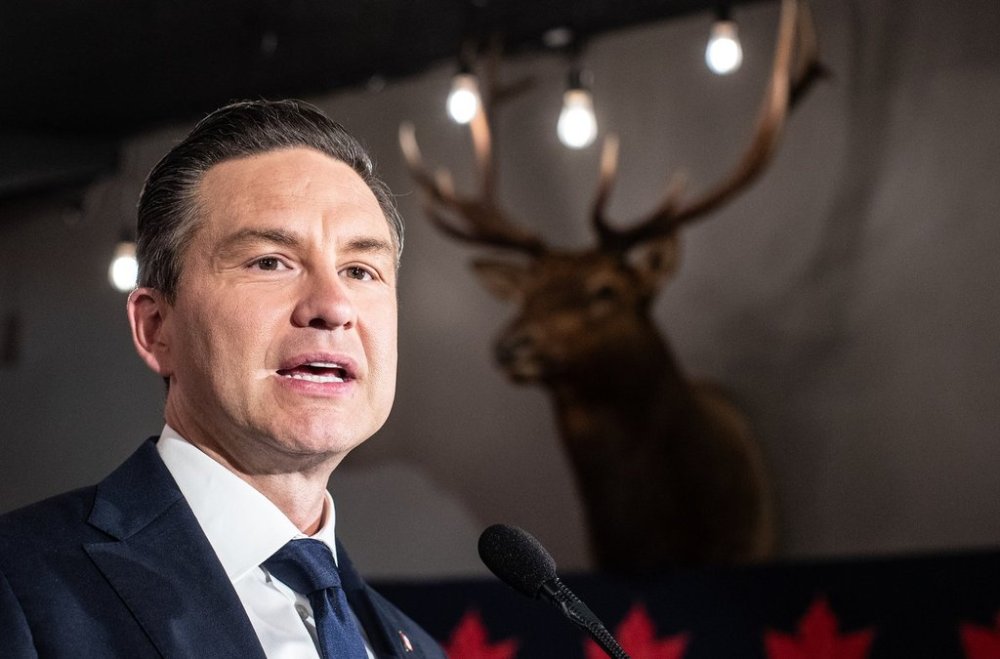
Battle River—Crowfoot is one of the safest Conservative seats in the country. The party has reached 80 per cent in every election but one since 2004.
Damien Kurek won with just shy of 83 per cent of the vote in April, and some observers have suggested in recent weeks that Poilievre would need to reach the same threshold to maintain the confidence of the party.
Conservative members will hold a secret-ballot vote on Poilievre’s leadership at their campaign in late January.
2. A record number of people ran for the seat
Poilievre was up against 213 candidates, including representatives from all the major political parties, a handful of fringe parties and a whole lot of Independents.
The vast majority of people who put their names on the ballot were from the Longest Ballot Committee, a group that says it’s protesting the first-past-the-post system.
The group has targeted a handful of byelections over the last year, and it targeted Poilievre’s riding of Carleton during the April election.
3. Elections Canada had to make adjustments
Elections Canada chose an unusual workaround: electors had to write in the name of their selected candidate on a modified ballot. There were lists of all 214 candidates available at polling stations for reference.
It says overall, things went smoothly.
The agency says it hired additional workers to count ballots, started the count earlier in the day (more than 14,000 people voted in advance polls before Monday), and ensured workers were trained to help people fill out the adapted ballots.
Elections Canada says it will publish a post-election report in the coming months with more details about how things went and what it learned.
4. The Longest Ballot Committee did not gobble up votes
In a 2024 byelection in Toronto—St. Paul’s, one of the Longest Ballot candidates named Félix-Antoine Hamel made history when he became the first candidate to receive zero votes in any Canadian election.
On Monday, 75 candidates got no votes at all. Another 61 got a single vote each.
Still, Poilievre has slammed the Longest Ballot Committee as “a scam,” pledging that he will introduce legislation to make it more difficult for this kind of disruptive protest to happen in the future, including by putting in place rules to ensure an official agent can only act for one candidate in an election. In Monday’s byelection, one man acted as the official agent for all the protest candidates.
Stéphane Perrault, the country’s chief electoral officer, wrote to the Liberal government last September after the Longest Ballot Committee took part in a Montreal-area byelection. Perrault asked then democratic institutions minister Dominic LeBlanc to change the candidate nomination process to ensure that voters cannot nominate more than one candidate.
The office of government House leader Steven MacKinnon said in a statement that the Liberals are also concerned.
“Our government shares the concerns about the longest ballot initiative and we are currently examining this issue,” a spokesperson said in response to questions Tuesday.
5. Alberta separatism was not a major issue
Several of the candidates in the byelection openly supported the idea of Alberta or Western Canada separating from the rest of the country.
In a June byelection for a provincial riding that includes some of the same territory, a separatist candidate got just shy of 18 per cent of the vote. Some polls this summer put support for Alberta independence as high as 30 per cent in the province.
During a candidates’ forum in July, a number of people running in Battle River—Crowfoot talked about Ottawa “taking advantage of Alberta.”
Grant Abraham, who ran for the United Party of Canada, said during the forum that he wanted “a strong and sovereign Alberta and its independence.”
He got 773 votes.
This report by The Canadian Press was first published Aug. 19, 2025.