
Alberta bill aims to clear further obstacles to citizen-driven referendum questions
Advertisement
Read this article for free:
or
Already have an account? Log in here »
We need your support!
Local journalism needs your support!
As we navigate through unprecedented times, our journalists are working harder than ever to bring you the latest local updates to keep you safe and informed.
Now, more than ever, we need your support.
Starting at $15.99 plus taxes every four weeks you can access your Brandon Sun online and full access to all content as it appears on our website.
Subscribe Nowor call circulation directly at (204) 727-0527.
Your pledge helps to ensure we provide the news that matters most to your community!
To continue reading, please subscribe:
Add Brandon Sun access to your Free Press subscription for only an additional
$1 for the first 4 weeks*
*Your next subscription payment will increase by $1.00 and you will be charged $20.00 plus GST for four weeks. After four weeks, your payment will increase to $24.00 plus GST every four weeks.
Read unlimited articles for free today:
or
Already have an account? Log in here »
EDMONTON – The Alberta government is clearing more legal hurdles faced by citizens aiming to put referendum questions on a ballot, including the prospect of leaving Confederation.
If passed, a bill tabled Thursday would halt a court proceeding on a pro-separatist referendum question that is awaiting a judicial decision, essentially giving the proponents a fresh start.
Justice Minister Mickey Amery told reporters the bill isn’t being put forward specifically because of that case, but those behind the separation question would be permitted to reapply at no cost.
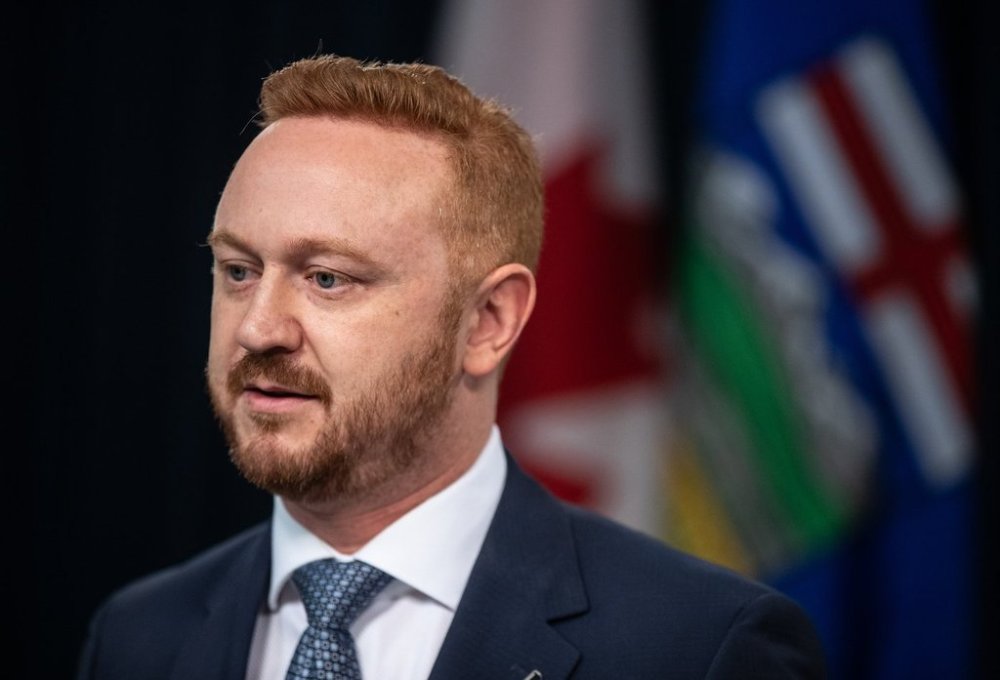
Amery said it could be thought of as a “reset,” as the government doesn’t want to see citizens looking to participate in the democratic system be slowed down by the courts.
“If those seeking independence believe that they have the support for it, this is their chance to prove it,” said Amery.
The referendum proposal in question, put forward earlier this year by the separatist group the Alberta Prosperity Project, was proposed as: “Do you agree that the Province of Alberta shall become a sovereign country and cease to be a province in Canada?”
It was referred to the courts by Alberta’s chief electoral officer to determine whether the question was constitutional — a move Amery and Premier Danielle Smith had denounced as premature.
The legislation would prevent the chief electoral officer from referring future proposals to the courts, while giving that power to the minister.
It also gives the minister the ability to recommend changes to the wording of referendum questions before they’re sent to voters, and it states that the government isn’t bound by the results of referendums if the questions aren’t constitutional or go beyond Alberta’s legislative jurisdiction.
The bill also removes a previous rule that referendums on the same or similar subjects couldn’t be held within five years of each other.
Amery said the legislation won’t affect a pro-Confederation petition certified earlier this week that seeks to make it official policy the province will not leave Canada.
The UCP could call a referendum on the question, put forward by former deputy premier Thomas Lukaszuk, or — as he has said he would prefer — simply adopt the proposal as policy moving forward.
Amery said a committee of the legislature will now review Lukaszuk’s proposal and recommend next steps.
The bill also removes a number of requirements that future referendum proposals must meet before petitioners can start collecting signatures, including that the proposal must be constitutional, factually accurate or have clear subject matter statements.
The minister said the changes would ensure all Albertans are able to put any question to voters in the name of direct democracy, and prevent one group from “piggybacking” on the referendum of another.
“I’m clearing the way for anybody from any political stripe or any ideology or any position to be able to put that question to Albertans,” he said.
Mitch Sylvestre, chief executive of the Alberta Prosperity Project and a United Conservative Party constituency association president, said Thursday the legislation is a “very big victory for us.”
“We’re really very happy if it lives up to the spirit of what it’s intended to do: give us the opportunity to put the question to the people and gather signatures.”
Sylvestre said they were confident they would have won the court case, but he is grateful and excited to re-apply to start a petition.
“The minute we can do it, it will be done,” he said.
He added they aim to surpass the more than 400,000 signatures Lukaszuk’s garnered.
The proposed changes come after Smith’s government, earlier this year, lowered the signature requirements for citizen-initiated referendums while also increasing the length of time petitioners have to collect the necessary signatures to get a question on a ballot.
Opposition NDP Deputy Leader Rakhi Pancholi told reporters the legislation demonstrates that when the UCP feels threatened, those elected will change the law to suit themselves.
“I can’t imagine how any Albertan can have trust in this government, in the processes they’ve laid out, as they keep changing them to suit their own purposes,” she said.
“They don’t believe in the courts.”
The legislation would also make other wide-ranging electoral changes, including rules aimed at preventing long ballot protests and restricting new political party names.
Party naming restrictions throw cold water on the efforts of two former UCP members, along with the Alberta Party, to establish a new iteration of the Progressive Conservative Party by retroactively preventing such a moniker from being used.
The legislation lists “distinctive” words and phrases that new parties will be prohibited from using, including communist, conservative, democratic, green, independent, liberal, reform, republican and wildrose.
Amery said it’s a non-partisan change being done to avoid confusing voters, and he alleged that some are purposely trying to deceive voters by using phrases like those listed.
He argued it’s not a marked change from previous election law, but brings clarity so that a new party can’t seek to register names like the “New Liberals” or the “Greenest Party.”
“We want to make sure that the people who are voting are casting their ballots for not only the party that they believe in, but the political ideology that they believe in as well,” he said.
Peter Guthrie, one of the former UCP members looking to revive the Progressive Conservative brand, told reporters Thursday that he found it astonishing the government would go so far as to legislate roadblocks to stop his efforts.
“This is for their political survival,” Guthrie, who now sits as an Independent, said of the government. “(Smith) realizes how dangerous a moderate, fiscally conservative party is for them, and that’s what we are.”
Guthrie said he and his fellow Independent MLA Scott Sinclair will be going back to the drawing board for a new name, but said for now: “You can call us, I don’t know, the Progressive Redacted Party.”
Another change proposed in the bill is to give Alberta’s justice minister immunity from sanctions from the Law Society of Alberta, which regulates lawyers, for any actions they perform “as part of their official duties.”
Government officials told reporters Thursday the legislation doesn’t define the minister’s “official duties.”
This report by The Canadian Press was first published Dec. 4, 2025.