
Ottawa kept people on Canada’s no-fly list without ‘necessary grounds’: spy watchdog
Advertisement
Read this article for free:
or
Already have an account? Log in here »
We need your support!
Local journalism needs your support!
As we navigate through unprecedented times, our journalists are working harder than ever to bring you the latest local updates to keep you safe and informed.
Now, more than ever, we need your support.
Starting at $15.99 plus taxes every four weeks you can access your Brandon Sun online and full access to all content as it appears on our website.
Subscribe Nowor call circulation directly at (204) 727-0527.
Your pledge helps to ensure we provide the news that matters most to your community!
To continue reading, please subscribe:
Add Brandon Sun access to your Free Press subscription for only an additional
$1 for the first 4 weeks*
- Enjoy unlimited reading on brandonsun.com
- Read the Brandon Sun E-Edition, our digital replica newspaper
*Your next Free Press subscription payment will increase by $1.00 and you will be charged $20.95 plus GST for four weeks. After four weeks, your payment will increase to $24.95 plus GST every four weeks.
Read unlimited articles for free today:
or
Already have an account? Log in here »
OTTAWA – A new report from the national spy watchdog says the federal government kept some people on Canada’s no-fly list without proper justification — a possible violation of the law that underpins the program.
The government is responsible for screening travellers through the Passenger Protect Program, commonly known as the no-fly list.
Federal officials inform air carriers when a passenger requires additional screening or is prohibited outright from boarding a flight because they could pose a threat to air security or might travel to commit a terrorist act.
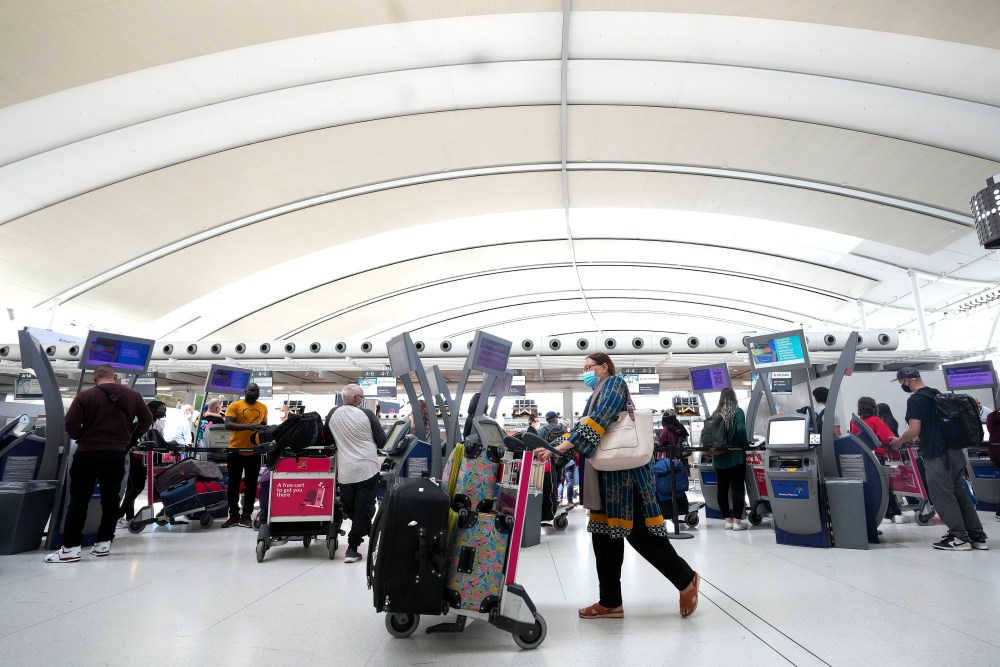
The National Security and Intelligence Review Agency looked at how people are added to the list, the actions taken when listed people try to fly, and ways to challenge inclusion on the roster.
The review agency says improvements to the program, such as centralized passenger screening, reduced the number of errors and improved security.
Public Safety Canada, which oversees the program, also has generally made sure that people on the list aren’t unfairly restricted from travelling, the watchdog says.
If an individual is denied boarding because they’re on the list, they receive a letter from the public safety minister with instructions on how to apply for recourse and to request removal.
In addition, the law governing the program, the Secure Air Travel Act, requires the public safety minister to review the list every 90 days to determine whether grounds for inclusion still exist.
The intelligence watchdog says while people met the act’s listing threshold when they were first added to the no-fly list, there were shortcomings in how the minister’s delegate decided to relist people during reviews of their cases.
The report notes that sometimes the 90-day reviews were not conducted on time.
The watchdog also found the minister’s delegate renewed the listing of six people “without having necessary grounds.”
Those cases included:
— two individuals the delegate had previously decided to delist, with no new information to justify a reversal of that decision;
— one person whose most recent case brief clearly indicated that the act’s listing threshold was not met; and
— three individuals who were relisted on grounds that were unrelated to the act’s thresholds.
The spy watchdog also pointed to a general lack of clarity — and in some cases disagreement — between program partners on when and why to consider delisting a person.
It found this was the case for decisions regarding each person’s listing status every 90 days, and for rulings on applications for recourse.
The intelligence watchdog says its recommendations are aimed at ensuring a more fair, principled and co-ordinated approach to managing the program.
It recommended Public Safety prioritize updating program governance documents to clarify roles and responsibilities for supporting the minister on listing decisions.
It said in cases where the minister or their delegate does not approve a proposal for relisting or delisting someone, the reasons for their disapproval should be clearly documented and relayed to the agency that nominated the person for inclusion.
The watchdog also recommended that Public Safety build a complete record of all positive matches to the list, actions taken in relation to them and the outcomes of those steps.
This report by The Canadian Press was first published Feb. 17, 2026.