
Opposition parties back changes to status rules in Indian Act, Liberals say not yet
Advertisement
Read this article for free:
or
Already have an account? Log in here »
We need your support!
Local journalism needs your support!
As we navigate through unprecedented times, our journalists are working harder than ever to bring you the latest local updates to keep you safe and informed.
Now, more than ever, we need your support.
Starting at $15.99 plus taxes every four weeks you can access your Brandon Sun online and full access to all content as it appears on our website.
Subscribe Nowor call circulation directly at (204) 727-0527.
Your pledge helps to ensure we provide the news that matters most to your community!
To continue reading, please subscribe:
Add Brandon Sun access to your Free Press subscription for only an additional
$1 for the first 4 weeks*
*Your next subscription payment will increase by $1.00 and you will be charged $20.00 plus GST for four weeks. After four weeks, your payment will increase to $24.00 plus GST every four weeks.
Read unlimited articles for free today:
or
Already have an account? Log in here »
OTTAWA – All four opposition parties in the House of Commons are backing legislation to change the status rules in the Indian Act to end the “second-generation cutoff.”
But the Liberals say that while they support changes to registration eligibility, more consultations with First Nations are needed before the law is amended.
Bill S-2, introduced in the Senate with support from the Liberals, initially sought to restore First Nations status to some 3,500 individuals.
Those individuals’ ancestors lost their status before 1985 due to a law that said they could not maintain status if they wanted to vote in federal elections or own property.
By the time that law was amended in 1985, thousands of people already had lost their status. Because First Nations status is passed down from generation to generation, their descendants were not given status.
S-2 sought to fix that.
But the 1985 changes also introduced a new rule preventing the transfer of status to a person who has at least one grandparent and one parent without status — the second-generation cutoff. That rule meant the knock-on effects on those who lost status due to the pre-1985 law were even broader.
After hearing weeks of testimony from First Nations leaders, senators broadened the bill to end the second-generation cutoff as well. The amended bill would allow status to be passed on to children as long as at least one of their parents is registered.
Some chiefs say that if the second-generation cutoff is not dropped, it could leave their communities with no federally recognized members in the next generation — essentially eliminating their rights as a distinct people.
The Assembly of First Nations passed a resolution in December supporting the Senate’s changes and calling on Ottawa to commit to increased funding to offset the cost to their communities of absorbing new members.
The Union of B.C. Indian Chiefs said it has consulted with the federal government on the issue for decades and accused the Liberals of using consultations as a delaying tactic.
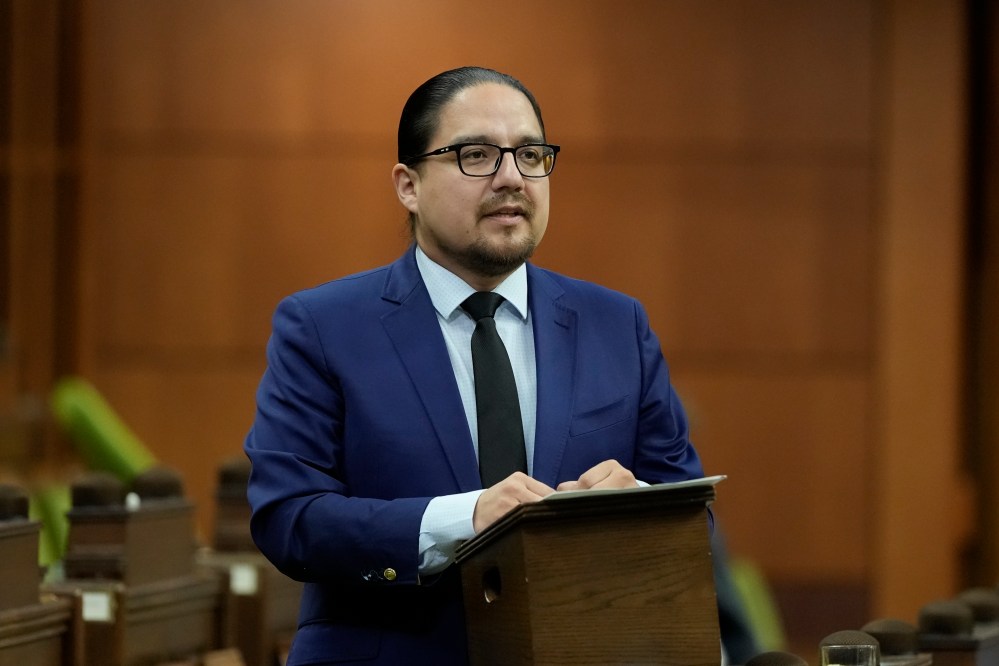
MP Billy Morin, the Conservative critic for Indigenous Services, told the House of Commons on Friday the legislation gives Parliament a unique opportunity to broaden eligibility requirements without forcing First Nations leaders to go to court. He said the Liberals should support the changes proposed by the Senate.
“The Senate has rightfully challenged the 45th Parliament of Canada to make history with this bill,” said Morin, who previously served as chief of Enoch Cree Nation.
Morin said changes to eligibility requirements would add approximately 22,000 people to the Indian Act registry in the first year, and between 7,000 and 8,000 people per year over the next 30 to 40 years.
“The government chooses to focus on excuses, but the risk of doing nothing is greater. We have a chance now to change the narrative,” he said. “The government can be proactive in reconciliation by doing the right thing now, before going through long, costly litigation again to end sex discrimination in the Indian Act.”
In an interview with The Canadian Press after debate wrapped Friday, Morin said he helped to convince his party to back the amendments by speaking about his family’s experiences under the Indian Act.
He said his cousin has one child who is not eligible for status, while the other is.
“They have to grow up with being ostracized,” Morin said. “They have to grow up knowing that one can inherit property and own a home on the nation, and own a business affiliated with the nation, and one can’t. There’s something wrong with that.”
During debate in the House of Commons Friday morning, NDP MP Lori Idlout criticized the federal government over what she called its unbalanced approach to consultation.
She said that when the government wants to pass legislation — like the major projects bill C-5 last year — it has no qualms about violating the rights of Indigenous Peoples.
“Now, in S-2, the Liberals want to do consultations on how to remedy this issue, stating there are a range of potential pathways. All of a sudden they worry about whether S-2 would be Charter-compliant,” Idlout said. “I call on them to use the same pace they did in C-5 to expedite the passage of this bill.”
Idlout also called for discussions with First Nations on how they want to move forward with their own membership lists outside the Indian Act.
Indigenous Services Minister Mandy Gull-Masty has signalled for months her government is looking to address the second-generation cutoff — but not through the changes to S-2 made by senators.
Speaking in the House of Commons on Friday, Gull-Masty said that as a First Nations woman she knows the harm caused by Indian Act status rules. She said the 3,500 people covered under the legislation she backed before the Senate amendments can’t wait any longer for their rights to be recognized.
“The second generation cutoff, this is a critical issue that must be addressed the right way,” she said.
“The question is not how we will do it, but it is when we will do it. We need to follow the lead of community to ensure that the solutions we bring forward are not only supported by community, but have consensus of rights-holders.”
This report by The Canadian Press was first published Feb. 27, 2026.