
Meth-psychosis beds open at 72-hour detox centre
Advertisement
Read this article for free:
or
Already have an account? Log in here »
We need your support!
Local journalism needs your support!
As we navigate through unprecedented times, our journalists are working harder than ever to bring you the latest local updates to keep you safe and informed.
Now, more than ever, we need your support.
Starting at $15.99 plus taxes every four weeks you can access your Brandon Sun online and full access to all content as it appears on our website.
Subscribe Nowor call circulation directly at (204) 727-0527.
Your pledge helps to ensure we provide the news that matters most to your community!
To continue reading, please subscribe:
Add Brandon Sun access to your Free Press subscription for only an additional
$1 for the first 4 weeks*
*Your next subscription payment will increase by $1.00 and you will be charged $20.00 plus GST for four weeks. After four weeks, your payment will increase to $24.00 plus GST every four weeks.
Read unlimited articles for free today:
or
Already have an account? Log in here »
WINNIPEG — Four beds reserved for people in meth-induced psychosis opened Wednesday at the province’s new 72-hour detox facility.
“We all see what goes on in our streets with meth,” Premier Wab Kinew said. “Well, today, we have a facility to be able to hold people until they’re not able to be a danger to other(s).”
The 20-bed facility at 190 Disraeli Fwy., which the province refers to as a protective-care centre, is operated by Main Street Project and fully operational.
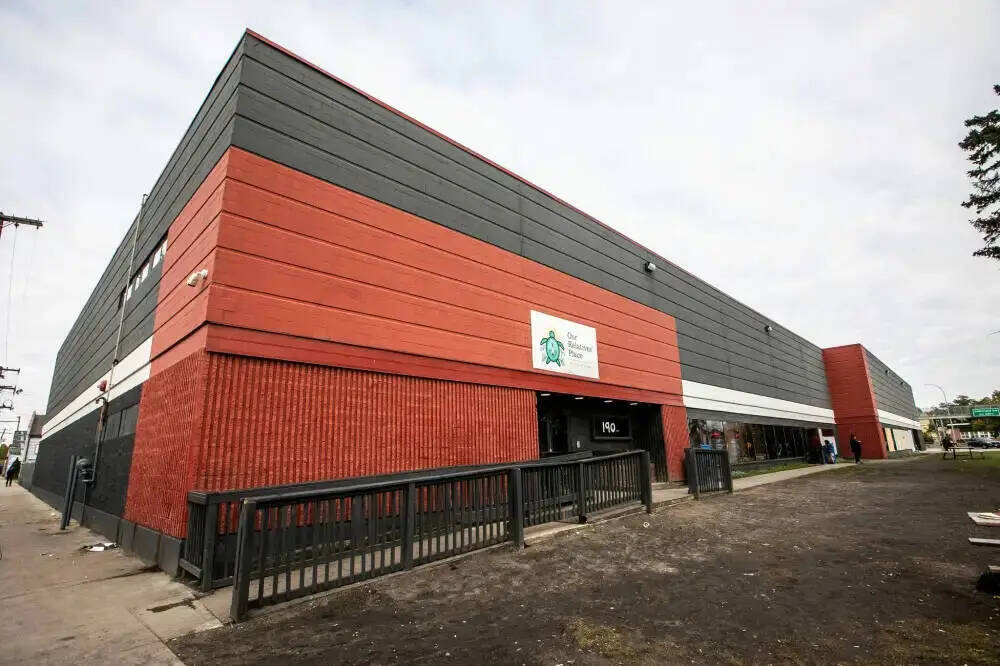
Four beds reserved for people in meth-induced psychosis opened Wednesday at the province’s detox centre at 190 Disraeli Fwy. (Mikaela MacKenzie/Winnipeg Free Press)
The other 16 detox suites are for alcohol detentions and opened in December, which is when the province had hoped to have the entire facility operational.
“Four months later, and we have not seen any (drug users) in there, other than it’s being used as a drunk tank,” Tory addictions critic Jeff Bereza said Wednesday.
Each suite measures three by three metres and has a bed, toilet, sink and is equipped with video surveillance.
People admitted to the four “meth” beds can be held up to 72 hours. They may be used for people who’ve ingested other long-lasting drugs.
It took more time for those units to open in order to ensure necessary equipment and training were “up to par” to treat people experiencing the effects of meth, Kinew said.
Those effects sometimes include hallucinations that can lead to violence. Patients are first assessed by an emergency room doctor before being transported by police to the South Point Douglas site.
Once there, they’re overseen by health experts who decide when it’s safe to release them.
The facility opened after the passage of the Protective Detention and Care of Intoxicated Persons Act on Nov. 6. Under the law, intoxicated people in public places who pose a danger or cause disturbances can be detained and held for up to 72 hours.
The previous law — the Intoxicated Persons Detention Act — permitted 24-hour holds and was based on the effects of alcohol, not drugs.
At least one advanced-care paramedic is on site at all times, Marc Savard, the Winnipeg Fire Paramedic Service’s director of community medicine and health system liaison, said in a statement.
Thirty-two of 40 WFPS community paramedics have completed specialized training to handle cases, including spending time at the Health Sciences Centre addictions unit and a Rapid Access to Addictions Medicine clinic.
The remaining eight will finish training as schedules allow, Savard said.
“We’re trying to tie people into a better path, but the first step is, let’s just keep people in the community safe,” Kinew said.
Doctors Manitoba wasn’t consulted on the protective care centre but the physicians’ advocacy organization is “always ready” to assist government with planning physician resourcing and contracts, a spokesperson wrote in a statement.
N’Dinawemak, a 90-bed shelter and drop-in centre, shares a building with the detox centre. Approximately 7,000 people used the facility in February, some of them also having used substances, executive director Frank Parkes said.
“We never stop,” he said.
Meanwhile, Kinew said the province’s planned supervised consumption site remains in limbo.
“We’re waiting on the feds to provide us with the permit, the approval, so we’re effectively ready to go, in terms of opening,” he said.
The province is eyeing 366 Henry Ave., a single-storey building mostly surrounded by automobile-repair shops and other businesses as the location for the controversial facility.
» Winnipeg Free Press