
Debate over a foreign spy service for Canada influenced by allies, money: study
Advertisement
Read this article for free:
or
Already have an account? Log in here »
We need your support!
Local journalism needs your support!
As we navigate through unprecedented times, our journalists are working harder than ever to bring you the latest local updates to keep you safe and informed.
Now, more than ever, we need your support.
Starting at $15.99 plus taxes every four weeks you can access your Brandon Sun online and full access to all content as it appears on our website.
Subscribe Nowor call circulation directly at (204) 727-0527.
Your pledge helps to ensure we provide the news that matters most to your community!
To continue reading, please subscribe:
Add Brandon Sun access to your Free Press subscription for only an additional
$1 for the first 4 weeks*
- Enjoy unlimited reading on brandonsun.com
- Read the Brandon Sun E-Edition, our digital replica newspaper
*Your next Free Press subscription payment will increase by $1.00 and you will be charged $20.95 plus GST for four weeks. After four weeks, your payment will increase to $24.95 plus GST every four weeks.
Read unlimited articles for free today:
or
Already have an account? Log in here »
Hey there, time traveller!
This article was published 08/03/2026 (207 days ago), so information in it may no longer be current.
OTTAWA – The decades-long debate over whether Canada should create a CIA-style foreign spy agency has been coloured by pressure from allies, budgetary restraint and internal federal rivalries, a new study reveals.
Much of the discussion about Canada’s foreign intelligence aspirations has taken place — fittingly perhaps, given the subject matter — in classified memos and behind closed doors in the halls of government.
“To spy, or not to spy,” a new paper by researcher and former Canadian intelligence analyst Alan Barnes, draws on recently released archival records to trace the history of official thinking on the question from 1945 to 2007.
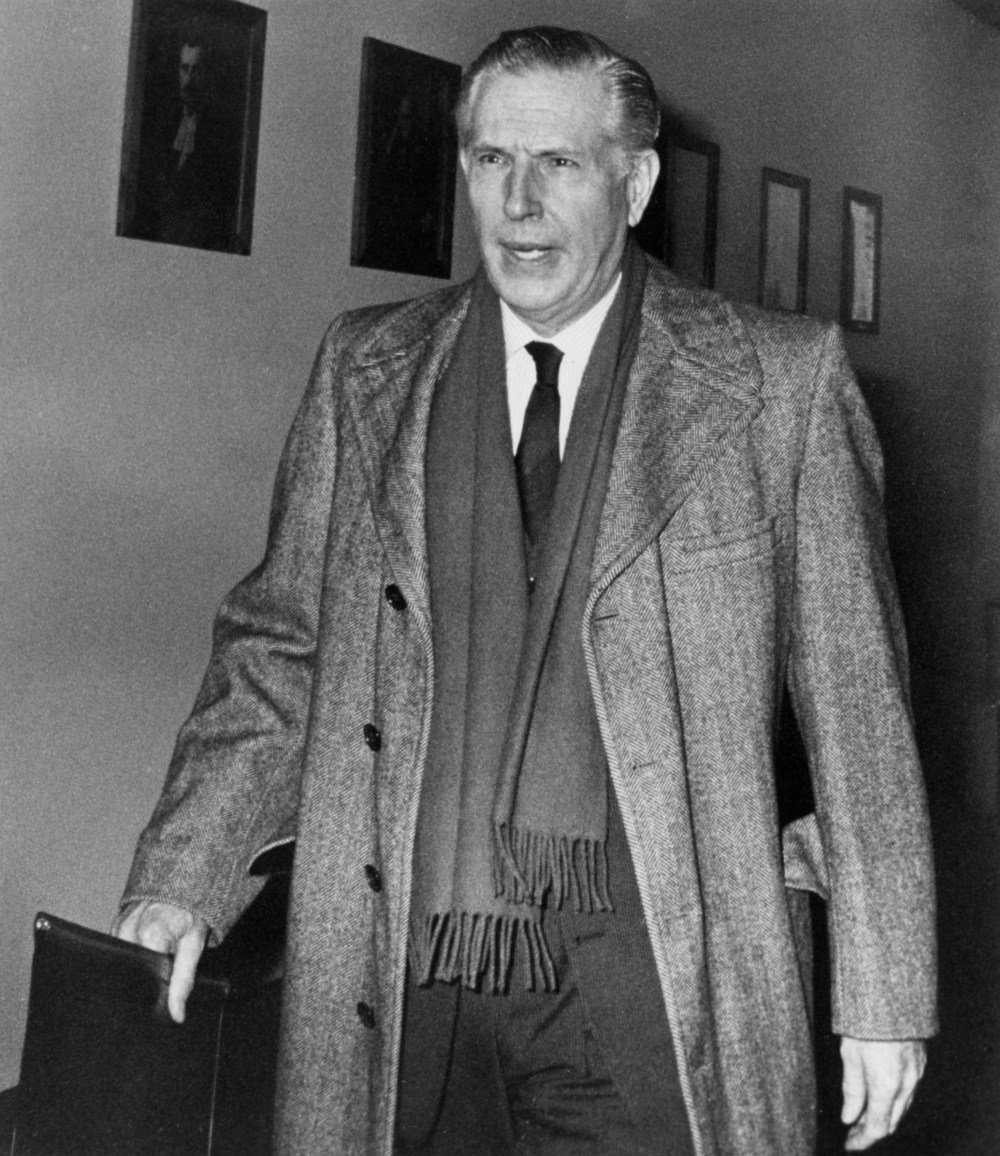
Ottawa’s fractious relations with Washington over the last year have prompted fresh conversations about whether Canada should have its own intelligence service that dispatches people abroad to covertly gather political, military and economic information.
An understanding of past deliberations about a Canadian foreign intelligence agency “is an important element of an informed public debate” on the question, said Barnes, a senior fellow at Carleton University’s Norman Paterson School of International Affairs.
Barnes’ paper, published by the Canadian Foreign Policy Journal, explains how Canada’s cautious consideration of the idea of an international espionage service stretches back at least eight decades to the days following the Second World War.
During the war, Canada developed the ability to electronically collect signals intelligence, the Joint Intelligence Committee co-ordinated foreign intelligence activities and produced assessments, and the RCMP gathered information about domestic security threats.
Missing from the mix was an organization operating outside Canada to collect foreign intelligence clandestinely using human sources, similar to the British Secret Intelligence Service, or MI6, and the U.S. Central Intelligence Agency, Barnes writes.
“Nevertheless, when officials were considering the shape of the post-war intelligence community, the idea of creating a foreign intelligence agency was in the air,” the paper says.
An SIS officer visited Ottawa in 1951 to discuss setting up a Canadian spy service with Britain’s assistance. That led to a proposal for a modestly scoped agency which, Barnes surmises, would have operated in the Caribbean. The plan was gradually scaled back and ultimately went nowhere.
“It was only the first such proposal to meet this fate,” the paper says.
Still, Canada was coming under increasing pressure from its allies to contribute more to the collective pool of intelligence information, Barnes writes.
The CIA informed Ottawa of an American interest in conducting interrogations in Canada of defectors and immigrants from the Soviet bloc.
“This galvanized the attention of officials in Ottawa with the concern that if Canada did not do the work, the allies would do it themselves,” the paper says.
The federal cabinet gave the green light to an “interview organization” in April 1953.
In the late 1950s, that organization expanded its work to include debriefings of Canadians — often businesspeople or scientists — following their return from travels in the Soviet bloc, Barnes writes.
“On occasion, travellers were briefed on specific intelligence requirements prior to their trip.”
This activity was now “edging closer” to intelligence collection abroad, “with the attendant personal and political risks,” the paper says.
Canadian military officers and diplomats were part of the International Commission for Supervision and Control that operated in Indochina beginning in 1954.
“Washington was quick to accept Canada’s offer to provide intelligence from the delegation,” Barnes writes. “Over the following years, Canada furnished military, political and economic reporting to the American, British, and later, Australian, intelligence agencies.”
In Cuba, after the U.S. cut off diplomatic relations with the Castro regime, Canada provided Washington with extensive diplomatic reporting from the Canadian Embassy in Havana, the paper notes.
“After the 1962 Cuban Missile Crisis, at the request of the U.S., Canada stepped up its intelligence collection activities in Cuba by assigning an additional officer full-time to this work.”
At one point, John Starnes, a senior foreign ministry official who would later lead the RCMP’s security service, was approached by a CIA officer who made a strong case for Canada’s engagement in covert intelligence-gathering abroad.
“He was nonplussed by Starnes’ response that he could see no direct benefit to Canada of an organization which would be largely serving the interests of other countries, or any vital government information requirement that could not be more effectively addressed by other means,” the paper says.
The RCMP committed illegal break-ins, stole a Parti Québécois membership list and burned a barn to prevent a meeting from taking place — events that helped spur the formation of the civilian Canadian Security Intelligence Service in 1984.
An early meeting of deputy ministers to discuss the proposed new intelligence service raised the idea of “establishing a separate intelligence gathering unit, particularly with respect to foreign intelligence, along the lines of arrangements in Britain and Australia,” the paper says.
Officials felt economic and commercial intelligence were of growing importance and the distinction between “national security” and “national interest” was often not clear.
But the legislation governing CSIS stopped short of giving the new agency powers to gather foreign intelligence abroad.
It authorizes collection of intelligence related to security — such as a brewing terrorist attack — both inside Canada and overseas, and the gathering of foreign intelligence within Canada at the request of either the minister of foreign affairs or the minister of defence.
The period from the 1990s to 2007 saw a number of proposals for a Canadian foreign intelligence agency “of varying detail and completeness,” Barnes says.
“These proposals were driven by the concerns of officials in Ottawa about how best to adapt Canada’s foreign intelligence capabilities to meet the new demands of post-Cold War conditions and then the new international situation brought about by 9-11,” he writes.
“They reflected Canadian — rather than allied — views of what was needed. But the debate within the bureaucracy was complicated by differing interpretations of what a ‘foreign intelligence agency’ was actually for, and by a blurring of the concepts of ‘foreign’ and ‘security’ intelligence.”
Barnes reports this period was marked by competition between Canada’s foreign ministry and CSIS over which organization should take the lead in intelligence collection activities outside Canada.
“This rivalry currently seems to be in abeyance, but the question has not been settled,” the paper says. “Both organizations likely believe that they are best placed to take on the task if a future government decides to expand Canada’s foreign intelligence collection activities overseas.”
Barnes says the question of money was instrumental to the failure of a mid-1990s proposal for a foreign intelligence agency.
The various proposals over the years for such an agency did not include a full consideration of the cost, he writes. “Most papers downplayed this question, or put it off for later study.”
The most fundamental element missing from those proposals was clarity about what specific information Canada needed to formulate foreign or defence policies “that could only be provided by a new foreign intelligence agency, at an acceptable financial and political cost,” the paper says.
“Most of the proposals put forward only a very general idea of the kind of information that a covert agency might provide, or simply assumed that such an agency would be useful.”
This report by The Canadian Press was first published March 8, 2026.