
Immigration department not keeping up with demand for student visa probes: auditor
Advertisement
Read this article for free:
or
Already have an account? Log in here »
We need your support!
Local journalism needs your support!
As we navigate through unprecedented times, our journalists are working harder than ever to bring you the latest local updates to keep you safe and informed.
Now, more than ever, we need your support.
Starting at $15.99 plus taxes every four weeks you can access your Brandon Sun online and full access to all content as it appears on our website.
Subscribe Nowor call circulation directly at (204) 727-0527.
Your pledge helps to ensure we provide the news that matters most to your community!
To continue reading, please subscribe:
Add Brandon Sun access to your Free Press subscription for only an additional
$1 for the first 4 weeks*
*Your next subscription payment will increase by $1.00 and you will be charged $20.00 plus GST for four weeks. After four weeks, your payment will increase to $24.00 plus GST every four weeks.
Read unlimited articles for free today:
or
Already have an account? Log in here »
OTTAWA – Auditor General Karen Hogan says the immigration department did not investigate or follow up on a large number of “high-risk cases” that weaken the integrity of the international student program.
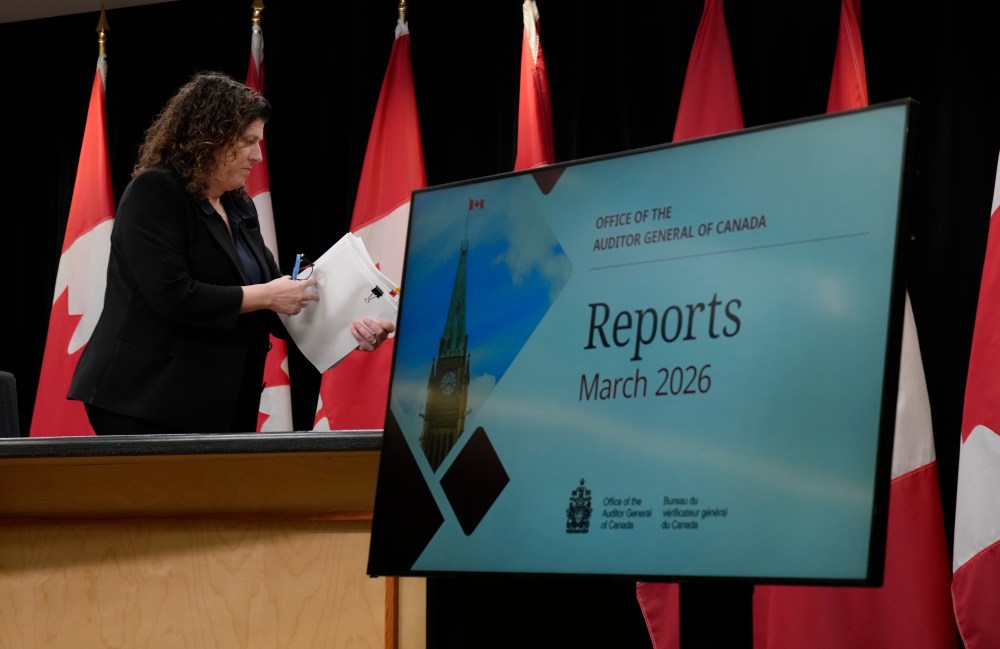
In a new report released Monday, Hogan said her audit found the immigration department does not have the resources to meet the demand for student visa investigations — and simply didn’t act when claims of fraud came up in hundreds of approved applications.
Immigration Minister Lena Diab told the House of Commons immigration committee Monday that the report offers “a preliminary look” at a four-years-plus plan to reform the international student program. She said she was minister for only four of the 18 months covered by the audit.
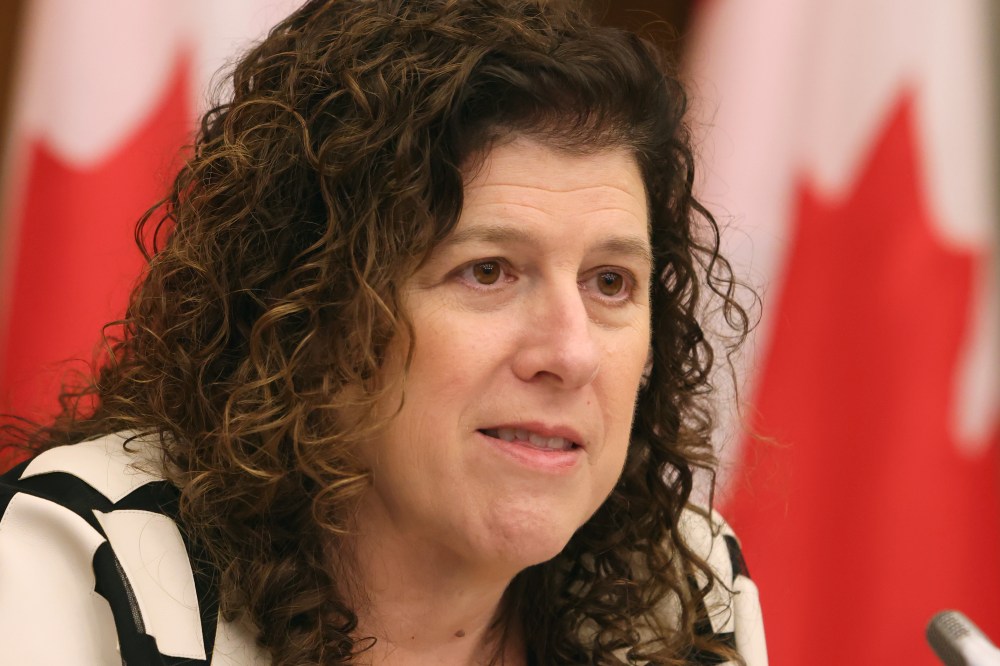
“The early audit cannot offer a complete picture of these reforms. It can inform, though, what we do as a go-forward basis,” Diab told the committee.
An audit of the program released Monday says about 150,000 cases in 2023 and 2024 were flagged because the student visa holders may not have been complying with the terms of their study permits. Such files are most often flagged because students are not attending the academic institutions that accepted them.
The report says the federal government launched only about 4,000 investigations of those flagged cases — and 1,600 of those were marked as inconclusive because the student in question did not respond to Immigration, Refugees and Citizenship Canada.
Hogan said during a Monday news conference that she expects the department to complete these investigations, even if student visa holders don’t respond to questions.
“That should be happening no matter where you are in the reforms. That should be acting on the data you have — to preserve the integrity of programs should be something you worry about at the start when you get an application, throughout the application and when the permit has expired,” Hogan said.
IRCC makes two attempts to reach out to students involved in these investigations before a file is marked inconclusive, an official from the auditor’s office explained in a background briefing. The official said this process takes about six months.
Immigration department officials told the auditor they only have the budget to conduct about 2,000 of these investigations annually until 2028.
Diab said during a Monday news conference that the department will begin “centralizing” and “streamlining” investigations. She did not say how many more investigations she expects to be completed annually and if the budget for investigations is being increased.
The department reports about 1,400 students whose files were investigated were found to be studying at the right school, while just 50 were found to be non-compliant. Another 915 investigations were cancelled and 37 investigations are still in progress, the auditor reports.
The department also did not follow up on 800 cases of applicants for approved study permits using bogus documents or misrepresented information on their applications between 2018 and 2023, Hogan found.
“There (are) clearly tools in their tool kit, things they can do when fraudulent documentation was used or if a student isn’t following the conditions of their permit. We didn’t see them consider that in these 800 cases,” Hogan said.
“Their own risk process identified these 800 cases, and then no action was taken.”
The report said this lack of action is a source of “serious concern” because the department would have no warning on file if any of these individuals made immigration applications.
The audit says 92 per cent of these problematic visa holders applied for some other kind of immigration status to stay in Canada, and 456 of them received approvals, including 105 receiving permanent residency.
When asked specifically about these permanent residency approvals, Diab said student visa extension applications are all reviewed.
“At any point that there’s an extension of any of the students that were under the direct student program, they are being reviewed,” she said.
Michelle Rempel Garner, the Conservative immigration critic, was watching Diab’s press conference and said responses like the minister’s will make more Canadians lose faith in the immigration system.
“The fact that she’s coming out here and cannot come up with a few key clear deliverables to change the system and ensure that all of these cases are being reviewed is crazy to me,” Rempel Garner said.
“Some of the things she said were just wrong. For example, she said that some of these permits were extended, but they got (permanent residency). That’s not the same thing.”
The audit also found that IRCC has no way of knowing how many international students with expired visas are leaving Canada.
The report looked at 549,000 people with expiring study permits in 2024 and found that 93 per cent of them were allowed to remain in Canada, leaving 39,500 who were ordered to leave the country.
The auditor general’s office worked with the Canada Border Services Agency to confirm that only about 16,000 of those expired 2024 student visa holders actually left the country.
Diab said the department will share more information on expiring student visas with the CBSA, as the auditor recommended.
The annual Immigration Levels Plan outlines a broader goal of reducing the number of temporary immigrants in Canada to less than five per cent of the total population by the end of 2027. A key part of this plan is putting hard caps on the number of international students admitted to Canada each year.
The auditor’s report says that new student visa approvals were far below their predicted levels in both 2024 and 2025.
Roughly 150,000 student visas were approved in 2024 when the anticipated target was nearly 349,000 visas — a 41 per cent approval rate. Only 50,000 had been approved as of Sept. 30, 2025, when officials had expected to approve just over 255,000 visas for the year — a 38 per cent approval rate.
The study permit approval rate was 58 per cent in 2023 and 54 per cent in 2022, the auditor’s report says.
The immigration department says it is not sure why approval rates are dropping, the report adds.
The auditor investigated whether the decline could be linked to new letter-of-acceptance verification rules or increased financial requirements but found neither measure could account for the extent of the approval drop.
The report found that all provinces saw larger-than-anticipated declines in study permit approvals, with all provinces but Quebec seeing reductions in study permit approvals of more than 59 per cent in 2024.
The department reported it expected to see a fluctuation of about 10 per cent in study permit approvals in all provinces except for B.C. and Ontario.
This report by The Canadian Press was first published March 23, 2026.