
Indigenous women’s groups call for funding to limit risks to safety, prosperity
Advertisement
Read this article for free:
or
Already have an account? Log in here »
We need your support!
Local journalism needs your support!
As we navigate through unprecedented times, our journalists are working harder than ever to bring you the latest local updates to keep you safe and informed.
Now, more than ever, we need your support.
Starting at $15.99 plus taxes every four weeks you can access your Brandon Sun online and full access to all content as it appears on our website.
Subscribe Nowor call circulation directly at (204) 727-0527.
Your pledge helps to ensure we provide the news that matters most to your community!
To continue reading, please subscribe:
Add Brandon Sun access to your Free Press subscription for only an additional
$1 for the first 4 weeks*
- Enjoy unlimited reading on brandonsun.com
- Read the Brandon Sun E-Edition, our digital replica newspaper
*Your next Free Press subscription payment will increase by $1.00 and you will be charged $20.95 plus GST for four weeks. After four weeks, your payment will increase to $24.95 plus GST every four weeks.
Read unlimited articles for free today:
or
Already have an account? Log in here »
OTTAWA – Advocates are calling for long-term, stable federal funding to safeguard Indigenous women and girls and warning the federal government’s major projects push could place them at higher risk.
Hilda Anderson-Pyrz, president of the National Family and Survivors Circle, said groups like hers still don’t know if they’ll receive continued funding from Ottawa. She said that uncertainty undermines their efforts to address the crisis of missing and murdered Indigenous women and girls.
“When we’re looking at the safety and human security of Indigenous women, girls and two-spirit and gender-diverse people, it’s really critical that organizations who are doing this important work — and even through the lens of prevention and economic participation — that they receive long-term, sustainable and equitable funding,” she said.
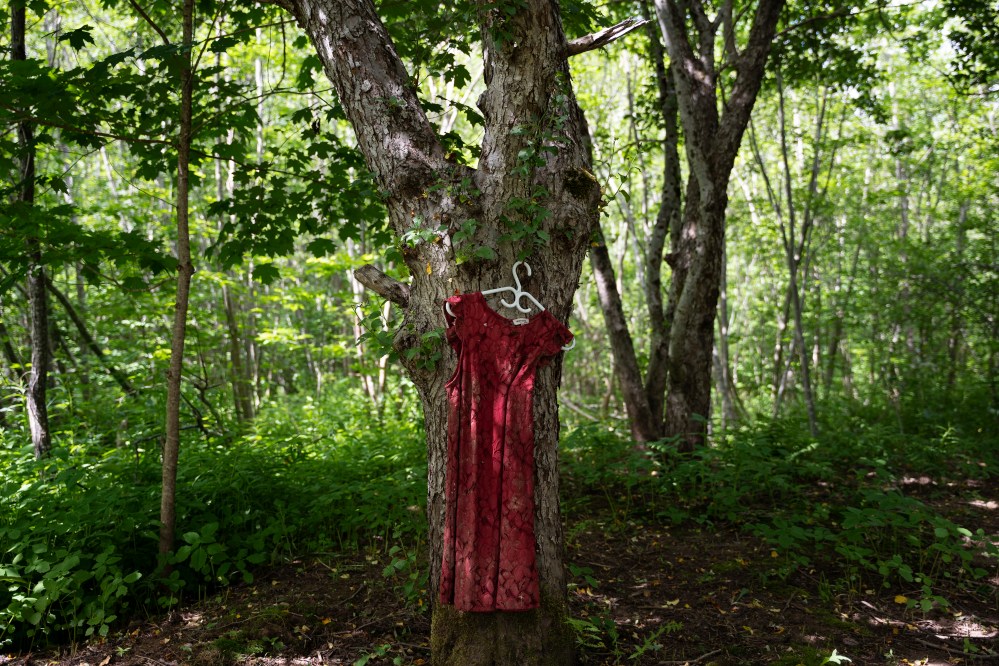
“They’re severely underfunded. There’s a real power imbalance.”
Anderson-Pyrz joined the Native Women’s Association of Canada, Les Femmes Michif Otipemisiwak, Giganawenimaanaanig and NDP MP Leah Gazan on Parliament Hill Wednesday to call for continued funding for programs and services.
They said piecemeal federal funding agreements with no long-term commitments hinder their efforts to plan and to support Indigenous women.
Anderson-Pyrz told The Canadian Press on Tuesday the federal government must take action to protect Indigenous women and girls — especially as it ramps up plans for resource extraction and infrastructure projects that could put them in harm’s way.
“If our voices aren’t at the table then, as the prime minister often says, we’re on the menu,” Anderson-Pyrz said.
Amnesty International has reported that binge drinking and drug use among transient resource sector workers, combined with high housing prices and a shortage of childcare services, can lead to the exploitation of Indigenous women and girls and make it harder for them to leave abusive relationships.
A 2019 inquiry into missing and murdered Indigenous women and girls concluded Indigenous women are 12 times more likely to go missing or be murdered than their non-Indigenous counterparts.
The final report was culled from the testimony of more than 2,380 family members, survivors, experts and knowledge-keepers brought together over two years to study the crisis and propose solutions.
Family members told the inquiry how intergenerational trauma and poverty compound the threats facing Indigenous women and girls, while knowledge-keepers described how women, through colonization, have been displaced from their traditional roles.
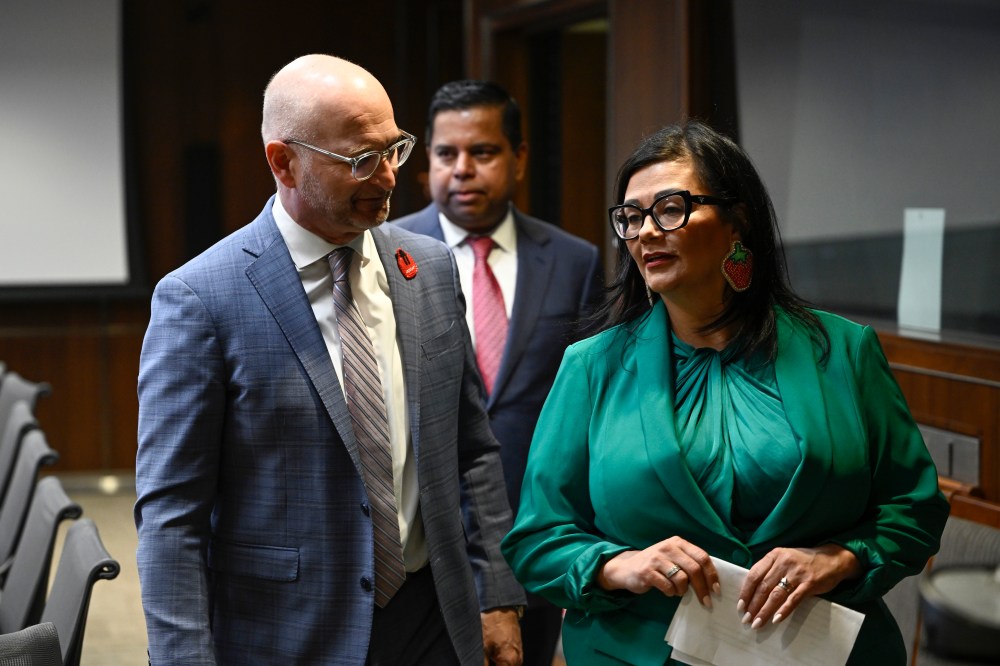
The commission brought forward 231 calls to action to address what it described as a genocide but seven years later, little progress has been made implementing them.
Anderson-Pyrz said the problem will only get worse without federal help.
“Today our right to life is threatened by the lack of political will, and it will remain so unless the government enacts the 231 calls for justice … Prevention means investing in Indigenous solutions — safe housing, community-based supports, culturally-grounded services that stop violence before it happens,” Anderson-Pyrz told the news conference Wednesday.
“We have seen short-term funding decisions that undermine the very organizations working to prevent violence and support families and survivors. The cost of this violence is measured in lives lost, families shattered.”
In a media statement, a spokesperson for Crown-Indigenous Relations Minister Rebecca Alty said the government takes the crisis of missing and murdered Indigenous women and girls seriously.
“Funding discussions are ongoing and are in no way impacted by the government’s comprehensive expenditure review,” wrote spokesperson Alec Wilson. He pointed to an interim funding agreement between the federal government and Anderson-Pyrz’s organization and said the government “invited” the group to submit a three-year funding proposal.
Anderson-Pyrz said she has not received that funding or any confirmation of it.
“We know there is more to do. Communities want to see faster progress and we share that urgency. This is about lasting, structural change,” Wilson said.
A recent report drafted by the Ontario Native Women’s Association for the United Nations Human Rights Committee says Canada’s justice and social systems continue to fail Indigenous women and girls.
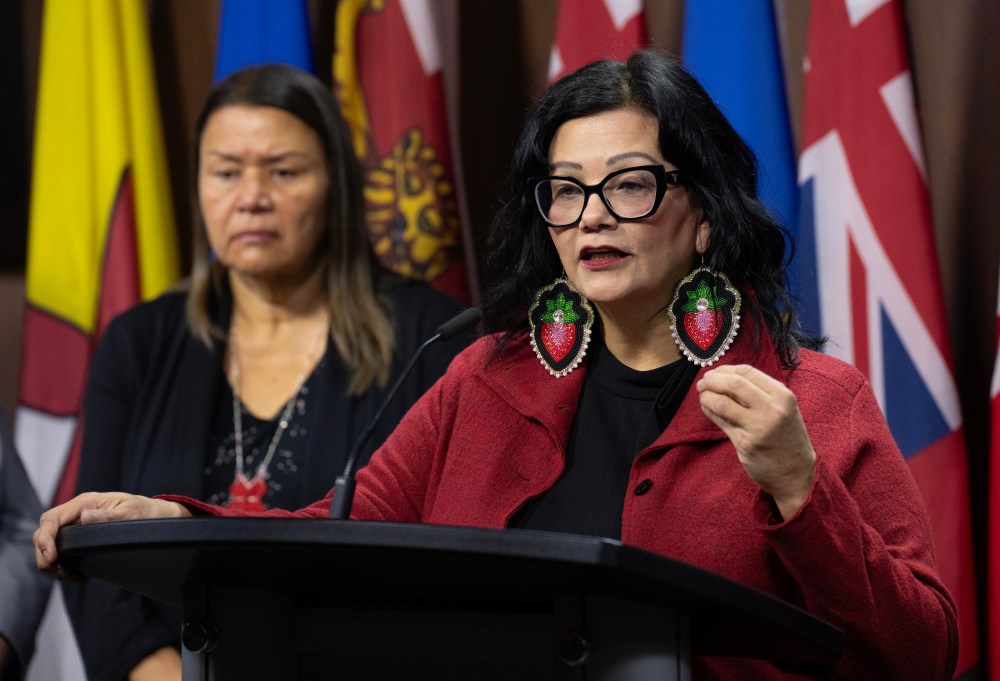
“Our lives continue to be devalued and our safety dismissed by governments and by the very systems intended to protect the people of this country,” the report says. “Canada’s continued inaction is a form of systemic discrimination and structural violence against Indigenous women.”
That same UN committee said in a report last month it was “concerned about the limited substantive progress achieved to date and notes the need for additional human and financial resources to ensure effective and sustained implementation.”
Gazan said at the news conference Prime Minister Mark Carney and his government are “turning a blind eye on this violence.”
“We are of national interest, and it’s time that the Liberal government and Prime Minister Carney stop leaving us out of the table,” she said.
This report by The Canadian Press was first published April 7, 2026.