
Frank Stronach’s lawyers argue abuse of process in preparing complainants
Advertisement
Read this article for free:
or
Already have an account? Log in here »
We need your support!
Local journalism needs your support!
As we navigate through unprecedented times, our journalists are working harder than ever to bring you the latest local updates to keep you safe and informed.
Now, more than ever, we need your support.
Starting at $15.99 plus taxes every four weeks you can access your Brandon Sun online and full access to all content as it appears on our website.
Subscribe Nowor call circulation directly at (204) 727-0527.
Your pledge helps to ensure we provide the news that matters most to your community!
To continue reading, please subscribe:
Add Brandon Sun access to your Free Press subscription for only an additional
$1 for the first 4 weeks*
- Enjoy unlimited reading on brandonsun.com
- Read the Brandon Sun E-Edition, our digital replica newspaper
*Your next Free Press subscription payment will increase by $1.00 and you will be charged $20.95 plus GST for four weeks. After four weeks, your payment will increase to $24.95 plus GST every four weeks.
Read unlimited articles for free today:
or
Already have an account? Log in here »
Hey there, time traveller!
This article was published 09/04/2026 (185 days ago), so information in it may no longer be current.
TORONTO – Prosecutors and police were “unacceptably negligent” in capturing what went on during meetings to prepare complainants for Frank Stronach’s sexual assault trial, the businessman’s lawyers argued Thursday as the months-long proceedings came to a close.
Defence lawyers brought an abuse of process motion in the final stretch of legal submissions at the auto parts magnate’s Toronto trial, arguing important pieces of evidence were irretrievably lost because police officers and Crown attorneys who were present failed to document the meetings in detail.
All seven of the original complainants recorded new police statements containing new information after their final meetings with prosecutors in January, just weeks before the trial was set to start, court heard.
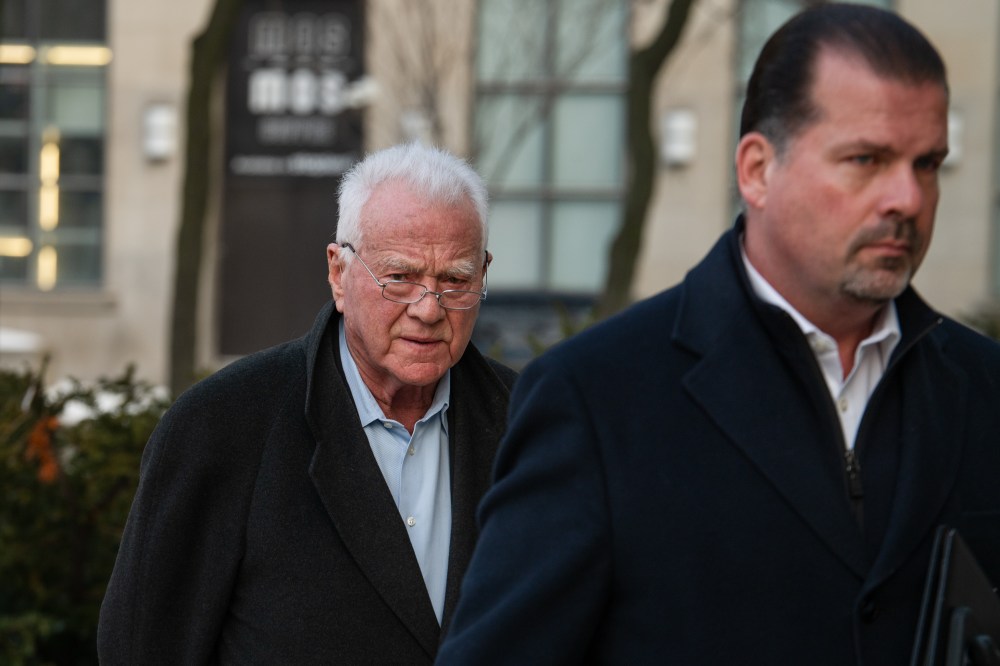
Defence lawyer Leora Shemesh argued Thursday that for all but one meeting, police didn’t chronicle how the new evidence first arose or what the Crown said, making it impossible to challenge the complainants on those conversations in cross-examination.
“We’re entitled to know if the complainants had newfound memories or whether or not they were guided or probed, whether or not they needed the assistance of the Crown to have gotten to that memory,” she said.
“That’s what we’re missing.”
Crown attorney David Tice argued the defence was able to cross-examine the complainants on what happened during the meetings, and just because they believe they could have done so better with more detailed notes doesn’t mean there was a denial of justice.
There is no requirement to record verbatim, and courts have found it’s enough to give a summary along with any new information, he said.
“The cases don’t say the context of everything that may have been said before, after, et cetera, is what’s required here,” he said.
Stronach, who is 93, pleaded not guilty to 12 charges stemming from alleged incidents that took place decades ago involving seven complainants.
As the trial went on, prosecutors sought to withdraw five charges related to three of the women, then agreed with the defence that Stronach should be found not guilty on all but one of those charges. That left Stronach with seven charges related to four women.
Last week, the judge presiding over the case said she “couldn’t possibly” convict the businessman based on the evidence of one of the remaining complainants, whose testimony she deemed unreliable.
Two of the charges are related to that complainant, who alleged Stronach raped her in the early 1980s.
The abuse of process motion largely focuses on the remaining three complainants.
The defence initially said it would seek a stay of proceedings but last week indicated that was no longer the case, suggesting the alleged abuse of process should instead be considered in weighing the Crown’s evidence.
At the outset of the trial in February, Shemesh said the motion would include allegations that some of the complainants were coached by prosecutors before trial.
On Thursday, the defence lawyer said she believes the Crown elicited new memories from the complainants by asking “probing questions,” which police had not done during their investigation.
“Some of it may have just been innocent questions, but I don’t know that,” she said.
Tice, the Crown attorney, said neither the police officers’ notes nor their testimony supports the argument that prosecutors asked probing questions. “That’s simply not the evidence,” he said.
He also rejected the defence’s argument that evidence had been lost simply because it was not captured.
“There’s nothing lost here,” Tice said.
Superior Court Justice Anne Molloy also drew a distinction between the Crown having evidence then discarding it, and never documenting it in the first place.
Molloy, who is hearing the case without a jury, also noted that Shemesh’s suggestion to have preparatory meetings recorded by audio or video marks a dramatic change from the normal procedure among police forces.
The judge said she hopes to have a verdict when the case returns to court on June 19.
“It’s a very difficult decision to write – this is not simple stuff,” the judge said.
Stronach, the founder of the auto parts manufacturer Magna International, is also set to face trial in nearby Newmarket, Ont., later this year.
This report by The Canadian Press was first published April 9, 2026.