
Feds sending support to Manitoba First Nation at risk of severe flooding
Advertisement
Read this article for free:
or
Already have an account? Log in here »
We need your support!
Local journalism needs your support!
As we navigate through unprecedented times, our journalists are working harder than ever to bring you the latest local updates to keep you safe and informed.
Now, more than ever, we need your support.
Starting at $15.99 plus taxes every four weeks you can access your Brandon Sun online and full access to all content as it appears on our website.
Subscribe Nowor call circulation directly at (204) 727-0527.
Your pledge helps to ensure we provide the news that matters most to your community!
To continue reading, please subscribe:
Add Brandon Sun access to your Free Press subscription for only an additional
$1 for the first 4 weeks*
- Enjoy unlimited reading on brandonsun.com
- Read the Brandon Sun E-Edition, our digital replica newspaper
*Your next Free Press subscription payment will increase by $1.00 and you will be charged $20.95 plus GST for four weeks. After four weeks, your payment will increase to $24.95 plus GST every four weeks.
Read unlimited articles for free today:
or
Already have an account? Log in here »
WINNIPEG – The federal government is sending help to a Manitoba First Nation as it faces calls from the community and the province to mobilize troops to prepare for the threat of devastating floods.
Federal Emergency Management Minister Eleanor Olszewski says she approved the deployment of “humanitarian personnel” to Peguis First Nation, located along the Fisher River north of Winnipeg.
“I have spoken with Premier Wab Kinew and we will work closely with the province and Peguis First Nation going forward,” Olszewski said Thursday on the social media platform X.
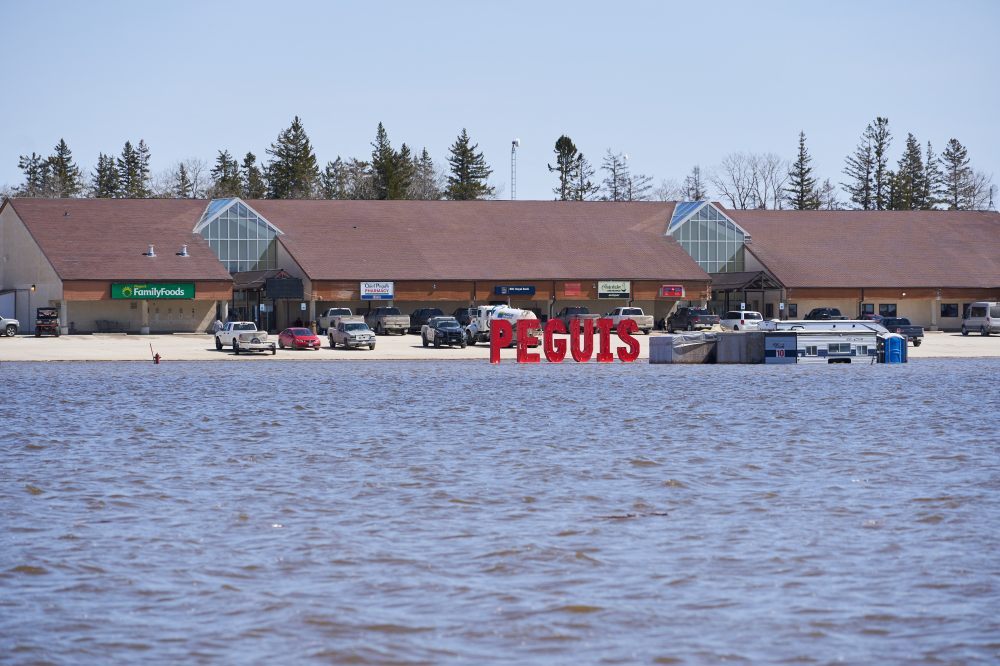
The province’s spring flood outlook indicates the Interlake region, which Peguis is part of, is at risk of flooding due to a large accumulation of snow, a delayed melt and an increased likelihood of rapid spring runoff.
The First Nation has been advised that if conditions remain unfavourable it could see water levels similar to the 2022 flood, considered one of the worst in the community and one that led to thousands being displaced and severe infrastructure damage.
“Peguis is left with little time to safeguard the community. The runoff water is expected to start on April 19, or earlier,” said Chief Stan Bird. “Once the runoff starts, Peguis will have only a few days to react.”
Work has already started on breaking up ice along the river and with sandbagging, but recent snowfall and cooler temperatures have hampered efforts.
Bird wants the Canadian Armed Forces to provide technical support as the community prepares for the floodwaters. Kinew echoed those calls. In an interview with CBC he said the province has put in a request for military assistance.
Public Safety Canada said personnel will complete an assessment and additional resources could be deployed later on.
A team of former military members and first responders from the non-profit Team Rubicon is expected to provide aid in the community, said Lisa Naylor, Manitoba’s minister of transportation and infrastructure.
Naylor said the province has been working on additional prevention measures, including allocating $1 million to Peguis to pay some of the costs.
“The department has been cutting ice, removing snow, steaming out culverts, everything we could think of to do in advance to try and prevent it,” she said.
Peguis First Nation has dealt with several floods in recent decades. The community was relocated in 1907 — from good farming land close to Winnipeg to its current location on a flood-prone river delta — under a surrender of land to the federal government that was later deemed illegal.
“We shouldn’t have to experience this (and) plan (for) this year in and year out. Our people’s lives are put on hold,” said Bird.
Leadership has long called for permanent flood protection. Naylor said a study is underway to determine options, but that it will ultimately be up to the community to decide how to proceed.
This report by The Canadian Press was first published April 9, 2026.
— With files from Steve Lambert