
Non-profit group says the number of unhoused people in Winnipeg is rising
Advertisement
Read this article for free:
or
Already have an account? Log in here »
We need your support!
Local journalism needs your support!
As we navigate through unprecedented times, our journalists are working harder than ever to bring you the latest local updates to keep you safe and informed.
Now, more than ever, we need your support.
Starting at $15.99 plus taxes every four weeks you can access your Brandon Sun online and full access to all content as it appears on our website.
Subscribe Nowor call circulation directly at (204) 727-0527.
Your pledge helps to ensure we provide the news that matters most to your community!
To continue reading, please subscribe:
Add Brandon Sun access to your Free Press subscription for only an additional
$1 for the first 4 weeks*
- Enjoy unlimited reading on brandonsun.com
- Read the Brandon Sun E-Edition, our digital replica newspaper
*Your next Free Press subscription payment will increase by $1.00 and you will be charged $20.95 plus GST for four weeks. After four weeks, your payment will increase to $24.95 plus GST every four weeks.
Read unlimited articles for free today:
or
Already have an account? Log in here »
WINNIPEG – The Manitoba government said Monday it remains focused on its promise to eliminate chronic homelessness, even as new numbers suggested the problem in Winnipeg is growing.
A report from End Homelessness Winnipeg, a non-profit umbrella organization that works with dozens of front-line groups, said there were just over 4,400 people who were considered chronically homeless in March — an increase of 104 from the previous month.
People are finding housing, the report said, but at a slower rate than the number of people becoming newly unhoused.
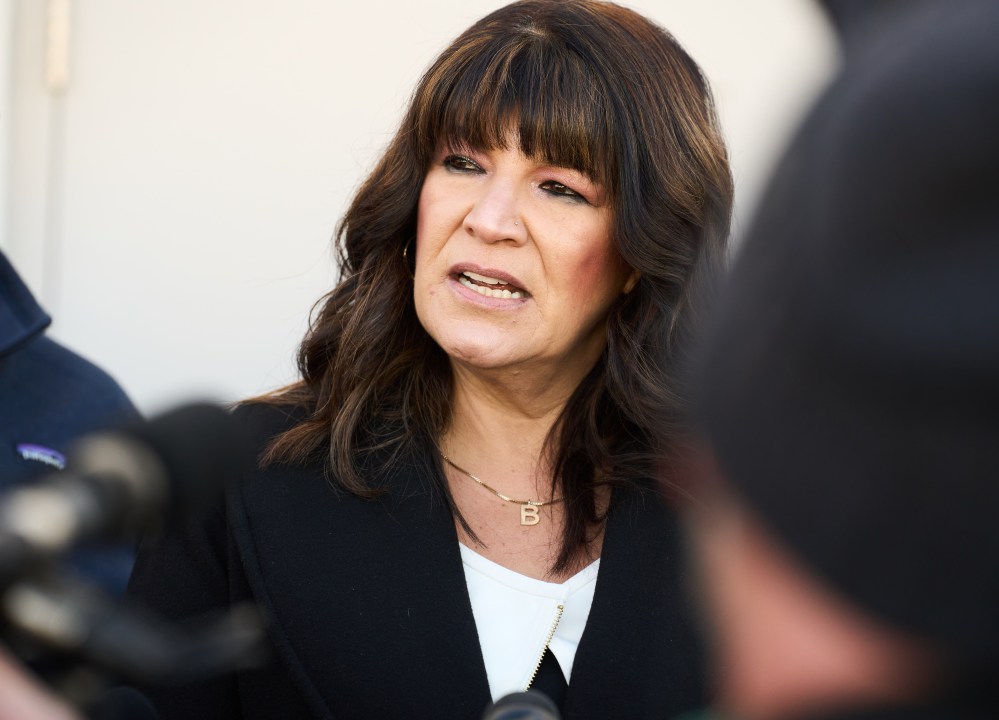
“It’s really clear we need to do more. We need to get ahead of this, and right now we are running behind,” Jennifer Moore Rattray, the non-profit’s chief executive officer, said.
The NDP government, elected in 2023, campaigned on a promise to end chronic homelessness within eight years.
Bernadette Smith, the minister of housing, addictions and homelessness, said the government has opened new social-housing units, and more than 700 social-housing and affordable units are under construction.
More than 200 people have been moved out of encampments, she added.
“We’ve taken boards off of over 2,100 Manitoba Housing units,” Smith said.
End Homelessness Winnipeg said the data changes over a one-year period are even more stark — 2,550 more people experiencing homelessness, and 1,300 people newly considered chronically homeless.
Chronic homelessness refers to having been homeless for at least 180 days over a one-year period, or 18 months over a three-year period.
The numbers are drawn from a real-time data set used by shelters and other service agencies across Winnipeg that provide supports.
Rattray cited a number of factors for the growing numbers. Governments over many years have not spent enough in affordable housing, she said. There are also increasing problems with addiction.
“I think we’re looking at significant mental health and wellness challenges. I think we’re looking at increasingly addictive drugs. I think we’re looking at intergenerational trauma,” she said.
Smith blamed much of the problem on the previous Progressive Conservative government, which she said did not build social housing units.
The Progressive Conservatives, now in Opposition, said the NDP should be more focused on opening up new addiction treatment spots instead of funding a planned supervised consumption site, slated to open later this year in Winnipeg.
“The NDP answer to addictions is to provide a space for (people) to consume more drugs, at five times what they’re investing in recovery,” Tory Leader Obby Khan said.
This report by The Canadian Press was first published April 13, 2026