
Manitoba’s former chief psychiatrist applies for court challenge of detention law
Advertisement
Read this article for free:
or
Already have an account? Log in here »
We need your support!
Local journalism needs your support!
As we navigate through unprecedented times, our journalists are working harder than ever to bring you the latest local updates to keep you safe and informed.
Now, more than ever, we need your support.
Starting at $15.99 plus taxes every four weeks you can access your Brandon Sun online and full access to all content as it appears on our website.
Subscribe Nowor call circulation directly at (204) 727-0527.
Your pledge helps to ensure we provide the news that matters most to your community!
To continue reading, please subscribe:
Add Brandon Sun access to your Free Press subscription for only an additional
$1 for the first 4 weeks*
- Enjoy unlimited reading on brandonsun.com
- Read the Brandon Sun E-Edition, our digital replica newspaper
*Your next Free Press subscription payment will increase by $1.00 and you will be charged $20.95 plus GST for four weeks. After four weeks, your payment will increase to $24.95 plus GST every four weeks.
Read unlimited articles for free today:
or
Already have an account? Log in here »
WINNIPEG – Manitoba is defending its law allowing 72-hour detention of people high on methamphetamines and other drugs, as its former chief psychiatrist has applied for a court challenge arguing it could lead to wrongful detention.
Premier Wab Kinew said his government has done extensive research, and worked with psychiatrists and emergency room doctors to ensure the highest medical standards are in place and Charter rights aren’t violated.
“We invite the scrutiny. We invite people to challenge and to ask questions about Charter Rights and Freedoms,” the premier told reporters on Monday when questioned about a recent affidavit filed by Dr. James Simm, who served as the province’s head psychiatrist for two years.
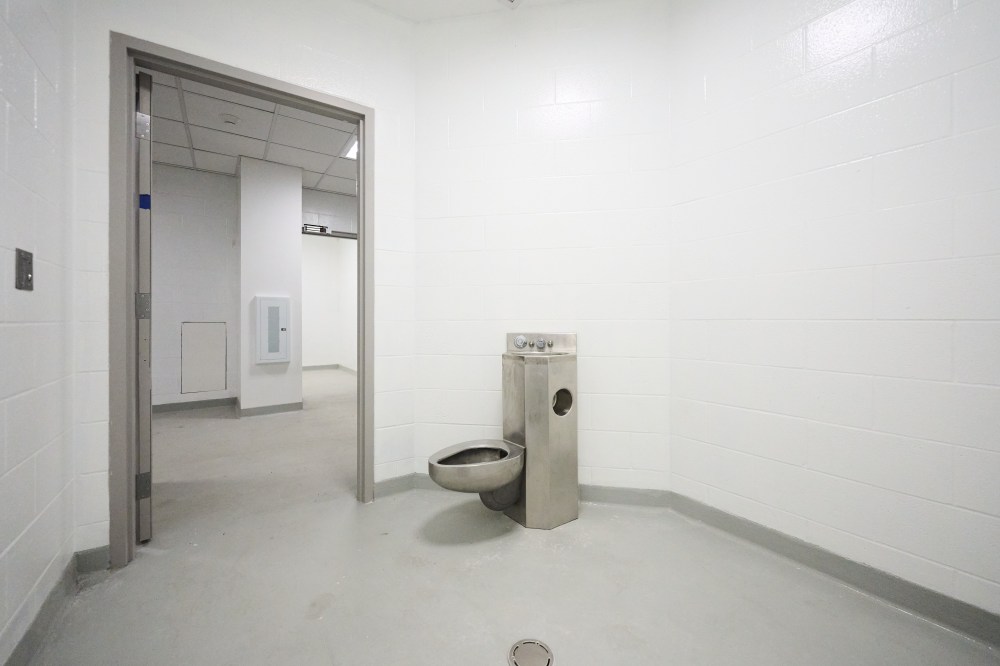
“We think that this approach will pass what should be a very high bar, because at the end of the day, this is about ensuring that the state, us as your provincial government, is taking the right approach when it comes to the needs of the many, balanced against trying to deliver a compassionate response to a very vulnerable few.”
The province passed a law last year to extend the amount of time highly intoxicated people can be detained from 24 hours to 72 hours. The government said it was to deal with the longer-lasting effects of methamphetamines.
The new protective-care centre is run by Main Street Project, a non-profit that has for decades run a nearby 24-hour centre commonly called the “drunk tank.”
The centre has held 2,834 people under the influence of alcohol since Dec. 2, said the office of Bernadette Smith, minister of housing, addictions and homelessness.
It began accepting people under the influence of drugs on March 4, and has seen 11 people.
The average length of stay is just over five hours, with the longest detainment being 20.5 hours.
“Alcohol still continues to cause so much damage across our province,” said Kinew.
The law has been criticized by community groups and medical professionals who argue that holding people against their will for up to three days criminalizes addiction.
Simm, a psychiatrist with more than 25 years’ experience, has filed an application in Court of King’s Bench to question the constitutional validity of portions of the legislation, which he argues violates Charter rights.
“The act creates a detention regime that poses foreseeable risks to life, liberty and security of the person, particularly for individuals with mental illness, addictions or medical instability,” Simm said in the application filed on Wednesday.
It names the attorneys general of Manitoba and Canada.
In it, Simm argues the current framework may result in prolonged confinement that could lead to a greater risk that serious medical or psychiatric conditions will go unrecognized and untreated.
Simm also expresses concern that symptoms of drug-induced psychosis could mimic those of people who are having a mental-health crises or live with a disability, “increasing the risk that individuals who are not intoxicated may be detained.”
The province has said that people will have to be cleared by a hospital before being transferred to the centre (and) people will be assessed frequently and will be offered follow-up care as they prepare to depart.
The law does not mandate proper mechanisms for withdrawal management, the application said.
Simm argues the law authorizes the use of seclusion-like environments without requiring physician involvement and mandatory medical evaluation.
“In my opinion, this proceeding raises serious justiciable issues and is an appropriate case for public interest standing.”
Simm calls for changes to be made the law that include mandatory medical assessments before someone is detained, people are made aware verbally and in writing that they have a right to contact counsel and criteria be developed that doesn’t solely rely on behavioural impressions.
This report by The Canadian Press was first published April 20, 2026.