
Ottawa has boosted monitoring of Iran’s threats to diaspora in Canada, official says
Advertisement
Read this article for free:
or
Already have an account? Log in here »
We need your support!
Local journalism needs your support!
As we navigate through unprecedented times, our journalists are working harder than ever to bring you the latest local updates to keep you safe and informed.
Now, more than ever, we need your support.
Starting at $15.99 plus taxes every four weeks you can access your Brandon Sun online and full access to all content as it appears on our website.
Subscribe Nowor call circulation directly at (204) 727-0527.
Your pledge helps to ensure we provide the news that matters most to your community!
To continue reading, please subscribe:
Add Brandon Sun access to your Free Press subscription for only an additional
$1 for the first 4 weeks*
- Enjoy unlimited reading on brandonsun.com
- Read the Brandon Sun E-Edition, our digital replica newspaper
*Your next Free Press subscription payment will increase by $1.00 and you will be charged $20.95 plus GST for four weeks. After four weeks, your payment will increase to $24.95 plus GST every four weeks.
Read unlimited articles for free today:
or
Already have an account? Log in here »
OTTAWA – Federal officials have ramped up their monitoring of Tehran’s threats against members of the Iranian diaspora in Canada, a senior public safety executive said Tuesday at a conference in Ottawa.
“We’re keeping a very close eye on their actions,” Sébastien Aubertin-Giguère, the national counter-foreign interference coordinator and an associate assistant deputy minister at Public Safety Canada, said at the Ottawa Civic Space Summit.
“Especially the Iranians have a history of, whenever they feel challenged and whenever the diaspora gets active, they have a history of fighting back. And they have also, unfortunately, a history of lethal activities.”
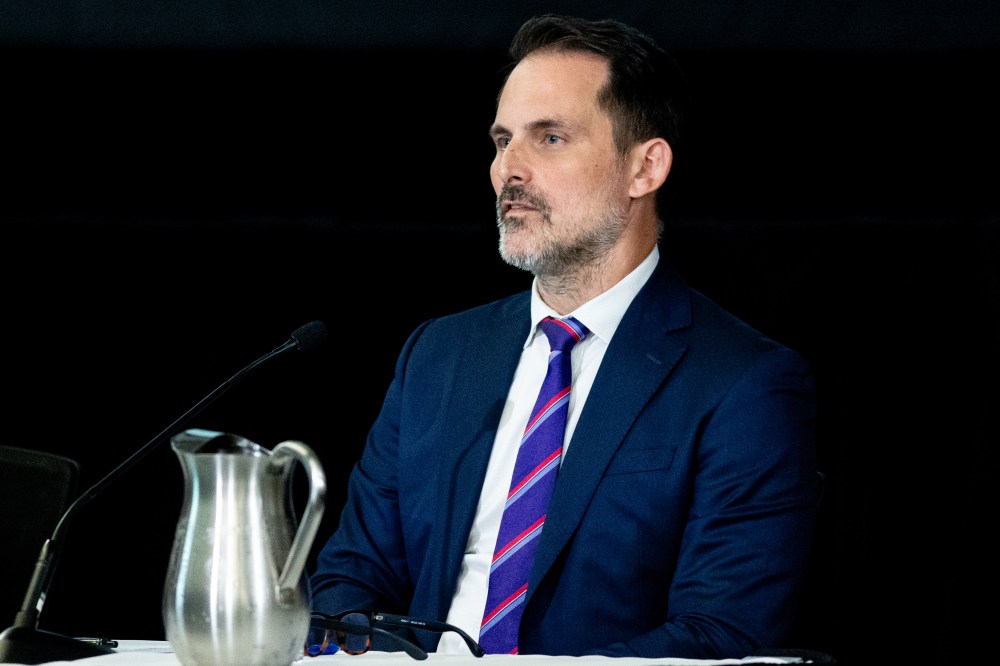
He made the remarks during a panel discussion at a conference held by Co-operation Canada, which represents dozens of Canadian non-profits working in international assistance.
Aubertin-Giguère said technology and rising geopolitical competition have made it cheaper and more advantageous for authoritarian states to reach out “beyond their borders to harass and try to silence the people they disagree with,” including in Canada.
“We’re seeing an uptick. At the same time, Canada’s demography is changing and it means that in many ways, Canada becomes a battleground for the political fights of the home country. So it creates sort of the conditions for transnational repression,” he said.
Aubertin-Giguère said Global Affairs Canada, Immigration, Refugees and Citizenship Canada and the Canada Border Services Agency “work together very closely” to detect threats at the borders and within the country.
“So if we know there’s some population at risk that is coming to Canada, we also make sure that we understand the security risks associated with these communities,” he said.
His comments come after the Conservatives and diaspora groups criticized the government over Iranian government officials showing up in Canada.
The head of the Canadian Security Intelligence Service said last November the agency had reprioritized resources to deal with “particularly alarming cases over the last year” emanating from Iran and its proxies.
The CBSA said last month it had received “approximately 280 tips” from individuals and groups about Iranians accused of links to Tehran, and the agency has come under fire for deporting just one Iranian official. The government says existing laws and protocols make it challenging to deport regime officials.
At this week’s conference, a handful of participants who have immigrated to Canada and work in the development sector said they have been targeted in Canada by actors affiliated with their countries of origin, including Iran. They claimed police do not seem to understand the threats they face.
Aubertin-Giguère said part of the challenge in dealing with transnational repression has been to detect threats emanating from the internet or diaspora communities, and to give police forces the tools to respond.
He pointed to the problem of “grey-zone activities” such as openly photographing someone’s house — something that is not a crime but could be part of a deliberate act of intimidation.
Noura Aljizawi, a researcher with the Citizen Lab at the University of Toronto, said democracies need to step up their outreach to diaspora groups, particularly given the access multiple regimes have to spyware and online surveillance of civilians at home and diaspora abroad.
“None of the democratic countries is doing enough,” she said. “It should be continuous work to end this and to combat all of these atrocities happening overseas.”
This report by The Canadian Press was first published April 22, 2026.