
Saskatchewan to change time bill in recognition of Alberta boundary communities
Advertisement
Read this article for free:
or
Already have an account? Log in here »
We need your support!
Local journalism needs your support!
As we navigate through unprecedented times, our journalists are working harder than ever to bring you the latest local updates to keep you safe and informed.
Now, more than ever, we need your support.
Starting at $15.99 plus taxes every four weeks you can access your Brandon Sun online and full access to all content as it appears on our website.
Subscribe Nowor call circulation directly at (204) 727-0527.
Your pledge helps to ensure we provide the news that matters most to your community!
To continue reading, please subscribe:
Add Brandon Sun access to your Free Press subscription for only an additional
$1 for the first 4 weeks*
- Enjoy unlimited reading on brandonsun.com
- Read the Brandon Sun E-Edition, our digital replica newspaper
*Your next Free Press subscription payment will increase by $1.00 and you will be charged $20.95 plus GST for four weeks. After four weeks, your payment will increase to $24.95 plus GST every four weeks.
Read unlimited articles for free today:
or
Already have an account? Log in here »
REGINA – Saskatchewan’s government has introduced a bill that would change how time is governed in communities that straddle the Alberta boundary.
Changes to the Time Act, tabled Thursday, would ensure Lloydminster and surrounding areas can stay on the same time as Alberta.
The Alberta government has introduced a bill to end annual clock changes starting Nov. 1 and then stay on daylight time year-round.
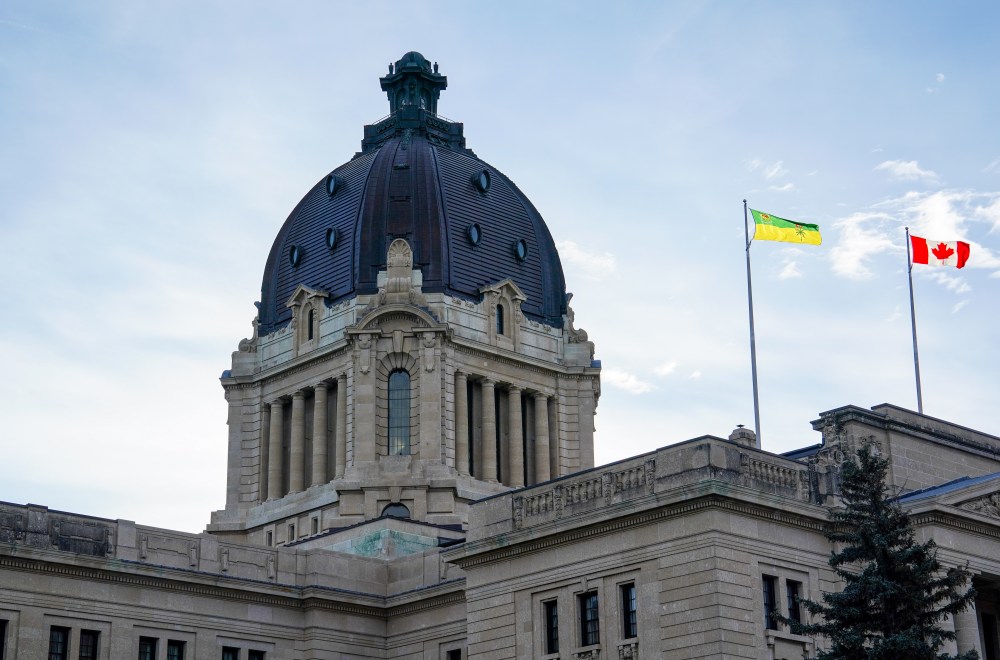
Should the bill pass, Alberta and Saskatchewan clocks would be on the same time 365 days a year.
But that would change things for a city like Lloydminster, which straddles the boundary between both provinces. Under Saskatchewan law, the city has to change its clocks twice a year in order to match the current time rules in Alberta.
Government member Colleen Young, who represents Lloydminster, told reporters Thursday the change is needed to ensure clocks on the Saskatchewan side don’t have to be changed once Alberta’s new rules are passed.
“Between Alberta, Saskatchewan and Lloydminster as a whole, we’d all be on the same time. Otherwise, (Lloydminster) is sitting all on their own,” she said.
But Young added she’s disappointed the Opposition NDP didn’t immediately support the legislation.
The bill didn’t receive unanimous approval to pass all stages Thursday. Instead, it is now to go through the regular legislative process.
“What a mess,” Young said. “We had an agreement (with the NDP) that it was going to be (passed). And now, at the last minute, I don’t know what happened here.”
Erika Ritchie, the NDP’s municipal affairs critic, told reporters there was no deal with the Saskatchewan Party government to pass the legislation immediately.
She said her party wants time to study the bill before approving it.
“We’re prepared to see this bill move through all stages next week,” Ritchie said. “I want to make sure that I’ve had the time to review it thoroughly, that I’ve had the opportunity to reach out to stakeholders.”
Gerald Aalbers, the mayor of Lloydminster, said in a government news release he welcomes changes in the legislation.
“While our residents have long been used to running on ‘Lloydminster time,’ the differing provincial time zones often prove a little tricky for those visiting our city for work and pleasure,” he said.
Young said clock changes have been a challenge for her constituents.
“Families taking kids to sport activities, people who have businesses that have to leave the community or come into the community, are always … working on different times. This (legislation) would have fixed it,” she said.
This report by The Canadian Press was first published April 30, 2026.