
From Supreme Court justice to governor general: who is Louise Arbour?
Advertisement
Read this article for free:
or
Already have an account? Log in here »
We need your support!
Local journalism needs your support!
As we navigate through unprecedented times, our journalists are working harder than ever to bring you the latest local updates to keep you safe and informed.
Now, more than ever, we need your support.
Starting at $15.99 plus taxes every four weeks you can access your Brandon Sun online and full access to all content as it appears on our website.
Subscribe Nowor call circulation directly at (204) 727-0527.
Your pledge helps to ensure we provide the news that matters most to your community!
To continue reading, please subscribe:
Add Brandon Sun access to your Free Press subscription for only an additional
$1 for the first 4 weeks*
- Enjoy unlimited reading on brandonsun.com
- Read the Brandon Sun E-Edition, our digital replica newspaper
*Your next Free Press subscription payment will increase by $1.00 and you will be charged $20.95 plus GST for four weeks. After four weeks, your payment will increase to $24.95 plus GST every four weeks.
Read unlimited articles for free today:
or
Already have an account? Log in here »
OTTAWA – Louise Arbour has prosecuted international war criminals, sat as a justice on Canada’s highest court, and exposed human rights violations in multiple countries as United Nations high commissioner.
Next month she will add the King’s representative in Canada to her extensive resume as she prepares to become the country’s next governor general.
Prime Minister Mark Carney announced Tuesday that Arbour, 79, will succeed Gov. Gen. Mary Simon, who has served in the role since July 2021.
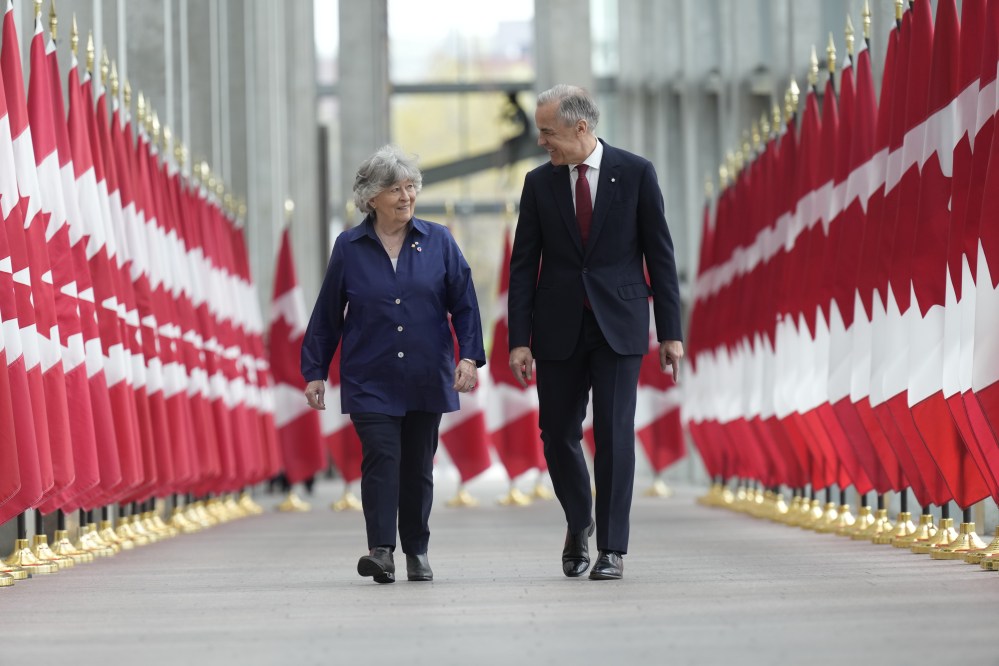
Arbour is a warm and engaging person with a keen sense of humour, said Université de Montréal rector Daniel Jutras, who worked alongside her at the Supreme Court.
“She cares about human interaction. She listens intently. She’s very funny as well — she’s incredibly funny,” said Jutras, a former executive legal officer at the top court.
“And the other thing, which I think is an absolutely critical quality for governor general, is that she’s extraordinarily humble.”
Jutras said Arbour’s experience as a judge gives her very valuable insight and preparation for her duties as governor general.
“She will understand that this is a delicate role, that there are inherent limits to what she can undertake, what she can contribute to Canadian politics and Canadian international relations,” he said.
“To me, that’s very significant.”
Arbour was born in Montreal and earned her law degree from the University of Montreal.
Among her early roles in the legal profession were as a clerk at the Supreme Court of Canada, and a teacher at Osgoode Hall Law School at York University in Toronto.
In 1987 she was appointed as an Ontario Supreme Court justice, before transitioning to the province’s court of appeal three years later.
Arbour rose to global prominence in the 1990s as the chief prosecutor on war crimes and genocide in both the former Yugoslavia and Rwanda. She was tapped for both roles by then-UN secretary-general Boutros Boutros-Ghali.
She became a Supreme Court of Canada justice in 1999, as the third woman to be called to the nation’s highest court.
In 2004, Arbour stepped down from the Supreme Court after she was appointed the UN High Commissioner for Human Rights. In that role, she spoke out against human rights violations around the world, including in the Darfur region of Sudan, Gaza, Afghanistan, Iraq and Chechnya.
Jonathan Prentice, who worked with Arbour in a number of capacities, including when she was commissioner for human rights at the UN, said he was happy to hear she would be governor general.
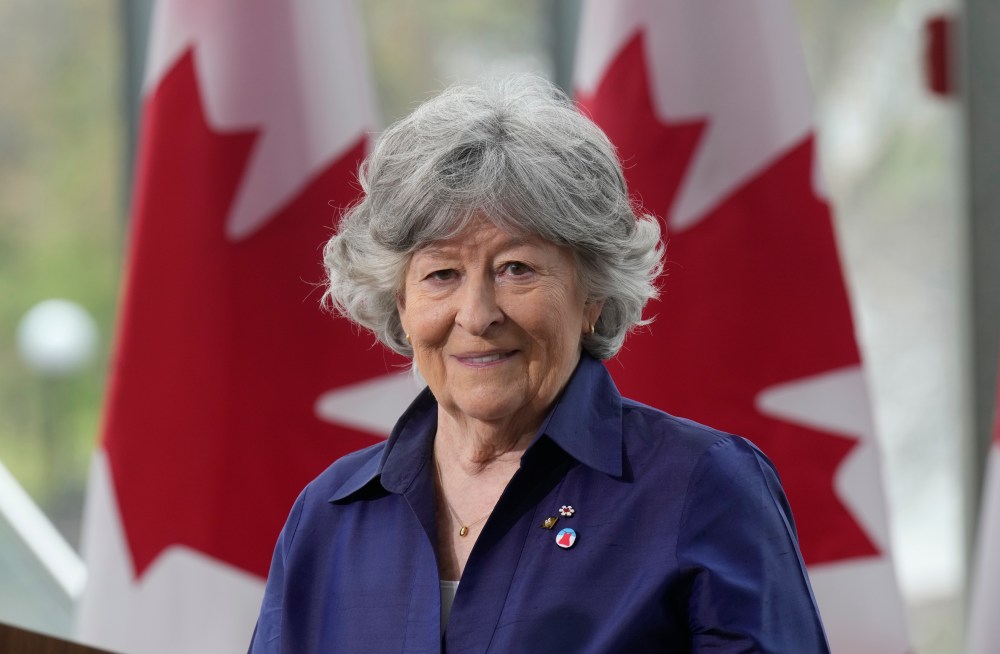
“I think she is a remarkable human being,” said Prentice, who now heads up a secretariat of the UN Network on Migration.
Arbour possesses a ferocious intelligence, clarity of thought and commitment to principle as well as an understanding that people have different views, he said.
“She explains her thinking and her positioning and the way she grounds it, not in emotion, but in principle, is really, really important, and is becoming ever more important in this world today,” he said. “It was remarkable to see her in action. I consider myself very lucky.”
Prentice added that Arbour is able to balance the importance and seriousness of work with having a life outside of her responsibilities.
“I think she’s got the whole package, and she’s great fun.”
Arbour returned to Canada in 2008 in order to spend more time with her family.
The former judge remained an active figure in retirement, leading the 2021 independent review of the Canadian Armed Forces’ handling of sexual assault, harassment and misconduct complaints.
She issued 48 recommendations in that report, including recommending that civilian investigators handle sexual misconduct complaints in the military. Legislation to make this change is still before the House of Commons.
When she is sworn in as governor general in early June, Arbour will also become the commander-in-chief of the Canadian Armed Forces.
This report by The Canadian Press was first published May 5, 2026.