
B.C. invests $1 million in ‘lightning reduction’ technology in bid to reduce fires
Advertisement
Read this article for free:
or
Already have an account? Log in here »
We need your support!
Local journalism needs your support!
As we navigate through unprecedented times, our journalists are working harder than ever to bring you the latest local updates to keep you safe and informed.
Now, more than ever, we need your support.
Starting at $15.99 plus taxes every four weeks you can access your Brandon Sun online and full access to all content as it appears on our website.
Subscribe Nowor call circulation directly at (204) 727-0527.
Your pledge helps to ensure we provide the news that matters most to your community!
To continue reading, please subscribe:
Add Brandon Sun access to your Free Press subscription for only an additional
$1 for the first 4 weeks*
- Enjoy unlimited reading on brandonsun.com
- Read the Brandon Sun E-Edition, our digital replica newspaper
*Your next Free Press subscription payment will increase by $1.00 and you will be charged $20.95 plus GST for four weeks. After four weeks, your payment will increase to $24.95 plus GST every four weeks.
Read unlimited articles for free today:
or
Already have an account? Log in here »
VANCOUVER – The British Columbia government is investing up to $1 million on field-testing new technology from a Vancouver company that aims to both predict and prevent lightning that may trigger wildfires.
Skyward Wildfire Technologies says it releases “lighting reduction material” into storms where high ignition risks are identified.
It says the material, which it describes as a “silica or basalt fibre with an aluminum nano-coating” enables electrical charge to “redistribute quietly inside the cloud,” instead of building up and creating a cloud-to-ground lightning strike.
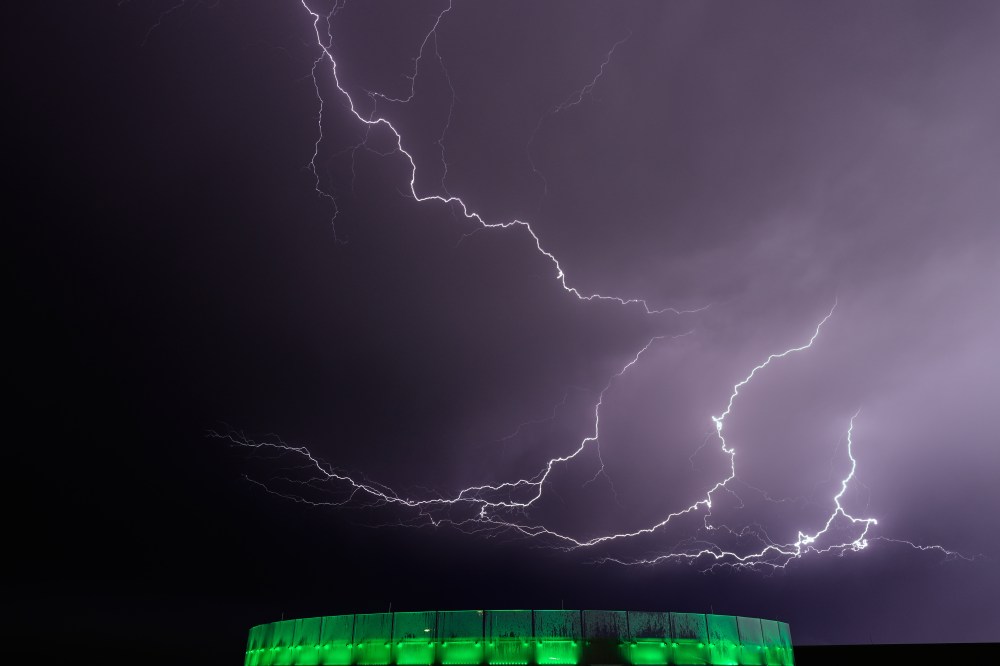
The B.C. Ministry of Jobs and Economic Growth says in a release that the province is delivering funding through Innovate BC and that Skyward also uses technology based on artificial intelligence to predict “areas of elevated lightning-caused wildfire risk.”
Lightning has been a leading cause of wildfires in B.C., with about 70 per cent of blazes covering 97 per cent of all areas burned in 2024 triggered by the phenomenon.
The province says the field tests will be used to determine if Skyward’s technology can meet B.C.’s wildfire prevention standards for potential application across Canada and beyond.
“The science isn’t new: lightning suppression research goes back to the 1960s,” the Skyward website says. “What’s new is the precision to deploy it only where and when a fire might otherwise start.”
Skyward says its lightning-reduction material is non-toxic and inert, and environmentally friendly compared to the release of thousands of litres of fire retardant or the smoke from a wildfire.
This report by The Canadian Press was first published May 7, 2026.