
Runny nose? Itchy? Experts say seasonal allergies worsening due to increase in pollen
Advertisement
Read this article for free:
or
Already have an account? Log in here »
We need your support!
Local journalism needs your support!
As we navigate through unprecedented times, our journalists are working harder than ever to bring you the latest local updates to keep you safe and informed.
Now, more than ever, we need your support.
Starting at $15.99 plus taxes every four weeks you can access your Brandon Sun online and full access to all content as it appears on our website.
Subscribe Nowor call circulation directly at (204) 727-0527.
Your pledge helps to ensure we provide the news that matters most to your community!
To continue reading, please subscribe:
Add Brandon Sun access to your Free Press subscription for only an additional
$1 for the first 4 weeks*
- Enjoy unlimited reading on brandonsun.com
- Read the Brandon Sun E-Edition, our digital replica newspaper
*Your next Free Press subscription payment will increase by $1.00 and you will be charged $20.95 plus GST for four weeks. After four weeks, your payment will increase to $24.95 plus GST every four weeks.
Read unlimited articles for free today:
or
Already have an account? Log in here »
A group of Canadian researchers says the amount of powdery pollen released by plants during their reproduction process has gone up across Canada in recent years and is exacerbating allergies from hay fever to hives.
Daniel Coates, director of Aerobiology Research Laboratories, which monitors pollen, said monitoring by his lab suggests pollen levels across Canada have doubled.
Climate change is partly to blame, he said.
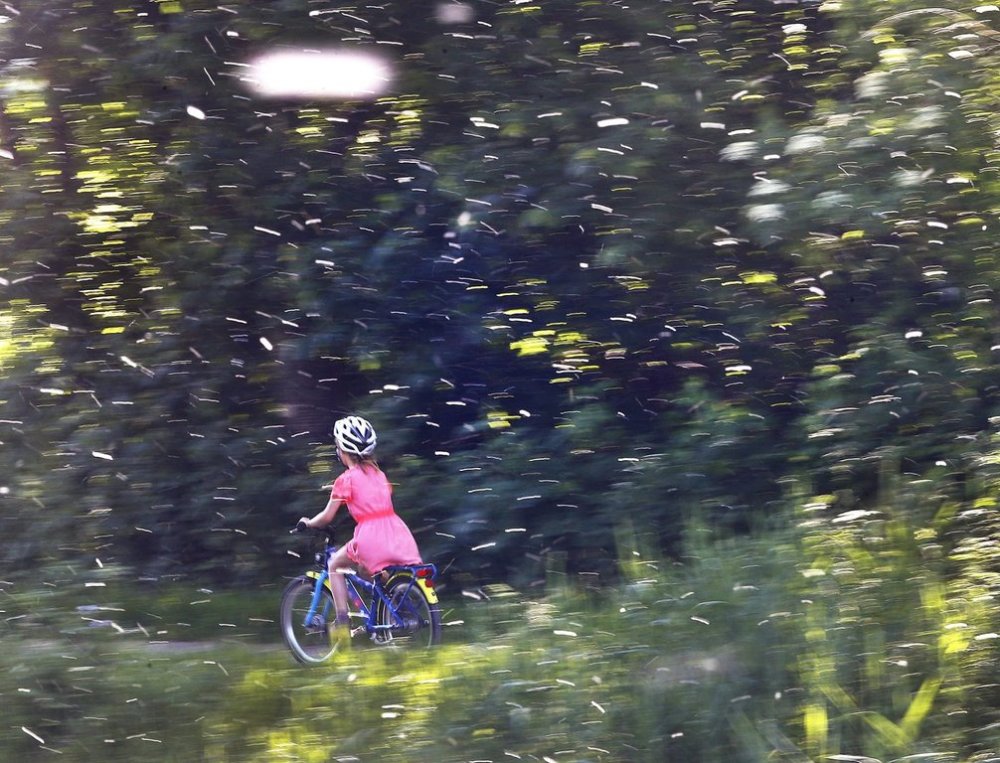
“It’s getting worse because pollen loves warm weather,” he said. “When you have longer periods of warm weather, science and data have proven that you’re going to see more pollen in the air as well.”
Unpredictable weather could also be why allergies are more intense in 2026.
This year, spring across the country has been cooler, Coates said. That means pollen from trees that usually burst earlier in the season — cedars and maples, for example — are releasing pollen around the same time as those that release later, including birch, oak and poplar trees.
“Poplar this year was really high in Edmonton, for example, and now they’re overlapping with what we more typically see around this time of year, which is like birch,” he said.
“We’re seeing a sort of a later start — but more intense start — to the season.”
Kevin Sproule, an Edmonton-based arborist, said seasonal allergies have been particularly intense in Alberta, which has in recent weeks experienced dramatic weather shifts from blowing snow and ice to blooming trees and sunshine.
“My wife and my kids have been experiencing more allergy symptoms this year than they have in the past and I believe that’s because of that intense explosion of pollen,” said Sproule, who works for tree pruning company Davey Tree.
Dawn Jurgens, also with Aerobiology Research Laboratories, said pollen allergies in cities across the world have gone up over the years, and botanical sexism is partly to blame.
She said municipalities have historically preferred to plant male trees rather than female trees to reduce the amount of fruiting debris the females might produce after the release of pollen.
“It does make allergies a little bit worse because you get more pollen release when there’s more male trees,” she said.
Pollen allergies, she said, are also intense in cities because of the “heat-island effect,” in which tightly packed buildings and paved surfaces in urban areas trap heat more than rural areas.
“So the temperature in the cities is much higher than it is in less urban areas,” she said.
Jurgens said allergy sufferers can’t do much to prevent intense allergic reactions to pollen other than changing their outdoor activities.
Amy Kish, senior laboratory technician with Aerobiology, said she’s been itchy and has had a runny nose.
The Ontario resident said when the weather is nice, she usually keeps the windows closed.
“I can’t have the windows open, and I get annoyed if my husband hangs the laundry out on certain days,” she said.
“It’s not fun feeling sick when your allergies are bad all the time.”
This report by The Canadian Press was first published May 18, 2026.