
Ebola ban prevents Ugandan LGBTQ+ activists from speaking at Ottawa rights conference
Advertisement
Read this article for free:
or
Already have an account? Log in here »
We need your support!
Local journalism needs your support!
As we navigate through unprecedented times, our journalists are working harder than ever to bring you the latest local updates to keep you safe and informed.
Now, more than ever, we need your support.
Starting at $15.99 plus taxes every four weeks you can access your Brandon Sun online and full access to all content as it appears on our website.
Subscribe Nowor call circulation directly at (204) 727-0527.
Your pledge helps to ensure we provide the news that matters most to your community!
To continue reading, please subscribe:
Add Brandon Sun access to your Free Press subscription for only an additional
$1 for the first 4 weeks*
- Enjoy unlimited reading on brandonsun.com
- Read the Brandon Sun E-Edition, our digital replica newspaper
*Your next Free Press subscription payment will increase by $1.00 and you will be charged $20.95 plus GST for four weeks. After four weeks, your payment will increase to $24.95 plus GST every four weeks.
Read unlimited articles for free today:
or
Already have an account? Log in here »
OTTAWA – The federal government’s blanket ban preventing people from some Ebola-affected countries from entering Canada is keeping Ugandan activists from attending a major LGBTQ+ rights conference in Ottawa.
“We really want to highlight the important role that Canada plays in providing support to human rights movements in the region,” said Doug Kerr, head of Dignity Network Canada, a coalition of Canadian groups advocating for LGBTQ+ rights globally.
The government of Prime Minister Mark Carney announced last week a 90-day suspension of various travel documents for people living in Uganda, South Sudan and the Democratic Republic of Congo, citing the threat of Ebola.
When announcing the policy on May 26, Health Minister Marjorie Michel told reporters it was “not a question of science” and that people were “traumatized” by the COVID-19 pandemic.
Kerr said the policy is barring three Ugandans who had been set to speak at a conference next week and to meet with MPs and foreign service officials about violent repression in Uganda and how Canada is supporting those affected.
“The anti-rights movements have really picked up on targeting LGBTQI people as a fairly easy target, and they’re having some success around the world on that, but that makes Canada’s role all the more important,” he said.
“Countries like Russia and the United States are working actively against the human rights of our communities.”
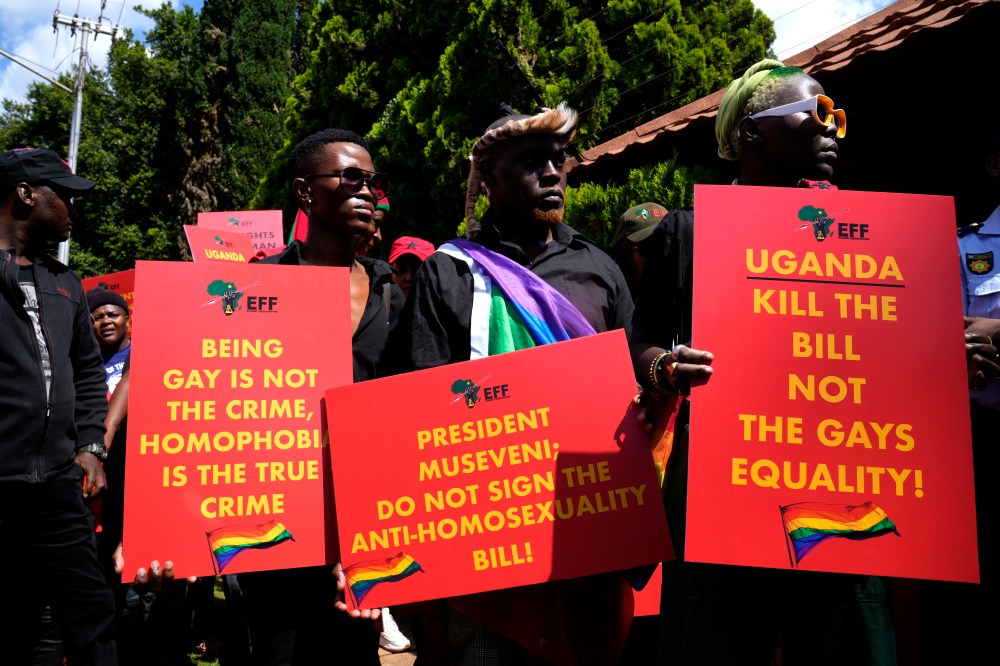
Uganda introduced a law in 2023 prescribing the death penalty for what it calls “aggravated homosexuality” and life imprisonment for other homosexual acts. The move came after advocacy by U.S.-based evangelical groups and the Russian government.
The House of Commons subcommittee on human rights has been hearing testimony about the crackdown, which has undermined efforts to eliminate HIV and has led some Ugandans to seek asylum in neighbouring countries.
Kerr said Uganda’s policies have inspired similar moves in other countries, including Senegal, Ghana and Belarus.
“It really is a focal point for the anti-LGBT movements,” he said. “It’s a very strong human-rights movement in Uganda that is fighting back against this, so it was really important for us to highlight this.”
The World Health Organization has asked countries like Canada to drop their blanket bans, arguing they only make it harder to stop the epidemic. The offices of Michel and of Immigration Minister Lena Diab have not responded to requests for comment.
This report by The Canadian Press was first published June 5, 2026.