
What is the ‘green whistle’ Canadian player Ismael Koné was given after FIFA injury?
Advertisement
Read this article for free:
or
Already have an account? Log in here »
We need your support!
Local journalism needs your support!
As we navigate through unprecedented times, our journalists are working harder than ever to bring you the latest local updates to keep you safe and informed.
Now, more than ever, we need your support.
Starting at $15.99 plus taxes every four weeks you can access your Brandon Sun online and full access to all content as it appears on our website.
Subscribe Nowor call circulation directly at (204) 727-0527.
Your pledge helps to ensure we provide the news that matters most to your community!
To continue reading, please subscribe:
Add Brandon Sun access to your Free Press subscription for only an additional
$1 for the first 4 weeks*
- Enjoy unlimited reading on brandonsun.com
- Read the Brandon Sun E-Edition, our digital replica newspaper
*Your next Free Press subscription payment will increase by $1.00 and you will be charged $20.95 plus GST for four weeks. After four weeks, your payment will increase to $24.95 plus GST every four weeks.
Read unlimited articles for free today:
or
Already have an account? Log in here »
When Canadian midfielder Ismael Koné was taken off the field on a stretcher during Canada’s World Cup match against Qatar on Thursday, photos showed him inhaling from a small green device, prompting many fans to wonder what it was.
Team Canada officials confirmed the inhaler to be Penthrox, also known as methoxyflurane, a fast-acting, non-opioid pain medication that is self-administered for short-term pain relief. It is commonly known as the “green whistle.”
One of the drug’s key features is that it’s administered by the patient directly: if a patient can’t hold the device themselves, the drug can’t be used, said Dr. Paul Winston, a specialist in physical medicine and rehabilitation based in British Columbia.
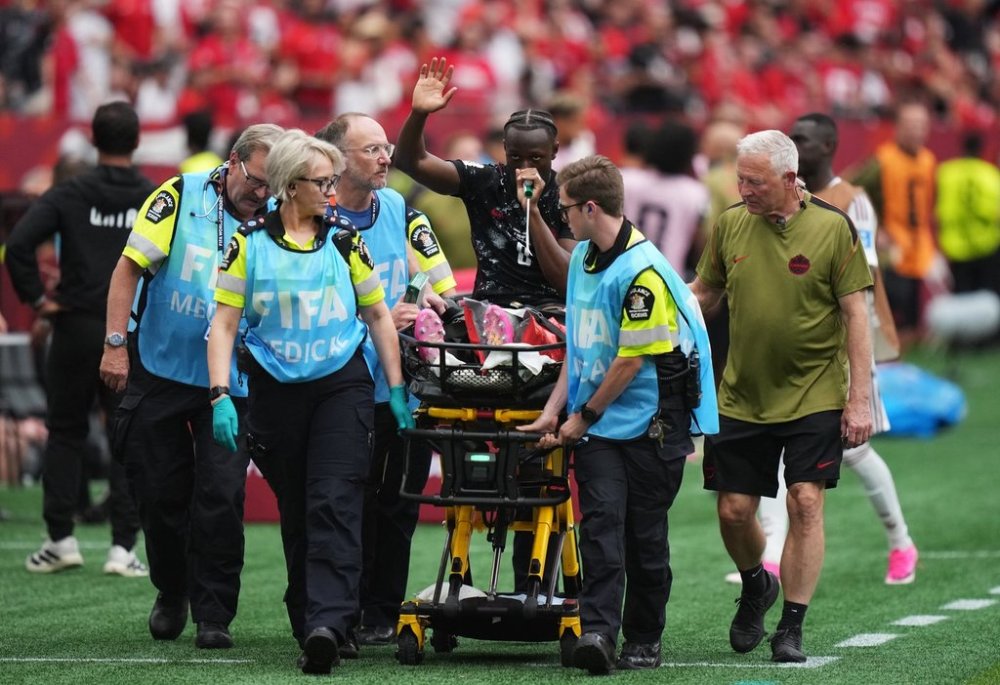
“The nice thing about Penthrox is you don’t overdo it, right? So if the person ends up saying, ‘Hey, I’m OK,’ they can stop puffing, or if the pain isn’t controlled, then they have time to administer the heavier medications that they may need to do,” Winston said.
Relief starts to kick in after six to 12 breaths and can last up to an hour, requiring careful monitoring in a clinical setting, the doctor said.
“It’s a bit like laughing gas. So people actually laugh hysterically when they’re on it and it takes away their pain and it acts as a cross between an anesthetic and a painkiller,” said Winston. “It doesn’t knock you out, but it sort of takes you out of your situation enough to put the pain aside.”
Penthrox was first developed as a general anesthetic in the United States in the 1960s and approved by Health Canada in 2022. It has been approved in Australia and New Zealand since the 1970s.
Winston said people Down Under “use it all the time when there’s beach accidents, trauma in the field.”
He said the drug is no longer approved in the United States because an older version was pulled from the market there due to toxicity concerns. As well, Penthrox cannot be used in patients with liver or kidney issues, he said.
Koné has since undergone surgery for his broken leg and will miss the remainder of the tournament.
This report by The Canadian Press was first published June 19, 2026.