
Feds considering high-speed rail stop in Kingston, Ont.
Advertisement
Read this article for free:
or
Already have an account? Log in here »
We need your support!
Local journalism needs your support!
As we navigate through unprecedented times, our journalists are working harder than ever to bring you the latest local updates to keep you safe and informed.
Now, more than ever, we need your support.
Starting at $15.99 plus taxes every four weeks you can access your Brandon Sun online and full access to all content as it appears on our website.
Subscribe Nowor call circulation directly at (204) 727-0527.
Your pledge helps to ensure we provide the news that matters most to your community!
To continue reading, please subscribe:
Add Brandon Sun access to your Free Press subscription for only an additional
$1 for the first 4 weeks*
- Enjoy unlimited reading on brandonsun.com
- Read the Brandon Sun E-Edition, our digital replica newspaper
*Your next Free Press subscription payment will increase by $1.00 and you will be charged $20.95 plus GST for four weeks. After four weeks, your payment will increase to $24.95 plus GST every four weeks.
Read unlimited articles for free today:
or
Already have an account? Log in here »
The federal government has directed Alto to consider an additional high-speed rail stop in Kingston, Ont., in a potential major change to the route after feedback from residents.
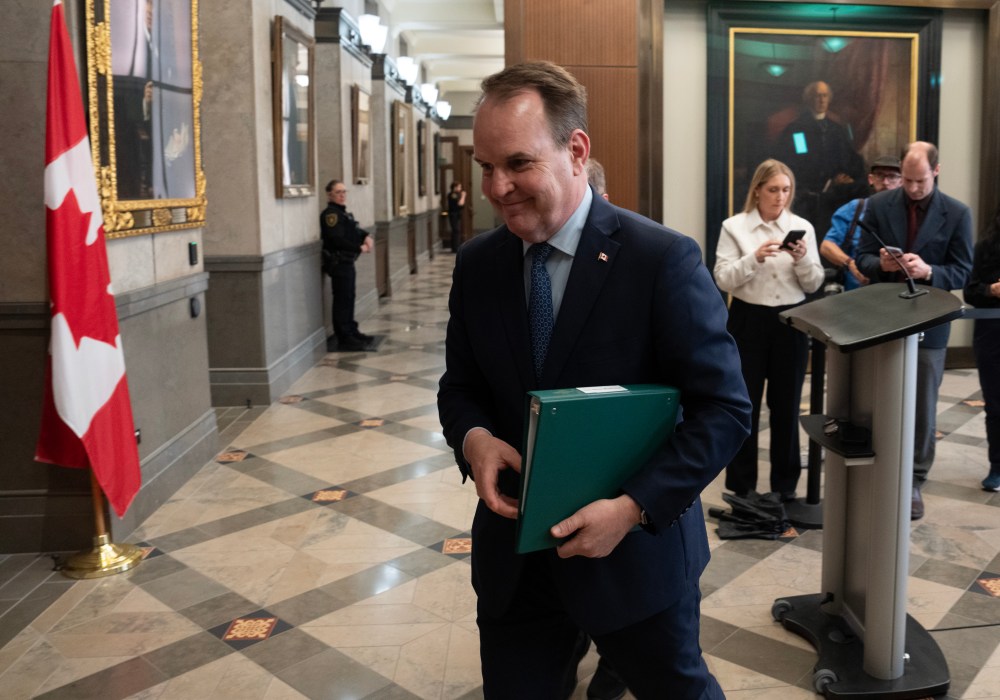
Transport Minister Steven MacKinnon said Monday he was “acting on what we heard” in public consultations spanning three months in roughly two-dozen communities this year.
“This is a strong indication of preference for one route over another,” he told reporters in Kingston, while stressing that no final decision has been made.
The project has garnered vocal opposition in rural parts of Eastern Ontario and in Mirabel, Que., where critics say the line would slice through their properties and force expropriations.
The eighth stop on the corridor would likely add time to the trip and costs to the project, raising questions about the budget as well as passenger and revenue projections.
So far, the cost estimate sits between $60 billion and $90 billion, though complex rail projects have a reputation for blowing through budget caps.
The line would see trains running between Toronto and Quebec City on dedicated electric tracks at speeds breaching 300 km/h.
Alto, the Crown corporation overseeing the effort, said MacKinnon instructed it to produce a plan assessing a southern route option between Ottawa and Peterborough, Ont., that includes a “potential stop in Kingston.” The possible stop would connect with the Via Rail station in that city.
It would reduce travel times between Kingston and Toronto by roughly half to about 90 minutes and allow the vast majority of residents between Peterborough and Ottawa to drive to a station in less than half an hour, according to Alto.
Construction of the first phase of the roughly 1,000-kilometre rail line is set to kick off in 2029 or 2030, linking Montreal and Ottawa in an effective test case for what would be a massive infrastructure project intended to transform rail travel in Canada’s most densely populated region.
So far, the federal government has mandated seven stops: Toronto, Peterborough, Ont., Ottawa, Laval, Que., Montreal, Trois-Rivières, Que., and Quebec City.
The project has garnered backlash from a grassroots coalition of farmers and small-town residents as well as the federal Conservatives and the Parti Québécois. Critics say the rail corridor would cleave communities, prompt hundreds of land expropriations and offer locals few benefits while costing taxpayers billions of dollars.
This report by The Canadian Press was first published June 22, 2026.