
Saskatchewan flooding forces more local states of emergency, some evacuations
Advertisement
Read this article for free:
or
Already have an account? Log in here »
We need your support!
Local journalism needs your support!
As we navigate through unprecedented times, our journalists are working harder than ever to bring you the latest local updates to keep you safe and informed.
Now, more than ever, we need your support.
Starting at $15.99 plus taxes every four weeks you can access your Brandon Sun online and full access to all content as it appears on our website.
Subscribe Nowor call circulation directly at (204) 727-0527.
Your pledge helps to ensure we provide the news that matters most to your community!
To continue reading, please subscribe:
Add Brandon Sun access to your Free Press subscription for only an additional
$1 for the first 4 weeks*
- Enjoy unlimited reading on brandonsun.com
- Read the Brandon Sun E-Edition, our digital replica newspaper
*Your next Free Press subscription payment will increase by $1.00 and you will be charged $20.95 plus GST for four weeks. After four weeks, your payment will increase to $24.95 plus GST every four weeks.
Read unlimited articles for free today:
or
Already have an account? Log in here »
REGINA – Flooding in Saskatchewan has forced more communities to declare states of emergency, while some residents were evacuated from a First Nation near the Manitoba boundary.
The Saskatchewan Public Safety Agency says 11 communities issued alerts over the past week following torrential rainfall.
Tyler Harrison, manager of the agency’s emergency services, says nine people from the Cote First Nation, 360 kilometres east of Saskatoon, were forced to flee the community.

He says the evacuees are considered vulnerable and would need easy access to medical services in case of an emergency.
Other communities dealing with flooding are in the province’s east-central region, including Canora, Kamsack and Norquay.
Heavy rain had overwhelmed sewer systems, leaving many homes with over a foot of water in basements, while also washing out nearby highways.
Leah Clark, the executive director of irrigation at the Water Security Agency, told a virtual news conference Thursday that some areas, already saturated with moisture, saw more than 275 millimetres of rain in the last week.
“These localized flood events are very difficult to predict and manage and they’re driven by intense storm systems, which drop a lot of water in a short period,” she said.
Precautionary drinking water advisories are in place for Togo and Rocanville, she added.
Harrison said the public safety agency has sent out equipment to communities that need to pump out water and pile sandbags.
It’s also helping them apply for financial aid through the province’s disaster assistance program, he added.
“If need be, we do have staff available for boots on the ground,” Harrison said.
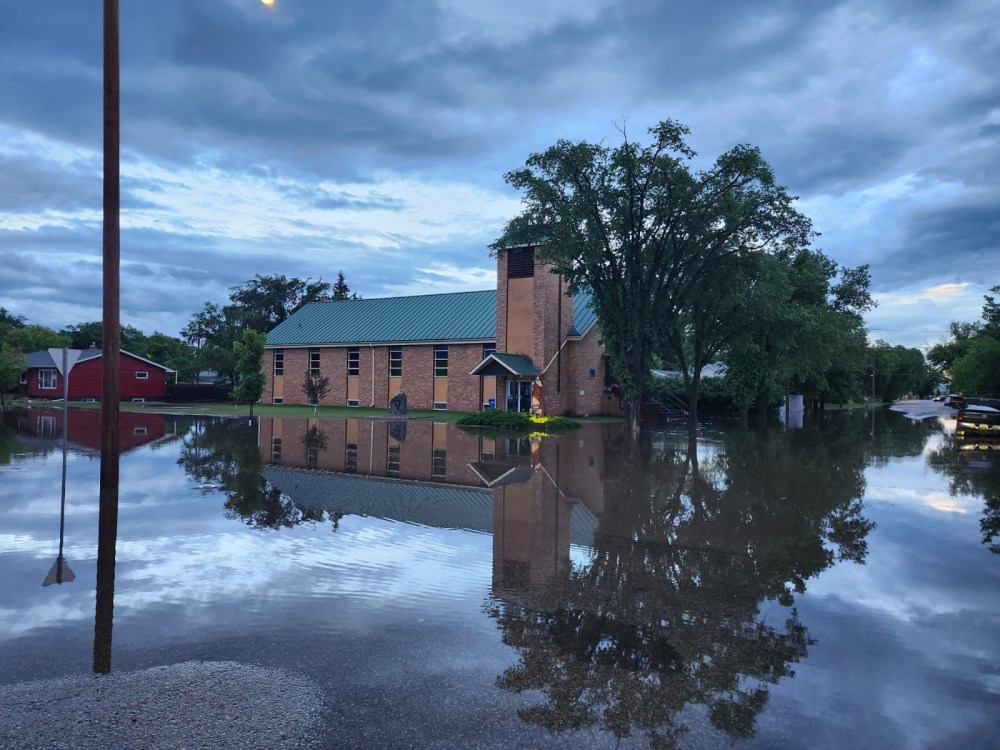
Earlier Thursday, Brandi Zavislak with the Town of Canora said around 70 homes in the community of about 1,700 people have basements flooded with sewage.
“They’re frustrated, they’re tired, they’re overwhelmed. They want their homes back,” Zavislak, a community development officer, said in a phone interview.
“Our sewer stations are just overwhelmed just because of the high volume of water we’ve received.”
Barry Hvidston, the chief administrative officer in nearby Kamsack, said residents are also frustrated with sewage flooding their basements.
“We’ve got a lake to the south of us right now. It’s usually just a little river. I haven’t seen it that high, ever,” he said.
This report by The Canadian Press was first published July 2, 2026.