
Uyghur group asks Canada to go beyond ‘vague’ response to China ethnic-unity law
Advertisement
Read this article for free:
or
Already have an account? Log in here »
We need your support!
Local journalism needs your support!
As we navigate through unprecedented times, our journalists are working harder than ever to bring you the latest local updates to keep you safe and informed.
Now, more than ever, we need your support.
Starting at $15.99 plus taxes every four weeks you can access your Brandon Sun online and full access to all content as it appears on our website.
Subscribe Nowor call circulation directly at (204) 727-0527.
Your pledge helps to ensure we provide the news that matters most to your community!
To continue reading, please subscribe:
Add Brandon Sun access to your Free Press subscription for only an additional
$1 for the first 4 weeks*
- Enjoy unlimited reading on brandonsun.com
- Read the Brandon Sun E-Edition, our digital replica newspaper
*Your next Free Press subscription payment will increase by $1.00 and you will be charged $20.95 plus GST for four weeks. After four weeks, your payment will increase to $24.95 plus GST every four weeks.
Read unlimited articles for free today:
or
Already have an account? Log in here »
OTTAWA – Ottawa’s reaction to a new Chinese law on ethnic unity is tepid and does not live up to Canada’s promise to stop foreign governments from threatening diaspora abroad, a Uyghur rights activist said.
The law, which Beijing enacted in early July, gives a legal basis for the Chinese government to prosecute people or organizations outside China if their actions are deemed to harm the progress of “ethnic unity.”
“It is a textbook example of transnational oppression,” said Mehmet Tohti, executive director of the Uyghur Rights Advocacy Project.
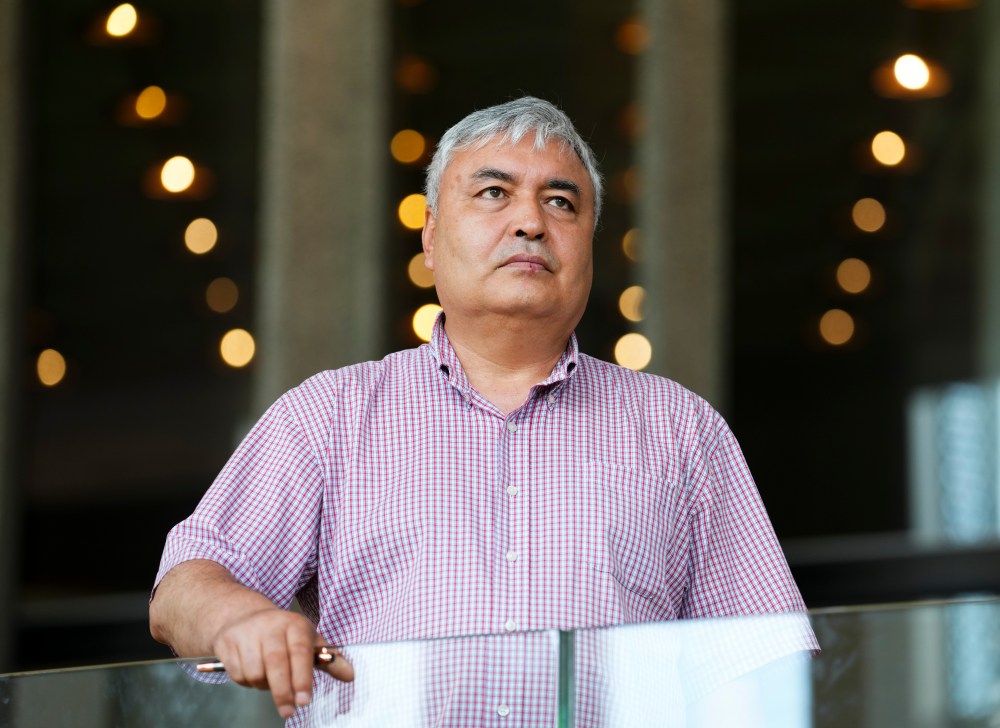
“Our reaction to China is fading away, day by day, week by week. And then we don’t hear too much about transnational repression or gross violations of human rights.”
China says the law promotes harmony among the country’s 55 ethnic groups, who make up just under nine per cent of the country’s 1.4 billion population. The law mandates the use of Mandarin Chinese as the primary language in education.
The law says all Chinese citizens have a duty to “forge a common consciousness of the Chinese nation according to law and the constitution.”
It may impact minorities like Tibetans and Uyghurs, who have protested Beijing policies in the past, including through violent means.
Uyghurs are a largely Muslim minority group who have been the target of a long-term campaign of detention, and later incarceration, by China. While the short-term internment camps were said to be closed in 2019, thousands ended up in prison, where experts have said they were targeted for their identity and not for actual crimes.
Canada’s ambassador to United Nations agencies in Geneva, Peter MacDougall, listed the law along a series of issues that Ottawa is watching, in a June 16 statement to the United Nations Human Rights Council, responding to an annual report on human rights worldwide.
“We are also concerned about the ethnic unity law in China, and call for respect of the human rights of minorities,” he said, while also touching on unrelated issues in Afghanistan, Iran and Ukraine.
Tohti said he’s stunned Ottawa had nothing to say about the risks of the law being used to persecute people in Canada and elsewhere.
“It is a vague and very weak statement,” Tohti said. “The nature of Chinese transnational repression, that dimension is almost ignored. And that should be the key focus for Canada.”
Tohti said there is particularly a risk of China issuing arrest warrants that could see people arrested if they travel to countries with extradition treaties with China such as South Korea. Already, Hong Kong’s sweeping national security law has been used to issue bounties for activists abroad, including in Canada.
He said Ottawa should mount a global effort to protect Chinese dissidents from the law, but he fears the government has given up on publicly raising human rights issues ever since Prime Minister Mark Carney’s visit to Beijing in January.
Tohti noted the Carney government made transnational repression a priority when it hosted the G7 summit last year.
“We should be playing a leadership role. Now we almost drop all of this important leverage from our agenda, and so we are talking softly now. We don’t talk too much about China’s human rights,” he said.
In a statement, Global Affairs Canada added that it will contest various policies by various countries.
“Canada will continue to work with international partners to advocate for the promotion and protection of human rights globally, including the rights of minorities,” wrote spokeswoman Samantha Lafleur, adding Ottawa’s foreign policy is shaped by Canadians valuing diversity at home.
Since 2023, Canada has been pursuing a seat on the UN Human Rights Council for the 2028 to 2030 period.
Deputy Conservative Leader Melissa Lantsman called the law “oppression with a legal stamp” by the Chinese Communist Party.
“Beijing’s new ‘ethnic unity law’ is just the latest tool in the CCP’s playbook of control, from crushing minority rights at home to menacing Taiwan abroad. Authoritarianism doesn’t stop at borders with this,” she wrote on the platform X.
The European Union and the U.S. State Department have said they will not allow the new Chinese law to be applied within their territories. Canada has not explicitly said that.
When asked about American and European pushback to the law, China’s Foreign Ministry spokesman Guo Jiakun did not explain why it includes extraterritorial applications.
“Certain countries, entrenched in ideological prejudice and driven by political manipulation, choose to turn a blind eye to China’s progress in socioeconomic development and human rights protection. Instead, they take things out of context, maliciously slander China’s ethnic policies, and fabricate and spread misinformation,” Guo said July 3 in an official translation.
“With such gross interference in China’s internal affairs, they attempt to undermine ethnic unity in China. We firmly reject these acts. We urge relevant countries to respect plain facts, stop spreading lies, and stop interfering in China’s internal affairs by hyping up ethnic issues.”
This report by The Canadian Press was first published July 10, 2026.
— with files from The Associated Press