
Canada’s concessions have meant little to Trump administration: U.S. trade czar
Advertisement
Read this article for free:
or
Already have an account? Log in here »
We need your support!
Local journalism needs your support!
As we navigate through unprecedented times, our journalists are working harder than ever to bring you the latest local updates to keep you safe and informed.
Now, more than ever, we need your support.
Starting at $15.99 plus taxes every four weeks you can access your Brandon Sun online and full access to all content as it appears on our website.
Subscribe Nowor call circulation directly at (204) 727-0527.
Your pledge helps to ensure we provide the news that matters most to your community!
To continue reading, please subscribe:
Add Brandon Sun access to your Free Press subscription for only an additional
$1 for the first 4 weeks*
- Enjoy unlimited reading on brandonsun.com
- Read the Brandon Sun E-Edition, our digital replica newspaper
*Your next Free Press subscription payment will increase by $1.00 and you will be charged $20.95 plus GST for four weeks. After four weeks, your payment will increase to $24.95 plus GST every four weeks.
Read unlimited articles for free today:
or
Already have an account? Log in here »
WASHINGTON – The United States’ top trade official says the Trump administration isn’t going to give Canada credit for its trade concessions as official negotiations between Ottawa and Washington remain stalled.
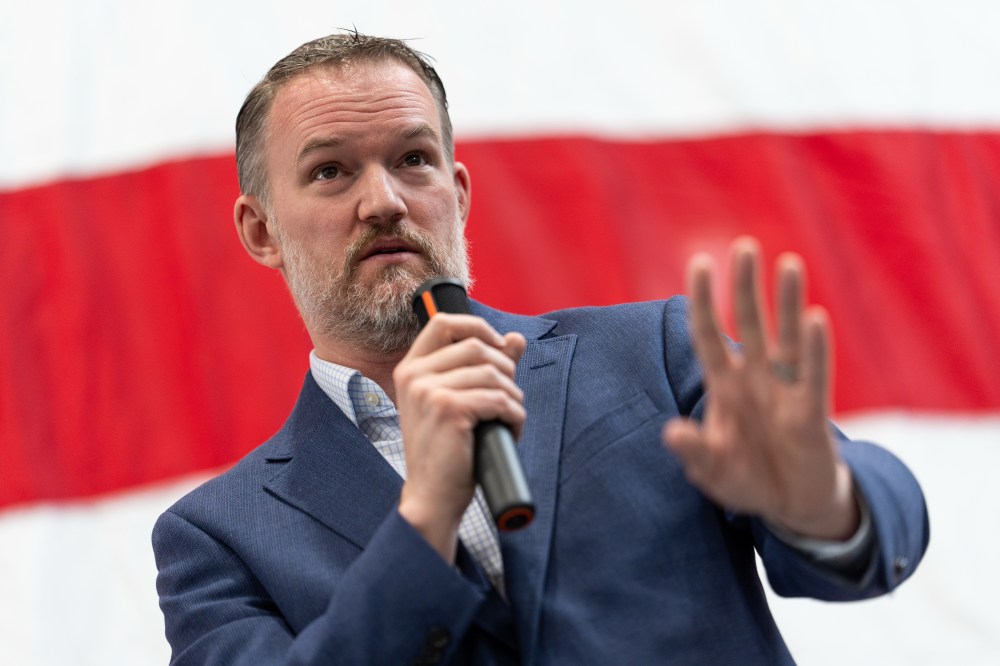
United States Trade Representative Jamieson Greer said Wednesday he’s glad Canada dropped its digital services tax and “rolled back” its Online Streaming Act but they “don’t really get credit for doing something bad and then undoing it.”
“That’s just good practice on their part,” Greer said at the Aspen Security Forum in Aspen, Colo.
Prime Minister Mark Carney dropped the tax last June, hours before payments from tech giants would be due, in a bid to resume suspended trade talks. The tax was to require the companies to pay tax on some of their revenues earned from Canadian users.
The effort seemed to steady the Canada-U.S. relationship briefly and a limited deal on some of U.S. President Donald Trump’s sector-specific tariffs appeared imminent last October.
But the U.S. froze talks again that month after Trump was angered by an Ontario-funded ad quoting former president Ronald Reagan criticizing tariffs.
In June, Ottawa directed the CRTC to reconsider its decision to triple streamers’ financial contributions to Canadian content as part of its work to implement the Online Streaming Act. The decision came down after protests from American interest groups and U.S. Ambassador to Canada Pete Hoekstra.
The relationship between Canadian and U.S. trade officials slowly thawed this year. Greer said he’s in weekly contact with his Canadian counterparts and he’s offered Ottawa proposals to “put us in a better position.”
He also said “we just haven’t seen a lot of movement.”
The United States formally announced that it was not renewing the Canada-U.S.-Mexico-Agreement on trade, known as CUSMA, at the start of July.
The agreement stays in place under annual rolling reviews for up to a decade, at which point it will expire if no extension agreement is negotiated.
Canada and Mexico both said they wanted a 16-year extension.
The continental trade agreement has shielded Canada and Mexico from many of Trump’s tariffs but industries like steel, aluminum, automobiles and cabinetry are being slammed with separate duties.
Those sector-specific duties have been a key issue for Canada’s negotiators and Trump seems unwilling to shift his stance on the tariffs.
Washington and Mexico have launched formal CUSMA negotiations but no such talks have started with Ottawa.
Greer said the Mexicans are “pragmatic” but the “trade deficit in Mexico really is a challenge.” He said there are issues with Mexico regarding overcapacity, subsidies, unfair trading practices and monetary policy.
Greer didn’t cite specific trade irritants with Canada but he repeated a Trump administration talking point when he claimed Canada and China were the only countries to retaliate after the president imposed his sweeping tariffs.
He said Trump also remains focused on lowering the trade deficit with Canada. That deficit is largely driven by oil imports; without taking energy into account, the U.S. runs a trade surplus with Canada.
Greer did speak optimistically about a future agreement with Canada, indicating that some of the talks need to happen at the highest levels.
“The reality is if the president and Prime Minister Carney have an understanding, I’m sure we can put together something that makes sense to get us over the hump,” he said.
“We’re always going to trade some with Canada, just because they’re there.”
This report by The Canadian Press was first published July 16, 2026.
Note to readers:This is a corrected story. A previous version said the security forum took place in Washington.