
‘The best is yet to come’: Canada dubbed a soccer nation as FIFA World Cup ends
Advertisement
Read this article for free:
or
Already have an account? Log in here »
We need your support!
Local journalism needs your support!
As we navigate through unprecedented times, our journalists are working harder than ever to bring you the latest local updates to keep you safe and informed.
Now, more than ever, we need your support.
Starting at $15.99 plus taxes every four weeks you can access your Brandon Sun online and full access to all content as it appears on our website.
Subscribe Nowor call circulation directly at (204) 727-0527.
Your pledge helps to ensure we provide the news that matters most to your community!
To continue reading, please subscribe:
Add Brandon Sun access to your Free Press subscription for only an additional
$1 for the first 4 weeks*
- Enjoy unlimited reading on brandonsun.com
- Read the Brandon Sun E-Edition, our digital replica newspaper
*Your next Free Press subscription payment will increase by $1.00 and you will be charged $20.95 plus GST for four weeks. After four weeks, your payment will increase to $24.95 plus GST every four weeks.
Read unlimited articles for free today:
or
Already have an account? Log in here »
EAST RUTHERFORD – Canada’s first appearance at the centre of soccer’s biggest showcase has come to an end.
The largest-ever FIFA World Cup came to a close on Sunday with Ferran Torres scoring in the 106th minute to give Spain a 1-0 victory over Argentina.
The result capped an expanded 48-team tournament where Vancouver and Toronto were among 16 host cities across Canada, the United States and Mexico.
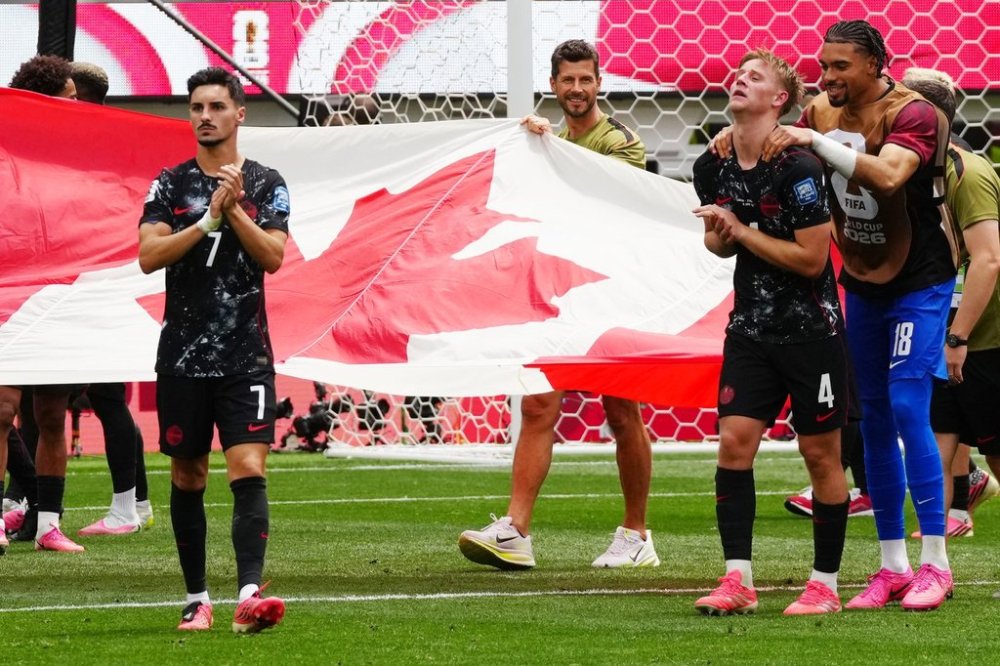
It marked the first time men’s World Cup games were held on Canadian soil and, over more than five weeks, the country celebrated soccer as the national team made history.
“It’s really been an extraordinary journey for all Canadians,” said Adam van Koeverden, Canada’s secretary of state for sport and the country’s self-described “World Cup Sherpa.”
“The World Cup itself, in terms of the sport, was remarkable. It was a huge step forward for Canadian soccer or football or whatever we call it. But what is clear is that Canada is a soccer nation.”
The lone Canadian on the field at Sunday’s final wasn’t wearing a jersey and cleats.
Justin Bieber instead sported long shorts and sneakers as he serenaded the sold-out crowd of 80,663 in East Rutherford, N.J., as part of the tournament’s first-ever halftime show.
“Ted Lasso” actors Jason Sudeikis and Brendan Hunt set up the performance, with Sudeikis — in character as the show’s titular affable soccer coach — saying he needed to put someone with “more soul” on the field.
He pulled Bieber from the sidelines and, after some words of encouragement, the Canadian pop star walked out strumming his acoustic guitar and singing his song “Everything Hallelujah.”
Other Canadians in attendance included rapper Drake, Oklahoma City Thunder star Shai Gilgeous-Alexander, singer-songwriter Tate McRae and model-actress Winnie Harlow.
Prime Minister Mark Carney and his wife Diana Fox Carney watched the game from a glassed-in suite.
As the match kicked off, Carney posted a message on social media noting how hundreds of thousands of fans packed streets across the country to cheer on Canada.
The national squad played with “extraordinary character, resilience, and grit,” the prime minister’s post read.
“Our team and our fans showed the world that Canada belongs on any pitch, against any team,” it continued. “Canada’s soccer journey is just beginning. The best is yet to come.”
Also with Carney in the suite were U.S. President Donald Trump, his wife Melania Trump, Mexican President Claudia Sheinbaum and FIFA President Gianni Infantino.
The three world leaders joined Infantino to present awards after the game, with Carney handing Spanish goalkeeper Unai Simon the Golden Glove trophy, awarded to the tournament’s top netminder.
Trump and Infantino closed out the ceremony by presenting Spain with the trophy in tandem.
After handing it to the team’s captain, Rodri, the U.S. president shook hands with a few players, then walked to the edge of the group, but did not leave the stage, despite Infantino running over and trying to usher him down. Trump was in the frame as the team’s celebratory photo was taken.
Trump, Carney and Sheinbaum’s rendezvous came after the U.S. administration opted not to renew a trilateral trade pact between the three nations — known in Canada as CUSMA — earlier this month.
Politics blanketed the tournament from the outset.
Before the World Cup began, Iran asked FIFA to move its games out of the United States, citing the ongoing war between the two nations.
The request was denied, and Iran’s players and staff spoke out about tight travel restrictions that prevented them from travelling from their base in Tijuana, Mexico, into Los Angeles until the day before group-stage games against New Zealand and Belgium.
The team was ultimately allowed to enter the U.S. two days before their final game against Egypt in Seattle on June 26.
Canada’s own border rules made headlines when Ghana’s Thomas Partey was denied a visa for his nation’s World Cup opener in Toronto. The 32-year-old midfielder is awaiting trial in England for multiple charges of rape and has entered a not guilty plea.
A federal judge dismissed Partey’s bid for emergency relief that would have allowed him to travel to Canada for the game.
There were questions over whether Ivory Coast player Elye Wahi would also be denied entry after it emerged the 23-year-old striker was under investigation for alleged betting-related offences.
The Ivorian soccer federation initially said Wahi would not be able to cross the border into Canada for the nation’s match against Germany in Toronto on July 20, but later issued a statement saying the necessary authorizations had been obtained.
Several critics questioned the cost of Canada’s hosting World Cup games.
The parliamentary budget officer pegged the total price tag for staging 13 games at $1.066 billion, with the federal government contributing $473 million and another $593 million coming from other levels of government.
The PBO said Canada’s costs were roughly in line with what was spent per game on previous World Cup tournaments.
Staging seven games in Vancouver and six in Toronto will have lasting legacies well beyond the economy, van Koeverden said.
“We are now more well known as the best sport hosting nation in the world, and we’ll continue to leverage that as we pursue more hosting opportunities,” he said.
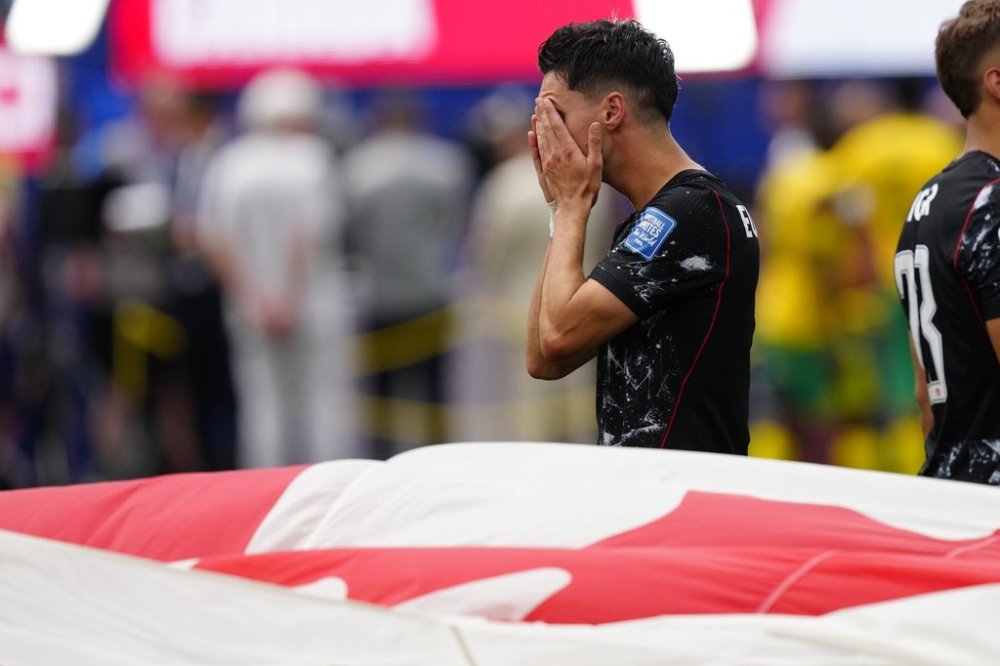
“It’s great for our economy, it’s great for infrastructure. It’s just wonderful for all Canadians to be able to enjoy world class sporting and cultural events on home soil. It creates jobs. It’s great for our place in the world.”
International media hailed Vancouver and Toronto as some of the top host cities before the tournament began, citing transportation, idyllic scenery and downtown stadiums.
Vancouver’s billing was well deserved, said Whitecaps midfielder Thomas Muller.
The 2014 World Cup winner spent this summer’s tournament working as an analyst for Germany’s Magenta TV, and was impressed by how fans in Canada embraced the showcase.
“The atmosphere was very nice,” said Muller, who was also at Sunday’s final. “Maybe we all didn’t expect it like that, but it’s so far a great World Cup in my opinion.”
One of the biggest games staged on Canadian soil came on July 2 when Portugal and Croatia squared off in a round-of-32 matchup in Toronto.
A sold-out crowd of 43,036 raucous fans packed the stadium — usually known as BMO Field — creating an electric atmosphere that didn’t go unnoticed by those on the field.
“Congratulations to everybody, to the organizers, to everybody who’s involved in football, soccer, in the city. It was incredible,” Portugal manager Roberto Martinez said after his team came all the way back to beat Croatia 2-1.
“Everything around the beautiful facilities here, it reminds me of the old-fashioned Premier League grounds. Congratulations to everybody.”
Canada’s own games were a source of special memories for players and fans alike.
The national team played a men’s World Cup game on home soil for the first time on June 12, battling Bosnia-Herzegovina to a 1-1 draw. The result marked the country’s first-ever point in the tournament.
Les Rouges then shifted to Vancouver where they trounced Qatar 6-0 in an emotional matchup for their first-ever victory.
The boisterous red-and-white clad crowd grew quiet early in the second half of the game when Canadian midfielder Ismaël Koné crumpled to the turf after being tackled from behind. He was stretchered off the field, his leg broken in two places.
It was the latest blow to a Canadian squad that saw several players hampered by various injuries leading up to and throughout the tournament.
Captain Alphonso Davies played just 15 minutes throughout the World Cup due to a nagging hamstring strain.
Van Koeverden was in the locker room after the Qatar game when Carney spoke to the team about how its performance reflected Canada’s values, especially in light of Koné’s injury.
That moment was “a bit surreal,” said the former Olympic sprint kayaker.
“The prime minister’s speech really resonated with the players,” van Koeverden said. “As a former athlete myself, it was just a really, really Canadian moment and an opportunity to reflect on how far we’ve come and what the opportunities are that lie ahead.”
Canada finished the group stage with a 2-1 loss to Switzerland in Vancouver, but finished second in Group B to earn a spot in the knockout round for the first time.
More magic followed in Los Angeles, where vice-captain Stephen Eustaquio scored in stoppage time to give the Canadians a 1-0 victory over South Africa in the round of 32.
The run came to an end in Houston when Les Rouges fell 3-0 to Morocco in the round of 16.
After the loss, Eustaquio said Canada’s showing throughout the tournament proved the World Cup is precisely where the nation belongs.
“The fact that we were able to be one of the 16 best teams of this World Cup, I think, is amazing for the country,” he said. “It’s amazing for this team, but we have to start from there. We have to start from there, realizing that the gap isn’t that big, that we have to fight.”
It wasn’t only the performance on the field that showed Canada’s place in the soccer world, but the celebrations across the country, said right back Alistair Johnston.
“We really proved to everyone what a footballing country Canada is,” he said. “Not just when we were playing there, but when other teams came, you could see the amount of passion that was there for the sport in Canada.
“That’s something that I’ve always known was there, but I don’t think the rest of the world truly knew, and I’m not sure all of Canada truly knew the true level of fandom that we have. So that was something I’m really proud of.”
This report by The Canadian Press was first published July 19, 2026.