
Edmonton sees wettest summer on record with endless rain, flooding and mosquitoes
Advertisement
Read this article for free:
or
Already have an account? Log in here »
We need your support!
Local journalism needs your support!
As we navigate through unprecedented times, our journalists are working harder than ever to bring you the latest local updates to keep you safe and informed.
Now, more than ever, we need your support.
Starting at $15.99 plus taxes every four weeks you can access your Brandon Sun online and full access to all content as it appears on our website.
Subscribe Nowor call circulation directly at (204) 727-0527.
Your pledge helps to ensure we provide the news that matters most to your community!
To continue reading, please subscribe:
Add Brandon Sun access to your Free Press subscription for only an additional
$1 for the first 4 weeks*
- Enjoy unlimited reading on brandonsun.com
- Read the Brandon Sun E-Edition, our digital replica newspaper
*Your next Free Press subscription payment will increase by $1.00 and you will be charged $20.95 plus GST for four weeks. After four weeks, your payment will increase to $24.95 plus GST every four weeks.
Read unlimited articles for free today:
or
Already have an account? Log in here »
EDMONTON – Alberta’s capital city has broken the record for its wettest summer on record days before the start of August, bringing with it flooding, show cancellations and relentless mosquitoes.
Edmonton has been saturated by 580 millimetres of rain as of Tuesday morning, beating the record set in 1953 with 417 millimetres from June through August.
“So typically, our summers, if we look at the three months of June, July and August, we see on average about 213.3 millimetres,” Brian Proctor, meteorologist at Environment and Climate Change Canada, said in an interview.
“But this year, it has been exceptionally wet and exceptionally stormy.”
Edmonton is also on track to record the wettest July — and month — on record.
The record for precipitation for July is 282 millimetres set in 1901 and, as of Tuesday, the city has recorded 260.7 millimetres, Proctor said.
Environment Canada has been keeping weather data from Edmonton since the 1880s.
More storms are forecast for the coming weeks in what has become Edmonton’s summer of soggy misery. Proctor said all the moisture in the area is also feeding into a cycle of thunderstorms.
“One of the things to think about for thunderstorms: moisture is like gasoline,” he said. “The more moisture you have available, the more severe the storms can be.”
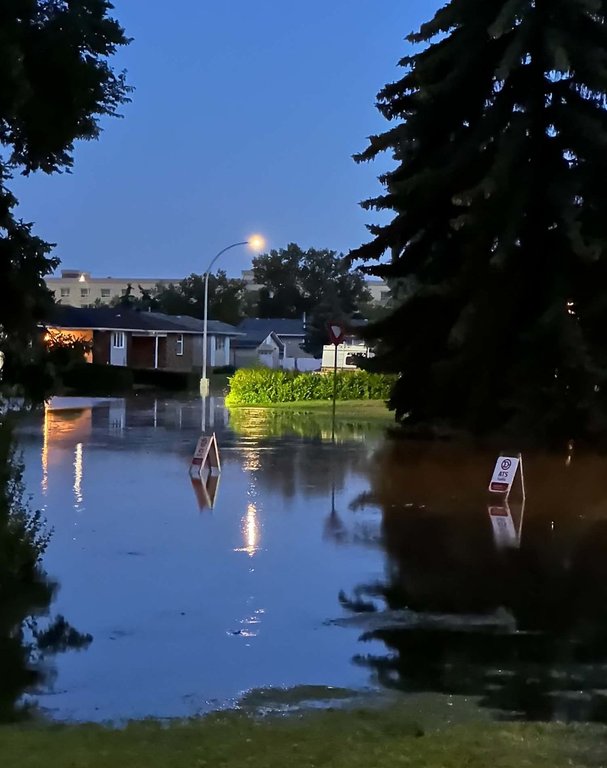
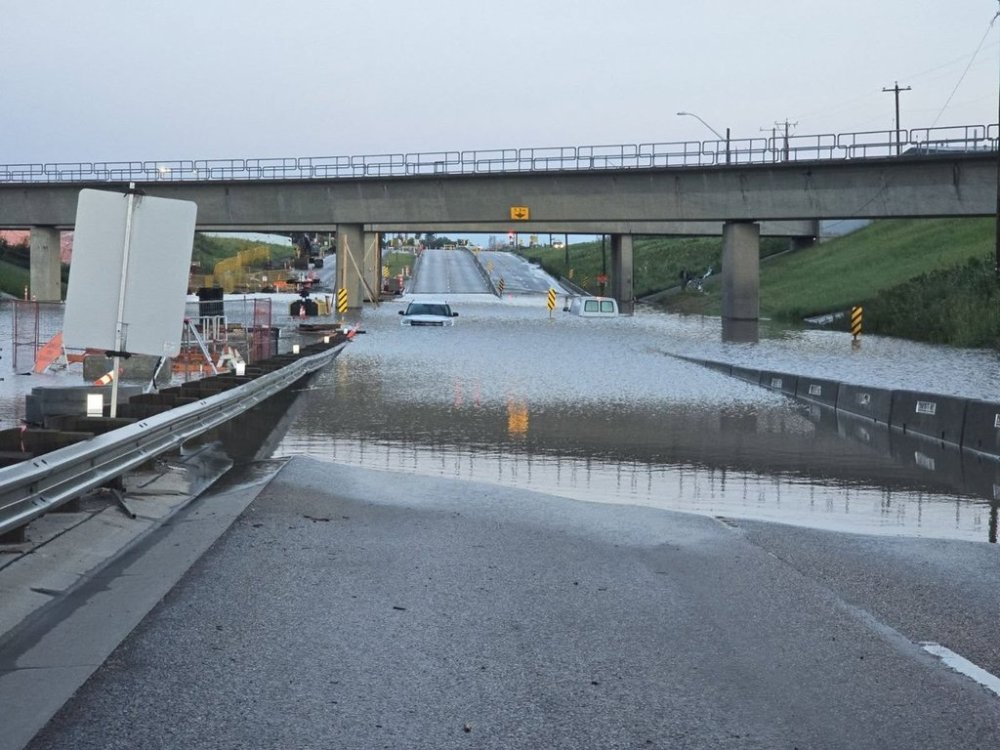
Frequent intense storms have routinely flooded roads, side streets and basements, as well as cancelled shows and events.
A severe thunderstorm forced concertgoers to seek shelter at a Post Malone concert in Commonwealth Stadium on Saturday.
The summer deluge has affected commuters. The city said Tuesday that several roads remained closed as crews worked to clean up downed trees and deal with localized flooding.
It said a storm Monday was the city’s sixth major weather event since June.
Last month was also the wettest June on record for the city. At the end of the month, a heavy storm threatened to overwhelm storm sewers. In an emergency alert, residents were asked to limit toilet flushes and showers to prevent sewer backups.
Visitor sites, including the Muttart Conservatory botanical garden, have closed. The Telus World of Science was expected to stay closed until late this year to fix water damage.
Elk Island National Park, east of the city, closed over the weekend as crews work to clear downed trees, fix damaged fencing and clean up debris.
For the Edmonton Folk Music Festival starting Aug.6, crews have been pumping water out of Gallagher Park, putting preparations behind schedule.
But dealing with the precarious weather is part of being an outdoor festival, said producer Terry Wickham.
“Every time it rains, to be honest, I kind of go ‘Oh, I’m glad we’re not running right now,'” Wickham said.
“Maybe it won’t happen in August, but that’s just kind of wishful thinking on our part.”
A swelling mosquito population due to all the water has also led to more hospital visits for children experiencing skeeter syndrome — an intense, localized allergic reaction to mosquito saliva.
Dr. Andrew Dixon, an emergency room physician at Stollery Children’s Hospital, said it has been treating five or six children a day with the condition.
He added that skeeter syndrome is more common in children and appears worse in the beginning of the season.
“Your body kind of gets used to it over time and stops reacting as much,” Dixon said. He said the condition isn’t dangerous and antihistamines are effective in treating it.
Mike Jenkins, a senior scientist with the City of Edmonton, said the number of mosquitoes in the city in mid-July is 15 times higher compared with this time last year.
“It’s definitely the largest number of mosquitoes we’ve had in the last decade,” Jenkins said.
“But that being said, it also has been one of our driest decades on record — until now.”
This report by The Canadian Press was first published July 28, 2026.
— With files from Fakiha Baig in Edmonton and Dayne Patterson in Calgary