
Human or AI bot? Ottawa consulting on transparency of AI systems
Advertisement
Read this article for free:
or
Already have an account? Log in here »
We need your support!
Local journalism needs your support!
As we navigate through unprecedented times, our journalists are working harder than ever to bring you the latest local updates to keep you safe and informed.
Now, more than ever, we need your support.
Starting at $15.99 plus taxes every four weeks you can access your Brandon Sun online and full access to all content as it appears on our website.
Subscribe Nowor call circulation directly at (204) 727-0527.
Your pledge helps to ensure we provide the news that matters most to your community!
To continue reading, please subscribe:
Add Brandon Sun access to your Free Press subscription for only an additional
$1 for the first 4 weeks*
- Enjoy unlimited reading on brandonsun.com
- Read the Brandon Sun E-Edition, our digital replica newspaper
*Your next Free Press subscription payment will increase by $1.00 and you will be charged $20.95 plus GST for four weeks. After four weeks, your payment will increase to $24.95 plus GST every four weeks.
Read unlimited articles for free today:
or
Already have an account? Log in here »
OTTAWA – The federal government is asking for input from Canadians about the transparency of artificial intelligence systems.
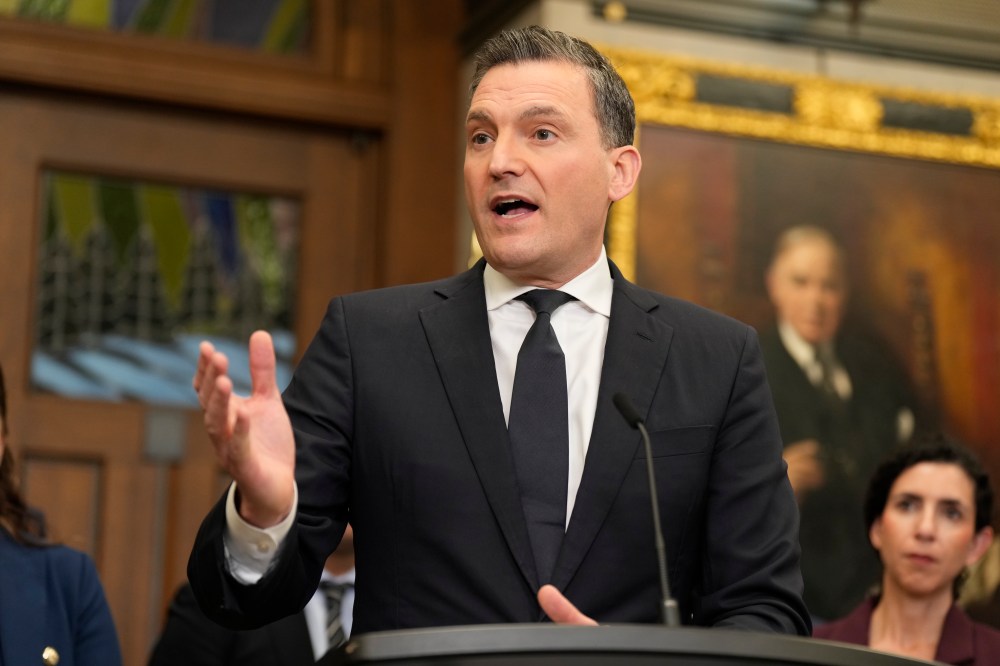
In an online post featuring an AI-generated video of the CN Tower launching into the air like a rocket, Artificial Intelligence Minister Evan Solomon said the government wants to hear from Canadians what meaningful and practical AI transparency might look like.
“AI can do extraordinary things, but as it becomes part of our everyday life, transparency matters more than ever. Are you interacting with AI or with a real person? Was something created by AI or not?” he said in the video.
Those are two key questions the government posed in a consultation launched last week.
The consultation is also considering ways to improve public access to information about AI systems, including their capabilities and limitations.
The government is also looking at enabling the tracking of serious AI-related incidents. In a discussion paper, it gave the example of prompt injection attacks, which it said can trick AI systems into taking unauthorized actions and lead to consequences like data breaches and financial fraud.
It’s also considering ways to better identify the activity of AI agents. The discussion paper cited the example of AI agents that Canadians can “direct to do their shopping, send their emails, or book their meetings.”
The paper said the government is looking “to understand where transparency about AI systems and AI-generated content matters most to Canadians, where existing practices and frameworks are sufficient, and where further action may be warranted.”
The paper said the government wants feedback “on the range of policy instruments available, such as voluntary codes, industry standards, and legislation, and how these instruments could be implemented and interact with one another.”
The consultation wraps up on Sept. 23.
The Liberal government has introduced a digital safety bill that would, once passed, impose a duty to act “responsibly” on the companies behind AI chatbots. It would also require social media companies to label synthetic content that is likely to be mistaken for a real recording.
Solomon has introduced a privacy bill that, once passed, would require organizations to be transparent about automated decision-making when it comes to significant decisions about people.
The Liberal government also included a measure criminalizing non-consensual sexual deepfakes in a crime bill that became law in June.
This report by The Canadian Press was first published July 31, 2026.