
Alleged Bishnoi gang member remains in custody after Federal Court ruling
Advertisement
Read this article for free:
or
Already have an account? Log in here »
We need your support!
Local journalism needs your support!
As we navigate through unprecedented times, our journalists are working harder than ever to bring you the latest local updates to keep you safe and informed.
Now, more than ever, we need your support.
Starting at $15.99 plus taxes every four weeks you can access your Brandon Sun online and full access to all content as it appears on our website.
Subscribe Nowor call circulation directly at (204) 727-0527.
Your pledge helps to ensure we provide the news that matters most to your community!
To continue reading, please subscribe:
Add Brandon Sun access to your Free Press subscription for only an additional
$1 for the first 4 weeks*
- Enjoy unlimited reading on brandonsun.com
- Read the Brandon Sun E-Edition, our digital replica newspaper
*Your next Free Press subscription payment will increase by $1.00 and you will be charged $20.95 plus GST for four weeks. After four weeks, your payment will increase to $24.95 plus GST every four weeks.
Read unlimited articles for free today:
or
Already have an account? Log in here »
VANCOUVER – The Federal Court has granted Ottawa a judicial review of a decision by an immigration board ordering the release of an alleged member of a criminal gang who is wanted in India to face a murder charge from 2012.
The decision dated Aug. 3 says Karamveer Singh is an Indian citizen who has been detained since April 2, and he is also alleged to be a member of the Bishnoi Gang, listed as a terrorist entity in Canada.
The ruling says the Immigration and Refugee Board failed to justify its findings related to the credibility of Singh’s two sisters and their ability to fulfill their duties as bondspersons upon his release, including the legitimacy of their funds.
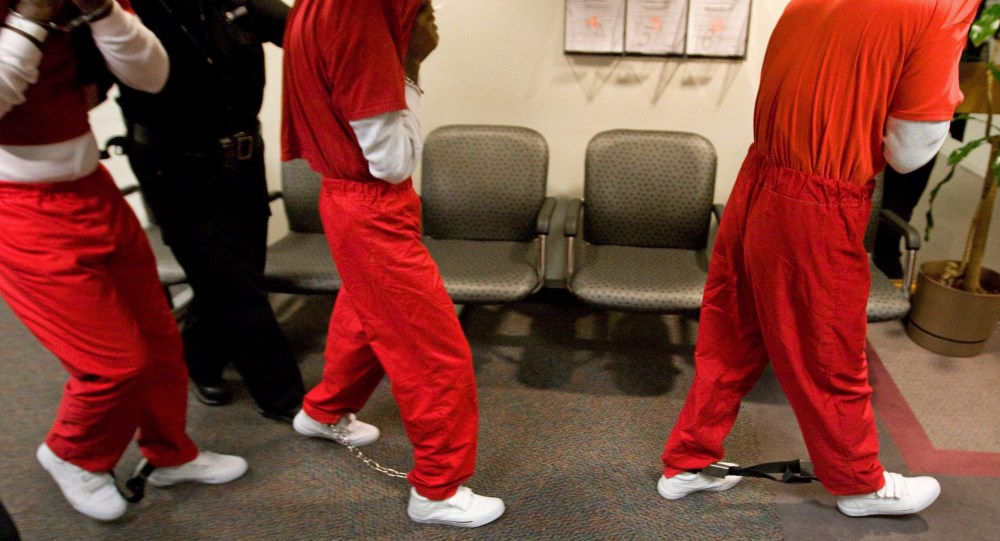
Singh was ordered released on June 10 with conditions that included house arrest, electronic monitoring and a $100,000 cash bond, but the Canada Border Services Agency refused the payment from Singh’s brother-in-law based on concerns about the source of the money, and he remained in custody.
The ruling says a detention review hearing last month resulted in another order to release Singh with a revised plan to address what the immigration board found to be his medium-level flight risk and the danger he posed to the Canadian public.
However, Federal Court Justice Phuong Ngo found the decision was unreasonable in a ruling from Vancouver that says the board’s decision was not responsive to critical evidence related to the credibility of Singh’s two sisters.
Singh’s next detention review hearing was set for Aug. 5, the ruling says.
The Immigration and Refugee Board says in an email that it has no public information regarding upcoming hearings for Singh. “This may reflect that the IRB has no information on this subject, or that only private records exist.”
Ngo found the board did not meaningfully assess the suitability of Harpawanjit Kaur Dhaliwal, Singh’s sister, as a bondsperson after the CBSA’s refusal of the $100,000 payment from her husband, with whom she was financially intertwined.
There were also “significant discrepancies” in Dhaliwal’s evidence provided as part of the immigration proceeding involving her brother, the ruling says.
“The (board) did not engage with the incoherent evidence with Ms. Dhaliwal’s employment and sources of income, among other things,” it says.
The immigration board requires that any guarantee related to a person’s release comes from a legitimate source of funds, whether it be a cash or bond or a so-called performance bond stemming from a real estate asset, it says.
The ruling says there were also “unresolved” issues in the testimony of Singh’s other sister, Navneen Kaur, related to her employment and income, along with records revealing “suspicious electronic transfers and deposits in her bank account.”
A bondsperson’s understanding of the legal orders binding a detainee is also an important consideration, it says, noting Kaur had testified that Singh’s fear of returning to India was correct because of the “fake charges” against him.
“Resolving this issue was a necessary part of the analysis on whether she would be suitable and reliable enough to supervise her brother and ensure compliance with his release conditions and potential removal, if he is released,” the ruling says.
“In this case, there was no intelligible analysis on her suitability, reliability and ability to supervise (Singh).”
Ngo also found the revised release order for Singh last month did not take into account how the changes would “overcome” his flight risk and the danger he posed.
The decision was required to explain and justify how the conditions of the release order adequately eliminate or overcome those risks, the ruling says.
“It did not do so, which also renders the decision unreasonable,” it says.
This report by The Canadian Press was first published Aug. 5, 2026.