
Housing complex questions linger
Advertisement
Read this article for free:
or
Already have an account? Log in here »
We need your support!
Local journalism needs your support!
As we navigate through unprecedented times, our journalists are working harder than ever to bring you the latest local updates to keep you safe and informed.
Now, more than ever, we need your support.
Starting at $15.99 plus taxes every four weeks you can access your Brandon Sun online and full access to all content as it appears on our website.
Subscribe Nowor call circulation directly at (204) 727-0527.
Your pledge helps to ensure we provide the news that matters most to your community!
To continue reading, please subscribe:
Add Brandon Sun access to your Free Press subscription for only an additional
$1 for the first 4 weeks*
- Enjoy unlimited reading on brandonsun.com
- Read the Brandon Sun E-Edition, our digital replica newspaper
*Your next Free Press subscription payment will increase by $1.00 and you will be charged $20.95 plus GST for four weeks. After four weeks, your payment will increase to $24.95 plus GST every four weeks.
Read unlimited articles for free today:
or
Already have an account? Log in here »
Brandon received a little good news on Wednesday.
In a late afternoon press release, the City of Brandon and the provincial government officially announced plans for a housing complex near the Brandon Regional Health Centre that is expected to serve people experiencing homelessness, and those at risk.
As reported, the multi-unit residential building will hold up to 48 units, and is envisioned to be built on a city-owned lot at 705 Rideau St., just two blocks from the hospital.
Brandon issued a request for proposals (RFP) on July 30, asking organizations to submit bids by Sept. 10 to develop and operate the facility, which will offer “trauma-informed and culturally appropriate supports.”
Rideau is a mixed residential and commercial street that features several private homes, as well as duplexes and other standard neighbourhood properties. At this point, there is no public housing in the area.
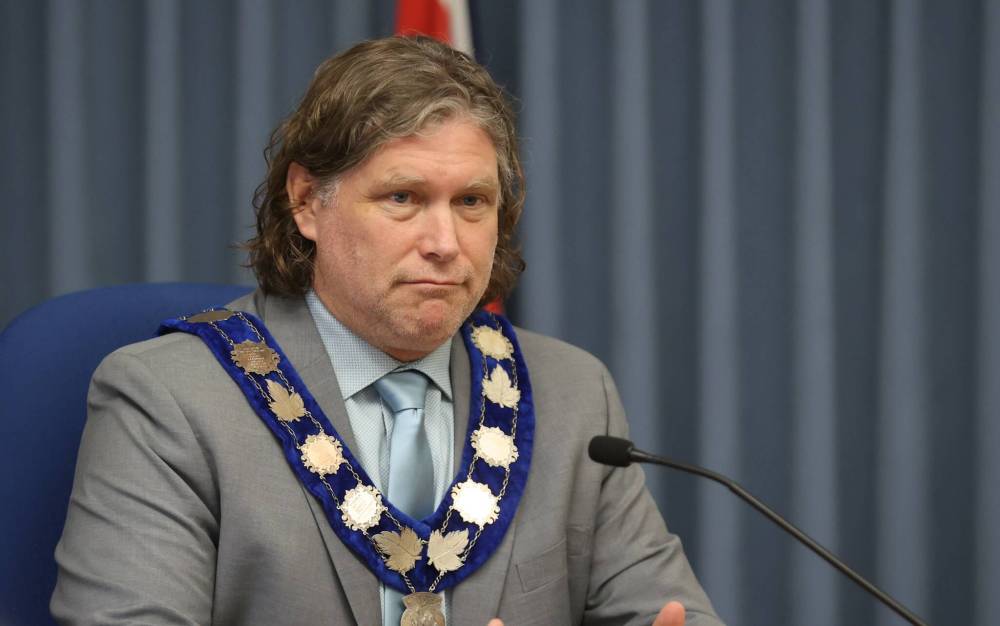
“I’m really pleased that the province is doing this,” Brandon Mayor Jeff Fawcett said Wednesday. “They’re trying to do a fair bit of housing, and we would like them to do a bit more because we do need people to get into those places. We’ve been advocating for this kind of housing a lot.”
We happen to share Fawcett’s enthusiasm for the project — Brandon could really use a few more solutions right about now. And there are some excellent reasons to support this project.
This announcement represents a bit of a policy change for the city, as the area around the hospital has been suggested by members of the public previously as a good location for these kinds of initiatives.
Not surprisingly then, the chosen site — a vacant lot covering about 3,508 square metres — was identified as a “key location” for supportive housing due to its nearness to essential services, transit, the hospital and nearby green spaces.
It also comes at little cost to the city — and by extension, city taxpayers — which is an added bonus. The city plans to sell the land for $1 and provide a 20-year, 50 per cent incremental tax offset to support the project.
The project itself will be funded by the Manitoba Housing and Renewal Corporation, which could take the form of proposal development and capital funding, as well as operating and support service funding under the province’s Housing Starts Here program.
While other affordable housing projects in the city, including the Massey Building renovation and the 24-unit transitional housing complex on 16th Street North, were completed under provincial housing streams, this would mark Brandon’s first project greenlit under the Housing Starts Here program.
As Brandon Friendship Centre vice-president Jason Gobeil told the Sun, “there are probably hundreds of people waiting for a different style of housing than where they’re at or they’re looking to get initially into housing.”
While there is little doubt that we need this kind of housing initiative in Brandon, there are some key questions yet to be answered about the development.
There are the usual, of course — how much will it cost the province to build this 48-unit complex, and how much will it cost annually to operate? There will need to be staff trained to help with the “transition” part of transitional housing, so it’s fair to ask how staff will be trained, and how many will be needed.
In the announcement yesterday, the City of Brandon also noted that the federal government might also fund the project through the city’s Affordable Housing Incentive Program, which is supported by the federal Housing Accelerator Fund.
Is this federal funding something that the city is actively attempting to secure for the project, or is this merely speculation at this point in time?
There are also more qualitative questions.
What do “trauma-informed and culturally appropriate supports” look like when it comes to programming and policy by the province for the city of Brandon? And that’s not meant in a negative way. We would assume that the province has a firm understanding of how similar projects have been created in Winnipeg, but it’s worth asking the question of how they may differ from city to city, community to community.
Winnipeg is an actively urban centre, whereas Brandon is far more rurally based than we often like to think. And the population under stress and duress who find themselves without a residence in our community are often from both small rural and First Nation communities themselves.
It’s also worth asking whether this complex will be designed as permanent supportive housing or strictly time-limited transitional housing. How it operates will necessarily change who the residence can help, how long they can stay and how success will be measured. A strictly transitional residence will require staff to work against a ticking clock, helping clients to then transition out, find a place to rent and secure a job within a limited time frame.
And anyone who has attempted to find a commercial apartment in Brandon these days will well understand the landlord’s market we have right now, with low vacancy rates and rising rents.
Lastly, we will need to understand the community impact of this complex. We hope that residents living around the hospital will see this as a benefit to their community. Getting people off the street or breaking away from couch-hopping and into affordable housing is a great first step to solving a major problem facing Brandon’s downtown community.
It’s definitely an effort worth supporting.