
Canada pays no entry fee as observer in next-generation jet fighter program, feds say
Advertisement
Read this article for free:
or
Already have an account? Log in here »
We need your support!
Local journalism needs your support!
As we navigate through unprecedented times, our journalists are working harder than ever to bring you the latest local updates to keep you safe and informed.
Now, more than ever, we need your support.
Starting at $15.99 plus taxes every four weeks you can access your Brandon Sun online and full access to all content as it appears on our website.
Subscribe Nowor call circulation directly at (204) 727-0527.
Your pledge helps to ensure we provide the news that matters most to your community!
To continue reading, please subscribe:
Add Brandon Sun access to your Free Press subscription for only an additional
$1 for the first 4 weeks*
- Enjoy unlimited reading on brandonsun.com
- Read the Brandon Sun E-Edition, our digital replica newspaper
*Your next Free Press subscription payment will increase by $1.00 and you will be charged $20.95 plus GST for four weeks. After four weeks, your payment will increase to $24.95 plus GST every four weeks.
Read unlimited articles for free today:
or
Already have an account? Log in here »
OTTAWA – Ottawa’s decision to kick the tires on a new, multinational fighter jet program does not come with any sort of price tag, National Defence has confirmed.
Canada recently became the first country to gain “observer status” with the Global Combat Air Program, a sixth-generation fighter jet under joint development by Italy, Japan and the U.K.
While the department said observer status comes with no strings attached, there would be “resource implications” should Canada decide eventually to join the next-generation jet development program as a full member.
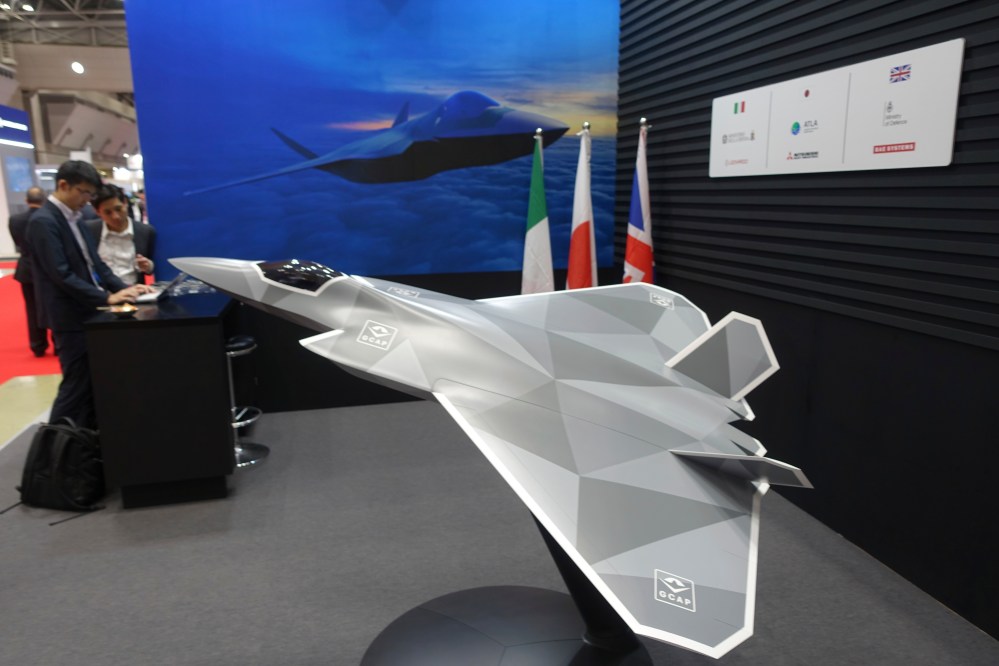
The cost to join remains unclear and would depend on future discussions with the governments taking part in the consortium developing the jet.
That’s not unusual. Ottawa committed in the early 2000s to paying hundreds of millions of dollars to join the program developing the F-35 stealth fighter.
National Defence said observer status will allow the federal government to better understand the program and assess potential “operational, industrial and economic benefits” that could come through deeper participation.
“As an observer, Canada’s interest in the GCAP is focused on assessing the potential for long-term industrial collaboration and participating in the development of future‑looking technology,” National Defence spokesperson Cheryl Forrest said in an email.
“Canada’s specialized aerospace and defence sector is well positioned to contribute to these capabilities. Early engagement in GCAP could create opportunities for Canadian industry to shape its development, invest in the technology early and secure meaningful participation throughout the life of the program.
“Canada is assessing these opportunities with a view to its long-term defence requirements, relationships with allies and potential industrial benefits.”
Defence Minister David McGuinty told reporters in Calgary on Thursday the federal government has an “obligation to see where the puck is going” as military technology advances at a breakneck pace.
“I was in the U.K. two weeks ago signing onto (GCAP) as an observer country. We think that that’s smart hockey,” he said. “We think it’s important to be there, up with that cutting-edge research.”
The department said that since Canada is the first country to join as an observer, an “observer arrangement” is being drafted to lay out how Canada will be involved.
Canada’s plan to procure a full fleet of F-35 stealth fighters remains under a political review by Prime Minister Mark Carney’s government.
The review was launched more than a year ago in response to the trade war started by U.S. President Donald Trump.
According to the Auditor General’s 2025 report on the F-35 procurement, National Defence spent about $1 billion from 1997 to 2023 to participate in the eight-nation Joint Strike Fighter program before it ever bought any of the jets.
Each F-35 jet produced through the global program contains some $3.6 million in Canadian-made components, according to federal government briefing materials.
A recently published federal government response to a House of Commons industry committee report says the F-35 review is also examining potential issues related to sovereign control of drones that would fly alongside the aircraft.
“The ongoing F-35 review is taking into consideration economic and industrial outcomes for Canada, including related to sovereign unmanned systems,” the government report said.
“Canada has designated aerospace and uncrewed systems as sovereign capabilities and continues to invest in domestic development and production.”
Canada has committed financially to purchasing 16 F-35s out of its planned fleet of 88 stealth jets.
Aerospace companies recently started signing cooperative partnerships to prepare for a scenario where Canada chooses to purchase a mixed fighter fleet that includes Saab Gripen fighters.
The Carney government has not hinted at where the review is headed.
This report by The Canadian Press was first published Aug. 7, 2026.