
Perseid meteor shower and partial solar eclipse to give skywatchers a celestial show
Advertisement
Read this article for free:
or
Already have an account? Log in here »
We need your support!
Local journalism needs your support!
As we navigate through unprecedented times, our journalists are working harder than ever to bring you the latest local updates to keep you safe and informed.
Now, more than ever, we need your support.
Starting at $15.99 plus taxes every four weeks you can access your Brandon Sun online and full access to all content as it appears on our website.
Subscribe Nowor call circulation directly at (204) 727-0527.
Your pledge helps to ensure we provide the news that matters most to your community!
To continue reading, please subscribe:
Add Brandon Sun access to your Free Press subscription for only an additional
$1 for the first 4 weeks*
- Enjoy unlimited reading on brandonsun.com
- Read the Brandon Sun E-Edition, our digital replica newspaper
*Your next Free Press subscription payment will increase by $1.00 and you will be charged $20.95 plus GST for four weeks. After four weeks, your payment will increase to $24.95 plus GST every four weeks.
Read unlimited articles for free today:
or
Already have an account? Log in here »
MONTREAL – Skywatchers in Quebec and beyond will get a unique show this week, as the Perseid meteor shower coincides with a partial solar eclipse.
The Astrolab astronomy centre at the Mont-Mégantic, Que., provincial park says shooting stars will rain down from the sky between Tuesday and Friday.
On Wednesday, the meteor shower will combine with a partial solar eclipse to create a rare celestial alignment.
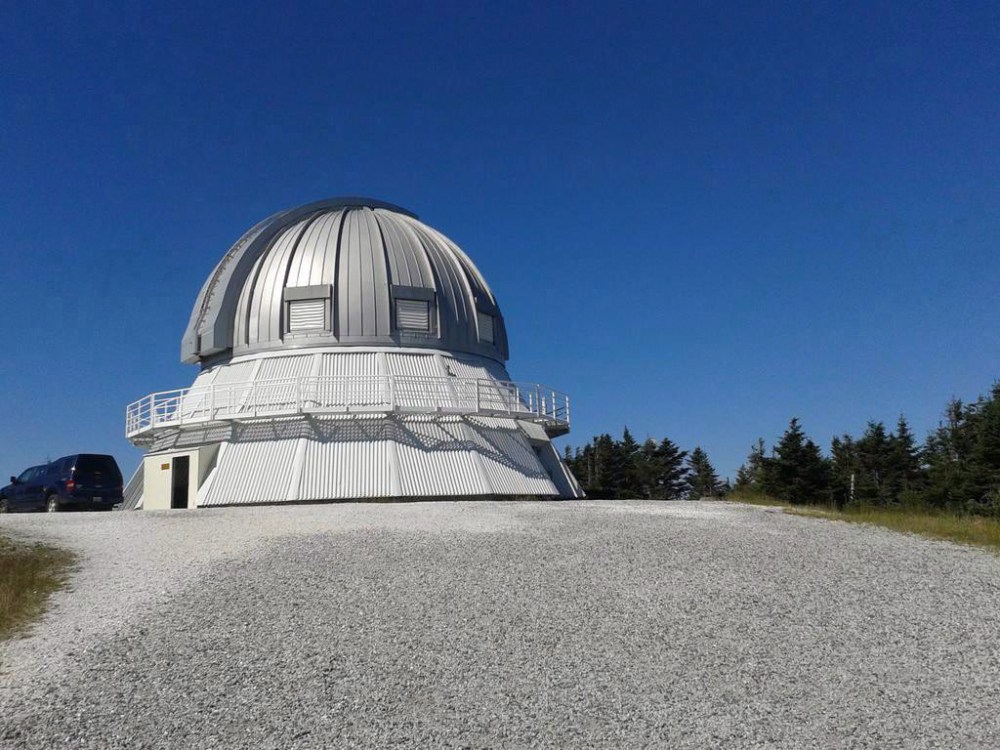
Sébastien Giguère, the Astrolab’s scientific coordinator, says the Perseid meteor shower can feature up to 100 shooting stars per hour, compared to about five on an average night.
“From time to time, Earth passes through a trail of dust left behind by a comet, leaving behind more dust in the solar system,” Giguère said in a phone interview. “And when Earth crosses that cloud of cosmic dust — that river of cosmic dust — well, there are more shooting stars than usual.”
The Perseids are debris from comet Swift-Tuttle, an icy ball that orbits the sun every 133 years and isn’t scheduled for a return visit until 2125.
Giguère said that while parts of Europe will experience a total solar eclipse, Canadians will witness the phenomenon partially. People in Atlantic Canada will see the highest amount of sun coverage, followed by those in eastern Quebec.
Giguère says the Astrolab, which is part of a dark sky reserve, will have activities “day and night” for people who want to witness the meteor shower, with the peak expected Wednesday.
He said people can also maximize their chances of seeing shooting stars by heading to an open area with as little light pollution as possible on a clear night and looking up.
He also wants to remind people watching the solar eclipse to use eye protection.
The organization that runs Quebec’s provincial parks says viewing conditions could be better than usual due to a new moon that doesn’t cast any light.
The Société des établissements de plein air du Québec says a partial lunar eclipse will also be visible across Quebec on the night of Aug. 27-28, providing a third astronomical event in one month.
This report by The Canadian Press was first published Aug. 11, 2026.
— With a file from The Associated Press