
Migrant workers left with uncertain future amid B.C. wildfire evacuations
Advertisement
Read this article for free:
or
Already have an account? Log in here »
We need your support!
Local journalism needs your support!
As we navigate through unprecedented times, our journalists are working harder than ever to bring you the latest local updates to keep you safe and informed.
Now, more than ever, we need your support.
Starting at $15.99 plus taxes every four weeks you can access your Brandon Sun online and full access to all content as it appears on our website.
Subscribe Nowor call circulation directly at (204) 727-0527.
Your pledge helps to ensure we provide the news that matters most to your community!
To continue reading, please subscribe:
Add Brandon Sun access to your Free Press subscription for only an additional
$1 for the first 4 weeks*
- Enjoy unlimited reading on brandonsun.com
- Read the Brandon Sun E-Edition, our digital replica newspaper
*Your next Free Press subscription payment will increase by $1.00 and you will be charged $20.95 plus GST for four weeks. After four weeks, your payment will increase to $24.95 plus GST every four weeks.
Read unlimited articles for free today:
or
Already have an account? Log in here »
After 20 seasons as a migrant worker in Canada Manuel Hernandez Cruz says he and others like him are in a “critical” situation as a wildfire in the Okanagan forced them to flee the jobs they depend on with no word on when they will be able to return or if the work will be there when they do.
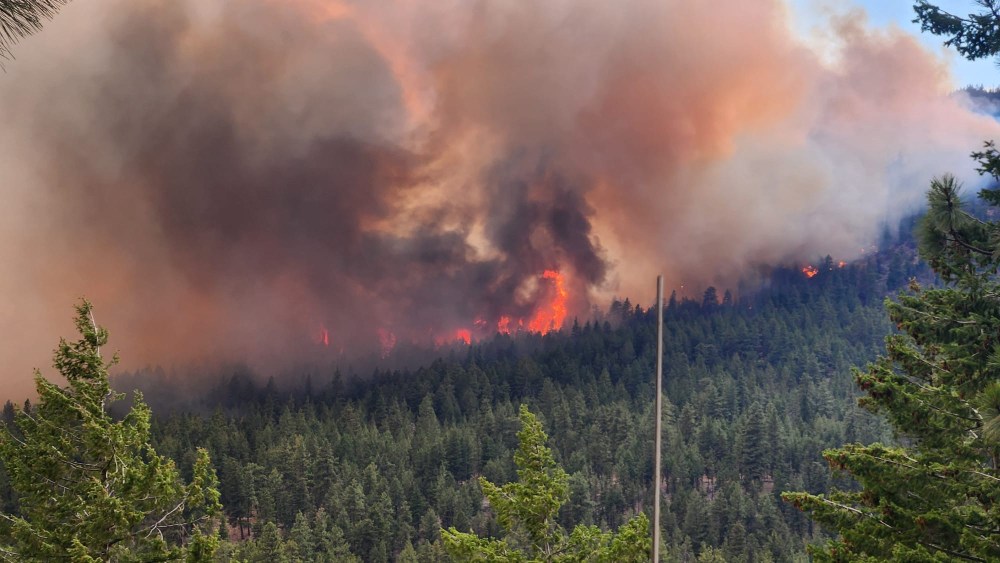
Cruz, who is from Mexico, fled the Bald Range fire that forced more than 20,000 people out of their homes near Summerland, B.C., and while he’s now safely in Penticton, he said each day that passes without getting back working increases his stress.
His boss told the group he works with that she will wait until Sunday to see if the situation improves “and if not, then there won’t be any work,” he said in an interview in Spanish.
“Some people are still waiting for all this to pass,” he said.
“To be here from Friday to Sunday and possibly wait longer, it’s going to be complicated, our survival,” said Cruz, who has worked in B.C.’s agriculture industry for 13 seasons.
British Columbia’s orchards, farms and ranches depend on migrant workers, some of whom have been left with an uncertain future because of wildfires, and advocates say more needs to be done at both the provincial and federal level to support them.
Raul Gatica, with the advocacy organization Dignidad Migrante Society, said his phone started ringing at about two a.m. last Saturday as the Bald Range fire spread and evacuation orders were issued.
By the end of the day, he estimates he spoke to about 50 workers who were forced out but are now facing a new set of problems as they go days without pay and evacuation orders stretch on.
He said temporary foreign workers are already paid poorly, and missing out on even a few days of work, while having to replace possessions and food left behind can have a significant impact.
“They are afraid of what will happen after the wildfires became controlled, because the smoke will still be there. And they say, what will happen? Will we still have the job or we won’t have the job,” he said.
Gatica said most migrant workers will not have accumulated the required 600 hours this early in the season to qualify them for employment insurance. He said the federal government could help by lowering that threshold and reducing the wait time for people to apply.
During the COVID-19 pandemic, Canada temporarily eased employment insurance rules, allowing Canadian claimants to qualify with a minimum of 120 hours.
“In Summerland, the majority of the people in this area, they don’t qualify because they won’t have enough hours, because they have (been here) one month or two months,” Gatica said.
A statement from Employment and Social Development Canada said the federal Migrant Worker Support Program can help workers with needs like replacing ID or finding temporary housing during wildfires and other emergencies.
It said people who are part of the Seasonal Agricultural Workers Program can be moved to other employers, where possible, in the event of wildfire.
A separate statement from Immigration, Refugees and Citizenship Canada said the government made changes in April to allow temporary residents affected by a natural disaster up to six months to apply to restore or extend their status.
“Additionally, temporary foreign workers on employer-specific work permits, including those impacted by wildfires, may already seek new employment while in Canada and may apply for a subsequent work permit,” the statement said.
“Those who find new employment may begin working while awaiting a decision on their work permit application under IRCC’s public policy on changing employers.”
In the Okanagan, multiple fundraisers have been set up to help.
Ingrid Mendez, the executive director of B.C.’s Migrant Workers Centre, said Friday that a relief fund they’re a part of has been able to hand out one-time supports of $150 each.
She estimates that about 100 workers were evacuated to different communities in the Okanagan, including West Kelowna and Penticton.
She said some are staying in emergency shelters, while others have found places to stay at different farms or in their employers’ homes.
Mendez said workers experienced similar struggles after flooding in the region in 2021.
“We saw workers losing their jobs, losing their employment, and not having any support, any income,” she said.
“Because of course during the floods many of the crops were lost, and with the fires, it’s the same.”
Mendez said she would like to see the provincial government reduce the three-month wait period for health coverage and a provincial services card.
“British Columbia is the only province that has this policy right now of the three-month wait period and this policy greatly affects migrant workers that come here every year to help us with our economy and help us with the many services and supports they do for us,” she said.
Gatica said some of the workers he has spoken with are already asking their employers to fly them home because they have no information.
Cruz said he hopes the government might be willing to help.
“I would like the government to turn their attention to the workers who came from abroad, because the truth is, the workers here are good workers, all of them,” he said.
This report by The Canadian Press was first published Aug. 14, 2026
— with files from Brenda Molina-Navidad