
Residents warned to prepare for changes when returning home after a wildfire
Advertisement
Read this article for free:
or
Already have an account? Log in here »
We need your support!
Local journalism needs your support!
As we navigate through unprecedented times, our journalists are working harder than ever to bring you the latest local updates to keep you safe and informed.
Now, more than ever, we need your support.
Starting at $15.99 plus taxes every four weeks you can access your Brandon Sun online and full access to all content as it appears on our website.
Subscribe Nowor call circulation directly at (204) 727-0527.
Your pledge helps to ensure we provide the news that matters most to your community!
To continue reading, please subscribe:
Add Brandon Sun access to your Free Press subscription for only an additional
$1 for the first 4 weeks*
- Enjoy unlimited reading on brandonsun.com
- Read the Brandon Sun E-Edition, our digital replica newspaper
*Your next Free Press subscription payment will increase by $1.00 and you will be charged $20.95 plus GST for four weeks. After four weeks, your payment will increase to $24.95 plus GST every four weeks.
Read unlimited articles for free today:
or
Already have an account? Log in here »
More wildfire evacuees in British Columbia are being allowed to return home Saturday morning, as emergency officials downgrade evacuation orders to alerts around the community of Clinton.
The changeover begins at 8:00 a.m., with the bulk of the updated alert area stretching north and east of Clinton, along Highway 97 to past 70 Mile House.
The Thompson-Nicola Regional District says areas west of the town, from the Kelly Lake substation, north to the district’s border, remain under evacuation orders due to the continued threat posed by the Pear Lake wildfire.
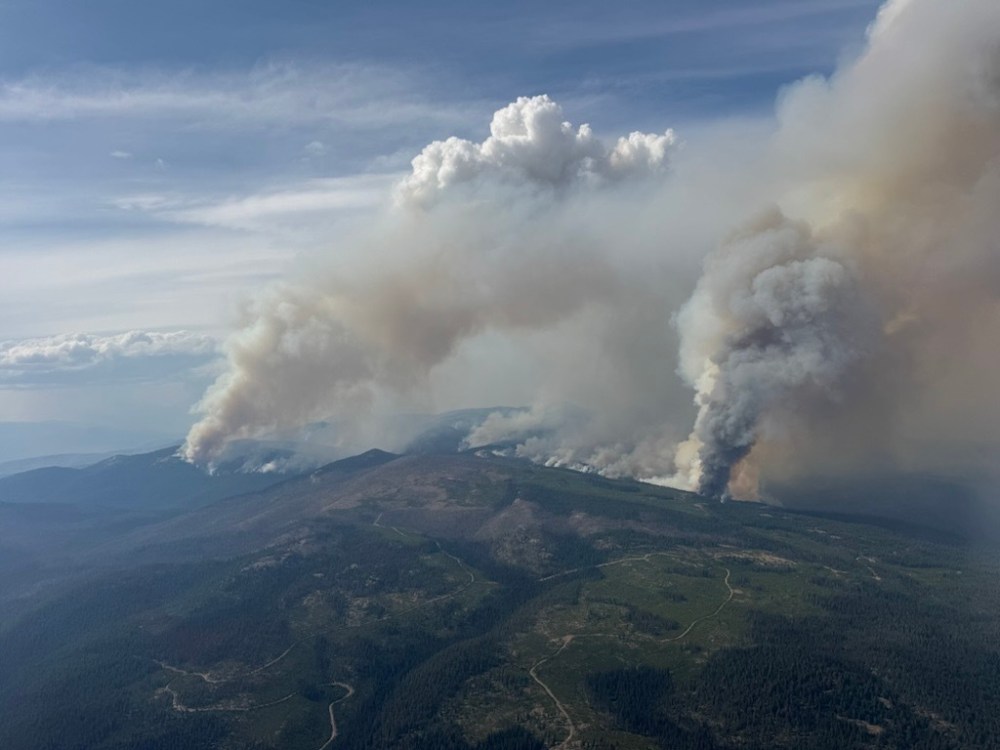
In a special update posted to YouTube, Clinton Mayor Roland Stanke said even though people are being allowed to go home, they will be returning to a community that has been profoundly affected, with the services people normally rely on limited or unavailable, and the threat of wildfire season still looming.
Meanwhile, a re-entry guide posted by the District of Summerland, aimed at Trout Creek residents, warns that the community may have changed dramatically, with blackened trees, smoke in the air, and missing landmarks.
Evacuation orders for parts of Summerland and Peachland on the shores of Okanagan Lake are slowly starting to lift, about a week after the Bald Range fire forced the evacuation of more than 20,000 people.
The guide says some homes and properties don’t have power, and the district is still under a boil-water notice with water restrictions.
It suggests that people return home with a kit that includes a flashlight, cleaning supplies, a first-aid kit, and a camera to record the property’s condition for insurance purposes.
Officials have also warned those returning that there are several bears in the Trout Creek area and residents need to dispose of their spoiled food properly.
The Bald Range wildfire near Summerland is one of about 120 fires burning in the province, with 38 per cent of those labelled as out of control.
Thousands of residents are still out of their homes, with 45 separate evacuation orders issued for numerous fires burning in the southern one-third of the province.
B.C.’s fire season started fast and early, and already about 400 buildings have been destroyed, including about 230 homes on the Okanagan Indian Band reserve that were lost in the Bradley Creek wildfire.
This report by The Canadian Press was first published Aug. 15, 2026.