
Hamed Shafia, convicted of murdering sisters and woman, granted absence from prison
Advertisement
Read this article for free:
or
Already have an account? Log in here »
We need your support!
Local journalism needs your support!
As we navigate through unprecedented times, our journalists are working harder than ever to bring you the latest local updates to keep you safe and informed.
Now, more than ever, we need your support.
Starting at $15.99 plus taxes every four weeks you can access your Brandon Sun online and full access to all content as it appears on our website.
Subscribe Nowor call circulation directly at (204) 727-0527.
Your pledge helps to ensure we provide the news that matters most to your community!
To continue reading, please subscribe:
Add Brandon Sun access to your Free Press subscription for only an additional
$1 for the first 4 weeks*
- Enjoy unlimited reading on brandonsun.com
- Read the Brandon Sun E-Edition, our digital replica newspaper
*Your next Free Press subscription payment will increase by $1.00 and you will be charged $20.95 plus GST for four weeks. After four weeks, your payment will increase to $24.95 plus GST every four weeks.
Read unlimited articles for free today:
or
Already have an account? Log in here »
In the time leading up to the murder of his sisters and stepmother, Hamed Shafia quashed his remorse by telling himself he had no choice and was simply going along with his father’s actions, he told a parole hearing Friday.
In reality, he was doing more than simply going along with it, said Shafia, who was 18 at the time of the killings. “I was aiding him in doing these things,” he said.
“So it was this back and forth in my mind, this game I was playing between moral obligation and then this whole notion that, ‘OK, I have to go through with it, this is honour,’ and all of that stuff.”
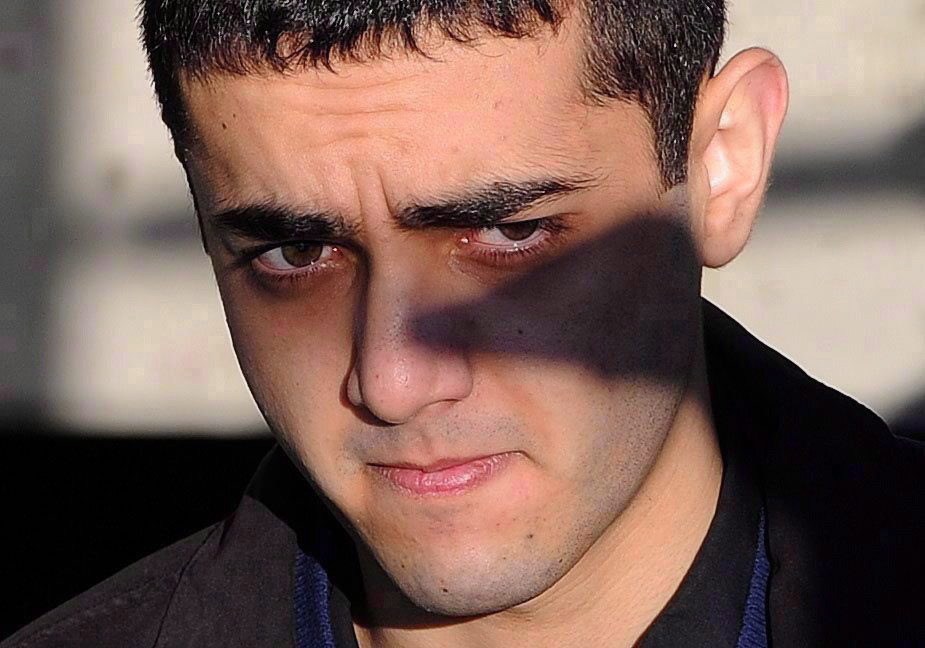
Shafia, now 34, was pressed about his beliefs and his relationships with his surviving family members as he sought two escorted temporary absences from the medium-security prison where he is serving a life sentence.
In the end, a Parole Board of Canada panel agreed Shafia should be allowed a brief visit to a minimum-security facility but rejected his request for another escorted absence to a mosque in Kingston, Ont.
“You’ve made a lot of progress. You’re moving in the right direction. You have gained insight … but there is still work there to be done,” panel member Mike Bossio told him, stressing the need for a gradual approach.
The panel is expected to release a more detailed written decision at a later date.
Shafia and his parents were found guilty in January 2012 of four counts of first-degree murder in the deaths of his teenage sisters and his father’s first wife in a polygamous marriage. First-degree murder carries an automatic life sentence with no chance of parole for 25 years.
The bodies of Zainab, 19, Sahar, 17, and Geeti, 13, and 52-year-old Rona Amir Mohammad were found in a car at the bottom of the Rideau Canal in Kingston in June 2009.
The trial judge had described the killings as being motivated by the Shafia family’s “twisted concept of honour,” and their view that the girls had “shamed” the family by dating and acting out.
The family had immigrated to Canada from Afghanistan and settled in Montreal, where the father was a successful businessman.
After his conviction, the younger Shafia argued that he was too young to be tried as an adult in the case, but Ontario’s top court rejected his appeal. The Supreme Court of Canada declined to hear the case in 2017.
On Friday, Shafia agreed he “dragged his feet” in taking accountability, and pointed to his growing relationship with his surviving siblings, particularly his two sisters, as the catalyst that helped him accept responsibility and work toward change.
Growing up, Shafia spent most of his time with his parents, especially his father, and had only “surface-level” conversations with his now-deceased sisters, he said.
The family had been in Canada just under two years when he and his parents committed the murders, he said. For the first four to six months, Shafia didn’t go to school; after that, he spent his time in school or at his father’s work, he said.
“I was closer to my father than I was with my sisters. I spent most of my time with my father and only a fraction of that with my siblings and my stepmother. … Simply put, he had more of an influence because I spent more time with him,” and there was no reason to question those beliefs, he said.
In the mid-2010s, however, Shafia began having deeper conversations with his remaining siblings, hearing about their feelings and their experiences “constantly being told that they’re in the bottom tier in the hierarchy,” he said.
“It put a face to this whole situation,” he said. “Before, it was just, ‘Hey, this is how things are and you being the eldest son should act this way.’ Whereas now it’s more that I understand who I’m acting against — it’s my sisters.”
Now, Shafia said he sees the beliefs he had in his youth as a way to control women, justified by misrepresenting religion.
His current view is that everyone is their own person, and no one should exert control over others, he said.
At one point in the hearing, Bossio asked Shafia what he would do if, while visiting the mosque on an escorted absence, someone recognized him and expressed disapproval. Shafia responded that he would simply walk away.
“It’s not hard for me to walk away from a person who quite frankly, has all right to not be fond of me. If I was a member of society, I wouldn’t be fond of someone who committed these crimes,” he said.
The board member replied that he had hoped Shafia would mention asking for support.
Shafia’s parole officer said he has completed several programs while in prison, including a moderate intensity violence prevention program.
He has also engaged in one-on-one meetings with the prison’s imam, focusing on extremist and misogynistic views of honour and women, “all with positive reports,” the officer said.
This report by The Canadian Press was first published Sept. 18, 2026.