
Calgary says 911 mistakes delayed search for missing autistic boy later found dead
Advertisement
Read this article for free:
or
Already have an account? Log in here »
We need your support!
Local journalism needs your support!
As we navigate through unprecedented times, our journalists are working harder than ever to bring you the latest local updates to keep you safe and informed.
Now, more than ever, we need your support.
Starting at $15.99 plus taxes every four weeks you can access your Brandon Sun online and full access to all content as it appears on our website.
Subscribe Nowor call circulation directly at (204) 727-0527.
Your pledge helps to ensure we provide the news that matters most to your community!
To continue reading, please subscribe:
Add Brandon Sun access to your Free Press subscription for only an additional
$1 for the first 4 weeks*
- Enjoy unlimited reading on brandonsun.com
- Read the Brandon Sun E-Edition, our digital replica newspaper
*Your next Free Press subscription payment will increase by $1.00 and you will be charged $20.95 plus GST for four weeks. After four weeks, your payment will increase to $24.95 plus GST every four weeks.
Read unlimited articles for free today:
or
Already have an account? Log in here »
CALGARY – The City of Calgary says 911 operators broke rules leading to a delay of almost an hour before the alert went out for missing 11-year-old Parker Wells.
The boy’s disappearance in July sparked a massive search that went on for two weeks until his body was found in a system of pipes under a city freeway. Foul play is not suspected.
Iain Bushell, the city’s head of emergency management, said in a statement Tuesday that 911 operators had the information they needed to alert police right away that July morning, but did not.
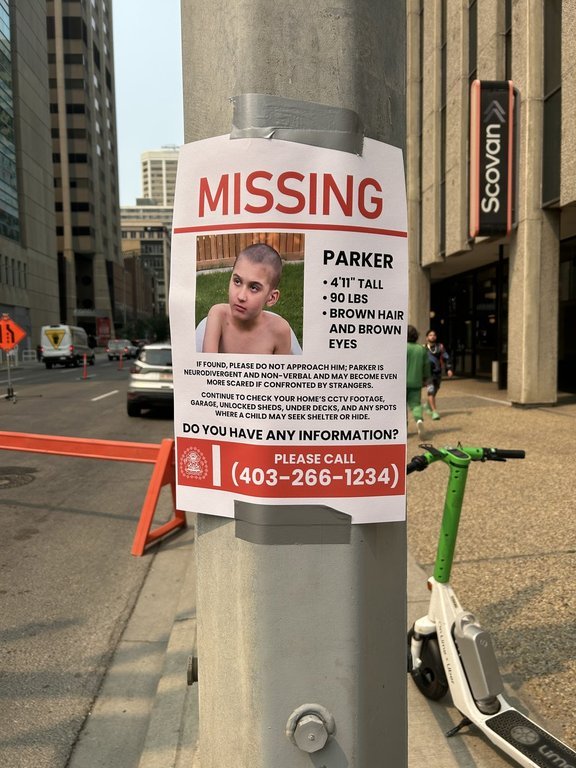
“Established procedures were not followed, resulting in a delay in how certain information was acted on,” Bushell said. “That delay did not meet the standard of service we expect.”
He said disciplinary action has been taken against those involved, but declined to provide details due to privacy rules.
“Calgary 911 employees are deeply committed to public safety,” he added. “When an event has a tragic outcome such as this, they feel the weight of that responsibility.”
The city said it has made changes after a review on the 911 response that day — more supervisors, more checks, and more spot reviews, along with updated training reviews.
“We are committed to strengthening our processes and ensuring our employees have the support, training and tools they need to serve Calgarians effectively,” Bushell said.
Parker walked away from his day home in north Calgary on the morning of July 16.
A city review cited by Bushell found that when the initial call came in from the day home at 10:53 a.m., the 911 operator did not flag it as an emergency because the day home did not want to officially list Parker as missing.
The review found that regardless of what the day home wanted, the 911 operator had enough information to alert police, which would have triggered other emergency search procedures and notifications in those crucial early minutes.
Soon after, the review said, a 911 supervisor reviewed the call and didn’t take action.
“The supervisor should have more fully considered the totality of available information, specifically the child’s age and the inability of day home staff to locate the child,” the review said.
A half-hour after the first call, the day home called back to report the child missing. The alert then went out to police, but not until 11:41 a.m. — a total of 48 minutes after the first call.
The search for the boy captured the attention and emotion of the city. Hundreds of police and volunteers checked and rechecked homes, boats, sheds, garages and waterways trying to find the child.
It was a complex undertaking complicated by Parker’s neurological condition.
Police cautioned that the boy could become more scared if confronted by strangers. Searchers played some of Parker’s favourite Disney songs from patrol vehicles to try to draw him out. Some left out Goldfish crackers.
After two weeks, the search was called off. A day later, Parker’s shoe was found near a culvert. His body was found a short distance away in a network of pipes under the north end portion of the Deerfoot Trail expressway. The spot was about three kilometres from the day home.
In the days that followed, a makeshift memorial of flowers, stuffed toys and candles grew by a footbridge near where his body was found.
Parker’s plight has also prompted petitions to change Amber Alerts. Such alerts are broadly disseminated warnings for children believed to have been abducted and in serious danger. In Parker’s case, an Amber Alert was issued as a special exemption but not until the second day of the search.
The Alberta government is now reviewing criteria for Amber Alerts.
This report by The Canadian Press was first published Sept. 22, 2026.