
Report on child murders points to institutional failures, missed warnings
Advertisement
Read this article for free:
or
Already have an account? Log in here »
We need your support!
Local journalism needs your support!
As we navigate through unprecedented times, our journalists are working harder than ever to bring you the latest local updates to keep you safe and informed.
Now, more than ever, we need your support.
Starting at $15.99 plus taxes every four weeks you can access your Brandon Sun online and full access to all content as it appears on our website.
Subscribe Nowor call circulation directly at (204) 727-0527.
Your pledge helps to ensure we provide the news that matters most to your community!
To continue reading, please subscribe:
Add Brandon Sun access to your Free Press subscription for only an additional
$1 for the first 4 weeks*
- Enjoy unlimited reading on brandonsun.com
- Read the Brandon Sun E-Edition, our digital replica newspaper
*Your next Free Press subscription payment will increase by $1.00 and you will be charged $20.95 plus GST for four weeks. After four weeks, your payment will increase to $24.95 plus GST every four weeks.
Read unlimited articles for free today:
or
Already have an account? Log in here »
OTTAWA – A new report on child murders says institutional failures — and warnings from mothers that officials dismissed — played a role in the deaths of eight children in Canada.
“In each case, warning signs were present. Concerns about violence, coercion, abuse, or danger were raised. Yet those warnings did not lead to adequate protection,” Suzanne Zaccour, director of legal affairs at the National Association of Women and the Law, told a press conference on Parliament Hill Thursday.
“In all five cases, the person seeking protection for the children was a woman. She asked for help from the police, child protection, the courts, and was not heard.”
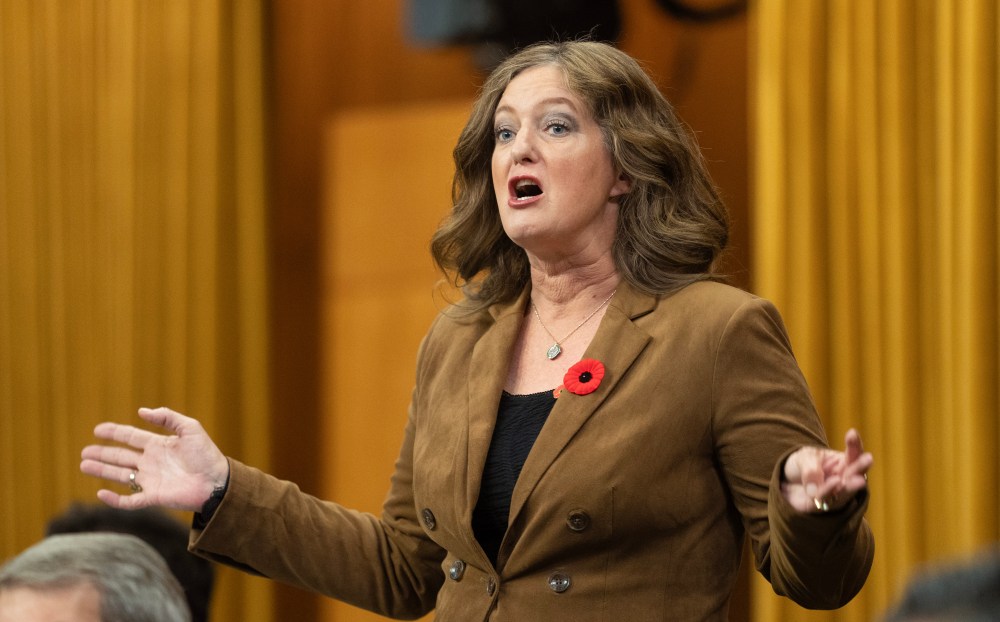
Institutions can prioritize a father-child relationship even in cases where there is a documented history of family violence, Zaccour said.
She urged Parliament to adopt a private members’ bill, introduced by Liberal MP Lisa Hepfner, which would curb parental alienation claims, among other measures.
Zaccour said parental alienation accusations are “systematically used as a litigation strategy to deflect attention from abuse, undermine a child’s disclosure of fear, and portray a protective mother as hostile, irrational, or manipulative.”
The report, published Thursday, analyzes the deaths of eight children in five different cases between 2011 and 2020. They include the case of four-year-old Keira Kagan, who was found dead alongside her biological father in a case that a review committee said was consistent with murder-suicide.
Philip Viater, a family lawyer and Keira’s stepfather, was also at the press conference.
“We brought an emergency motion asking that his parenting time be suspended or supervised because the risk was escalating,” he said.
Viater said the judge concluded that while the evidence was persuasive, the issue wasn’t urgent and child protection authorities could intervene in the meantime.
Two days before Keira died, a child protection worker said Keira’s father was “displaying behavior consistent with fathers who harm or kill their own children.”
“Yet they did not act. We were forced and directed to permit Keira to be in her biological father’s care unsupervised,” Viater said.
In another case outlined in the report, a seven-year-old girl was found unconscious in her room in Granby, Que., and later died in hospital. She had been placed in her father’s custody after being raised by her paternal grandparents.
Her grandmother had warned authorities there was a serious risk of sexual abuse, but she “lost custody after being perceived as hostile for reporting the dangers the girl was exposed to while in her son’s care,” the report says.
The child’s stepmother was found guilty of manslaughter and false imprisonment and the father pleaded guilty to false imprisonment.
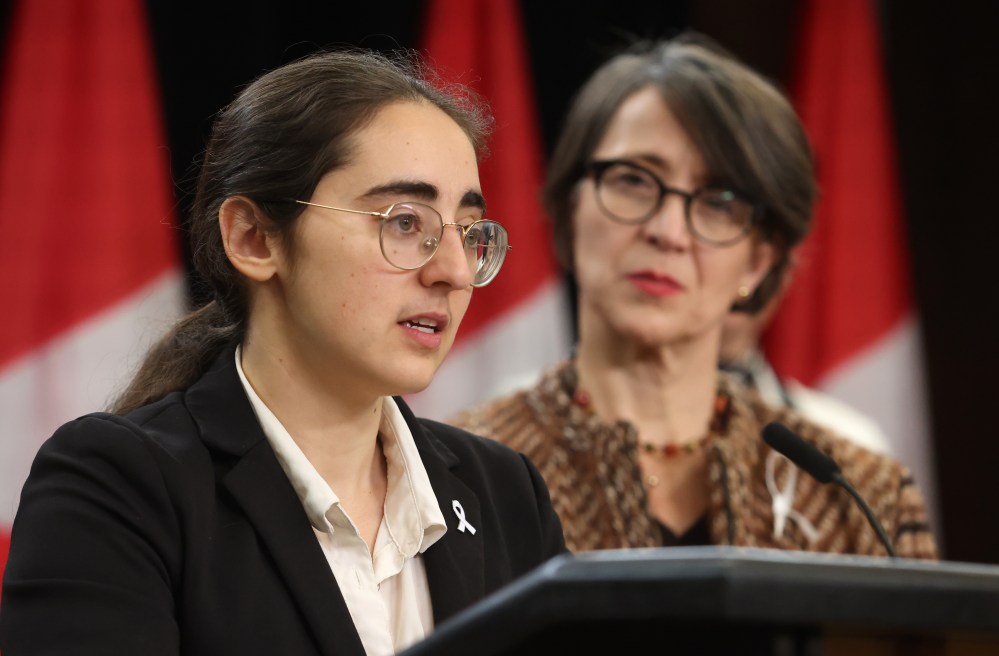
At the press conference on Thursday, Hepfner urged her colleagues to support her proposed legislation, “because children’s lives are at stake.”
Bill C-223 says a court, with some exceptions, “shall not take into consideration any allegation that a spouse has, or is likely to, through deliberate manipulation, persuade or encourage a child to become estranged from or resist contact with the other spouse.”
The report says the concept of parental alienation is frequently invoked in Canada’s courts. It says it’s used by parties in child custody cases to explain why a child resists seeing a parent, and to cast doubt on allegations of domestic violence.
“By interpreting a child’s resistance or a protective parent’s warning signs as manipulation rather than as an indicator of danger, institutions may contribute to maintaining or imposing contact with an abusive parent, thereby increasing the child’s vulnerability,” the report says.
Viater said experts, including a UN special rapporteur, have said the concept of parental alienation does not have a scientific basis.
Hepfner’s bill also would make other changes to the Divorce Act. It would impose new requirements on lawyers to screen for signs of family violence during divorce cases.
It also would give judges new tools to identify the existence and impact of coercive control on children and to ensure that, in some circumstances, children can express their preferences to a judge in a custody dispute.
This report by The Canadian Press was first published Sept. 24, 2026.
— With files from Alessia Passafiume