
A quarter of Quebec voters cast early ballots with six days to go before election day
Advertisement
Read this article for free:
or
Already have an account? Log in here »
We need your support!
Local journalism needs your support!
As we navigate through unprecedented times, our journalists are working harder than ever to bring you the latest local updates to keep you safe and informed.
Now, more than ever, we need your support.
Starting at $15.99 plus taxes every four weeks you can access your Brandon Sun online and full access to all content as it appears on our website.
Subscribe Nowor call circulation directly at (204) 727-0527.
Your pledge helps to ensure we provide the news that matters most to your community!
To continue reading, please subscribe:
Add Brandon Sun access to your Free Press subscription for only an additional
$1 for the first 4 weeks*
- Enjoy unlimited reading on brandonsun.com
- Read the Brandon Sun E-Edition, our digital replica newspaper
*Your next Free Press subscription payment will increase by $1.00 and you will be charged $20.95 plus GST for four weeks. After four weeks, your payment will increase to $24.95 plus GST every four weeks.
Read unlimited articles for free today:
or
Already have an account? Log in here »
MONTREAL – A quarter of eligible voters in Quebec have already cast their ballot, and candidates have six days to court those who are undecided before election day.
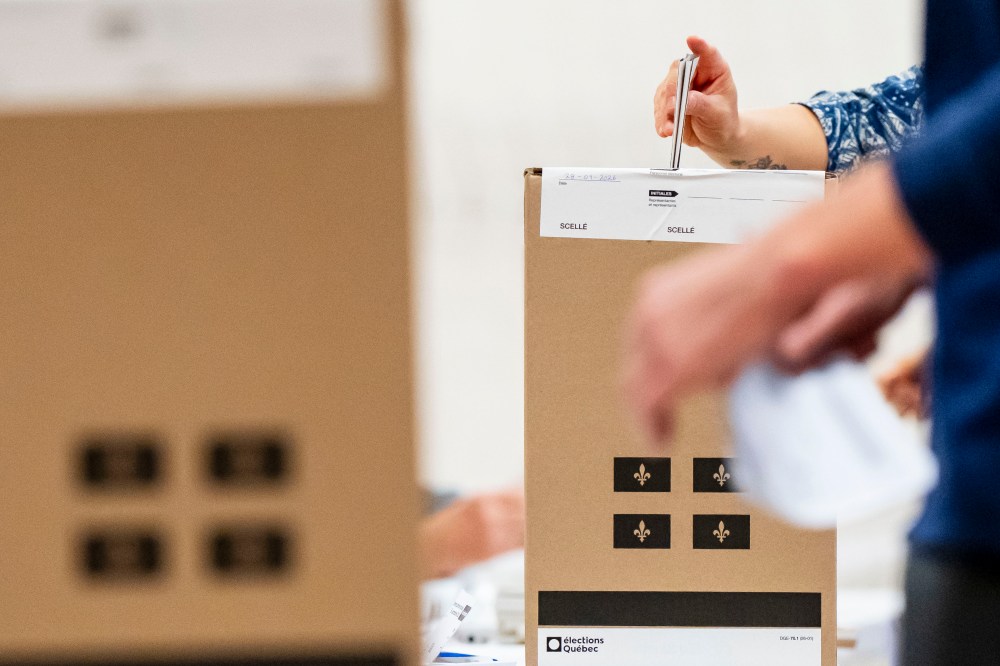
Élections Québec says 23.6 per cent of voters participated in advance polling on Sunday and Monday, including polls on school campuses and retirement homes.
Five parties are expected to win seats on Oct. 5, with the separatist Parti Québécois leading comfortably in the polls. But a new survey by La Presse shows that thousands of Quebecers have not made up their minds.
Immigration has dominated much of the campaign, and was a flashpoint for the Coalition Avenir Québec and the Conservative party on Tuesday. Both parties also promised to reduce the number of temporary immigrants and asylum seekers admitted in the province, which the PQ also advocated for.
Quebec would need Ottawa’s approval to do so, as both asylum and the international mobility program are under federal jurisdiction.
Conservative Leader Éric Duhaime was on the defensive after being accused of lying about asylum seekers.
A Radio-Canada report fact-checked claims made during a debate on Sept. 23, including Duhaime’s assertion that “more than a third of asylum seekers are fraudulent.” The public broadcaster reported that only 2.6 per cent of rejected claims were deemed fraudulent, while 27 per cent were denied for other reasons.
“Throwing around numbers like that about human beings who are fleeing danger in their home countries to seek refuge in Quebec is irresponsible, and on top of that, it’s false,” said Ruba Ghazal, co-spokesperson for Québec solidaire, on the campaign trail Tuesday.
Duhaime stood his ground, insisting that only 63 per cent of asylum seekers are admitted.
“So, you can play with words, but the reality is that more than a third either leave or are rejected before the process is over,” he argued.
Coalition Avenir Québec Leader Christine Fréchette, also mired in controversy since Friday, similarly promised to crack down on asylum seekers.
Though she distanced herself from Duhaime’s comments, she agreed that there “are too many of them” and said Ottawa must process asylum claims quicker. According to Fréchette, asylum claims take about three years to be processed.
“We’re talking about people who left everything behind to put their trust in us and come settle in Quebec,” she said.
Fréchette has been trying to shake off controversy after blaming members of her own party for trying to get journalists to pursue a story about foreign interference in the electoral process. Her party spent Monday on the defensive, but shifted her focus back to campaign promises.
Fréchette and Liberal Leader Charles Milliard once again invoked the PQ’s promised independence referendum to try to gain voters’ favours.
For her part, Ghazal was focused on attracting young voters to her leftist party, a demographic known for low turnout.
Speaking to youths in the Rosemont riding in Montreal, she pitched Québec solidaire as the party that will defend their futures and social democracy against austerity.
“I refuse to let them destroy everything that was built by those who came before us. That would be a profound injustice to today’s youth,” Ghazal said during a news conference.
She promised to cap rents, cut tuition fees in colleges and universities, make public transit free for those under 25, pay for mandatory internships and raise the minimum wage to $20 an hour.
Milliard focused his promises around secularism, saying he would wait until the Supreme Court hands down its decision before making any changes to the controversial law prohibiting government employees from wearing religious symbols.
This report by The Canadian Press was first published Sept. 29, 2026.