
Carney says Canada at ‘crucial time’ in conversation with Quebec premier-designate
Advertisement
Read this article for free:
or
Already have an account? Log in here »
We need your support!
Local journalism needs your support!
As we navigate through unprecedented times, our journalists are working harder than ever to bring you the latest local updates to keep you safe and informed.
Now, more than ever, we need your support.
Starting at $15.99 plus taxes every four weeks you can access your Brandon Sun online and full access to all content as it appears on our website.
Subscribe Nowor call circulation directly at (204) 727-0527.
Your pledge helps to ensure we provide the news that matters most to your community!
To continue reading, please subscribe:
Add Brandon Sun access to your Free Press subscription for only an additional
$1 for the first 4 weeks*
- Enjoy unlimited reading on brandonsun.com
- Read the Brandon Sun E-Edition, our digital replica newspaper
*Your next Free Press subscription payment will increase by $1.00 and you will be charged $20.95 plus GST for four weeks. After four weeks, your payment will increase to $24.95 plus GST every four weeks.
Read unlimited articles for free today:
or
Already have an account? Log in here »
OTTAWA – Prime Minister Mark Carney and his cabinet ministers Tuesday pledged to work with the new separatist Parti Québécois government in Quebec through the spirit of co-operative federalism.
On his way into a cabinet meeting on Tuesday, Carney told reporters he spoke with Quebec premier-designate Paul St-Pierre Plamondon after the PQ won a minority mandate in Monday’s provincial election.
St-Pierre Plamondon has said his separatist party would hold off on calling an independence referendum until after U.S. President Donald Trump leaves office.
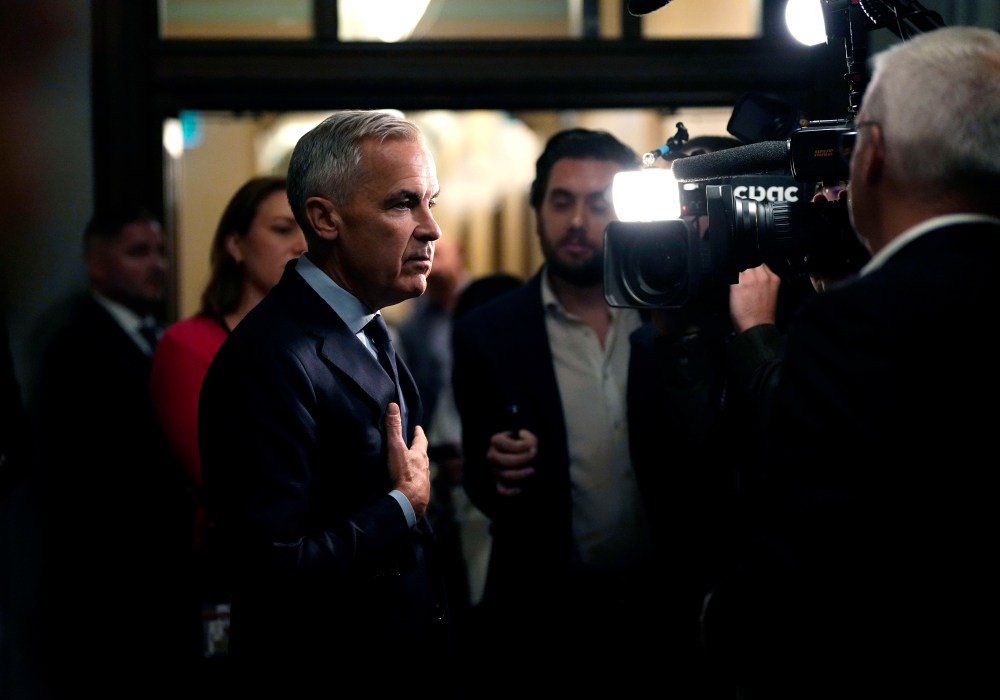
Carney called it a “crucial time” for the country, and said it’s important to focus on the now — not issues that are years into the future.
“This is a crucial time for our country, it’s a crucial time for Quebec,” he said. “This is not a time to wait for something a few years down the road. It’s a time to act. It’s a time for boldness.
That’s what this government’s been doing, whether it’s affordable housing, whether it’s in big projects, such as Churchill Falls in Quebec, whether it is in infrastructure — which we see in Quebec, the need for investment there — support for our workers that are being affected by American tariffs.”
Carney said the two leaders discussed some of those issues, including infrastructure funding and support for Quebec workers hurt by the U.S. trade war.
St-Pierre Plamondon told supporters in Montreal he will work with Quebec’s English speakers and with Carney when it serves Quebecers.
St-Pierre Plamondon has opposed the Alto high-speed rail development, a priority project of the Carney government, and has vowed a PQ government would withdraw from the project.
Industry Minister Mélanie Joly said she remains convinced both the Alto project, as well as the Churchill Falls energy development, will still go ahead.
“I’m convinced because this is in the interest of Quebecers. When it comes to Churchill Falls, it is the biggest investment in clean energy in the entire history of North America … $70 billion in investments,” Joly said.
“When it comes to high-speed rail, we believe that it is an important project for Canada but also specifically for Quebec because it will link the three major cities of Quebec which are Montreal, Trois-Rivières and Quebec (City).”
The minister added the rail link has been a “long-standing ask” by many Quebecers, “including those who voted for the new government.”
Heritage Minister Marc Miller said he would not speculate on the future of these projects but that Ottawa will press its case to the province.
“It’s not really time to speculate today. Alto is important for the country, it’s important for Canada, it’s important for our national unity,” Miller said.
“And we have a job federally to continue to convince Quebecers, Ontarians, and the rest of the country that this is really important for the economy.”
The Parti Québécois won 59 seats in Monday’s election, five seats shy of the 64 needed for a majority government.
The Coalition Avenir Québec was swept out of power in a resounding defeat, failing to win a single seat after eight years in power.
This report by The Canadian Press was first published Oct. 6, 2026.