
Timeline: How the deadly fire spread at CFB Wainwright
Advertisement
Read this article for free:
or
Already have an account? Log in here »
We need your support!
Local journalism needs your support!
As we navigate through unprecedented times, our journalists are working harder than ever to bring you the latest local updates to keep you safe and informed.
Now, more than ever, we need your support.
Starting at $15.99 plus taxes every four weeks you can access your Brandon Sun online and full access to all content as it appears on our website.
Subscribe Nowor call circulation directly at (204) 727-0527.
Your pledge helps to ensure we provide the news that matters most to your community!
To continue reading, please subscribe:
Add Brandon Sun access to your Free Press subscription for only an additional
$1 for the first 4 weeks*
- Enjoy unlimited reading on brandonsun.com
- Read the Brandon Sun E-Edition, our digital replica newspaper
*Your next Free Press subscription payment will increase by $1.00 and you will be charged $20.95 plus GST for four weeks. After four weeks, your payment will increase to $24.95 plus GST every four weeks.
Read unlimited articles for free today:
or
Already have an account? Log in here »
A fire that quickly ripped through a Canadian Armed Forces training ground in Alberta on Saturday killed four soldiers and injured 39 more.
Here is what is known about how it unfolded:
— Maj.-Gen. Wade Rutland, commander of the 1st Canadian Division, said 84 members of 3rd Battalion of Princess Patricia’s Canadian Light Infantry were training with live munitions in an area of CFB Wainwright.
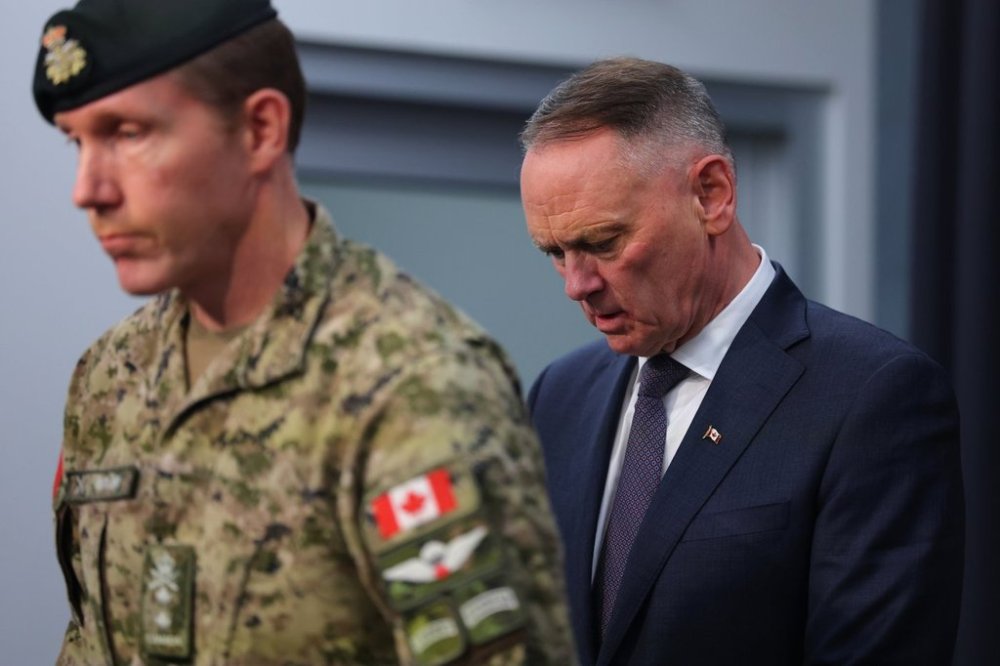
— He said most were throwing hand grenades on a range, while 10 soldiers were doing a simulated attack on an enemy in preparation for deployments overseas.
— Rutland said leaders were aware of a grass fire that ignited roughly a kilometre away from the ongoing training, but it was not considered a threat.
— Strong and sudden winds sent flames from the fire across the Prairie landscape in seconds, quickly bypassing fire guards and stopping soldiers in their tracks.
— Rutland said he was told by a commander on the ground that within 30 seconds to a minute, the fire was “right on top of them.”
— Emergency crews, including those from the Canadian Armed Forces and the town of Wainwright, were called to bring the fire under control.
— Dr. Sayeh Zielke, CEO of Acute Care Alberta, said by 6 p.m. on Saturday, health agencies were on a co-ordinating call and stood up a command centre.
— Hospitals declared a Code Orange to deal with the mass casualty incident and a rapid influx of patients.
— Alberta Premier Danielle Smith said 30 emergency units, including 22 ground ambulances and eight aircraft, were deployed directly into Wainwright.
— Several STARS air ambulances flew to Wainwright throughout the night.
— At around 7:30 p.m. MT on Saturday, Defence Minister David McGuinty announced from a TV studio in Ottawa that there were multiple fatalities and many more were injured.
— At 10:30 a.m. MT on Sunday, Prime Minister Mark Carney confirmed in a brief televised address from Ottawa that four soldiers died in the “violent, fast-moving fire,” calling it “one of the worst tragedies for the (Armed Forces) on Canadian soil in peacetime.”
— The Code Orange was lifted on Sunday.
— As of 3 p.m. MT Sunday afternoon, 39 patients were being cared for in hospital and at least 19 remained in critical condition, Smith said.
— Rutland said the Army currently does not believe the fire was the result of any explosion stemming from natural gas infrastructure on the base, nor any kind of outside interference.
— The military still must conduct a full investigation into field conditions and other factors that could have played into what transpired.
— Training at the Wainwright site was shut down on Sunday, but the battalion remains scheduled for a troop surge in Latvia in spring, so it will resume at a later date, Rutland said.
— Defence Minister David McGuinty said on Sunday the federal government “will keep Canadians informed as we learn more.”
This report by The Canadian Press was first published Oct. 19, 2026.