
Major projects bill would put decades of labour stability at risk: union leader
Advertisement
Read this article for free:
or
Already have an account? Log in here »
We need your support!
Local journalism needs your support!
As we navigate through unprecedented times, our journalists are working harder than ever to bring you the latest local updates to keep you safe and informed.
Now, more than ever, we need your support.
Starting at $15.99 plus taxes every four weeks you can access your Brandon Sun online and full access to all content as it appears on our website.
Subscribe Nowor call circulation directly at (204) 727-0527.
Your pledge helps to ensure we provide the news that matters most to your community!
To continue reading, please subscribe:
Add Brandon Sun access to your Free Press subscription for only an additional
$1 for the first 4 weeks*
- Enjoy unlimited reading on brandonsun.com
- Read the Brandon Sun E-Edition, our digital replica newspaper
*Your next Free Press subscription payment will increase by $1.00 and you will be charged $20.95 plus GST for four weeks. After four weeks, your payment will increase to $24.95 plus GST every four weeks.
Read unlimited articles for free today:
or
Already have an account? Log in here »
OTTAWA – Proposed amendments to Canada’s labour code outlined in Bill C-39 could put decades of labour stability at risk, Canadian Labour Congress President Bea Bruske told a parliamentary committee on Tuesday.
The 243-page bill seeks to fast-track approvals for major projects, cut their review times and create zones of “national interest” to pre-approve certain types of projects.
The bill also proposes changes to Section 107 of the Canada Labour Code to state that a minister can order a business under federal jurisdiction to resume operations, or put parties into binding arbitration.
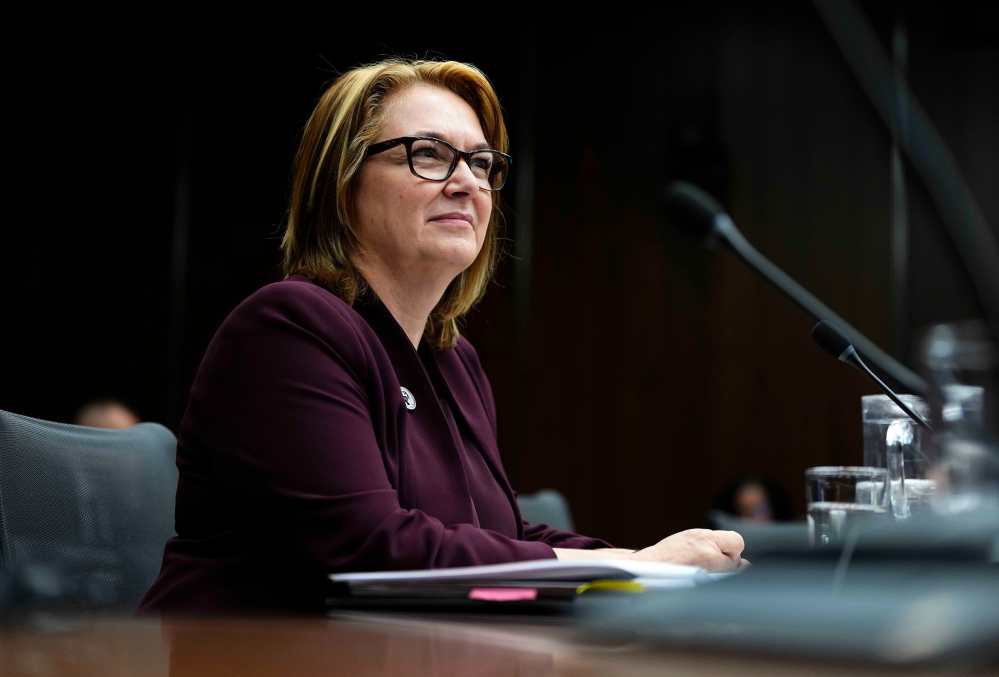
Bruske told MPs on the special House of Commons committee struck to review the bill that those proposed new powers effectively eliminate the right to strike.
“What looks like greater stability on paper is going to create more instability,” she told members of Parliament at the committee meeting.
Canadian Union of Public Employees national president Mark Hancock told the committee that when companies know the government will bail them out during a strike, they won’t put their best offers forward in contract negotiations.
“Bill C-39 doesn’t encourage employers to bargain,” he said. “It encourages them to lowball workers and wait for the minister to do their dirty work.”
Jobs Minister Patty Hajdu defended the legislation at a meeting of the C-39 committee on Monday.
Hajdu said the bill strengthens the right to strike by removing the ability to use Section 107 before a labour disruption. She argued the government has a responsibility to act during an “exceptionally consequential” dispute.
“Protecting workers and protecting the national interest go hand in hand,” she said.
The Canadian Labour Congress has proposed amendments that would ensure Section 107 does not give the minister the power to end legal strikes. Bruske said the group also has proposed striking an independent panel of experts to assess whether ongoing strikes have created a genuine national economic emergency.
“The panel would advise government, and if intervention were necessary, government would have to introduce legislation and make its case in Parliament,” she said.
Through C-39, the Liberals are proposing to introduce a new special mediator position. The special mediator would document both sides’ arguments in a labour dispute and publish a report to identify sticking points before talks break down.
It’s a tool the government sees being used in cases where unions and employers have a history of acrimony.
If passed, C-39 would require the jobs minister to consider the special mediator’s report before triggering Section 107. The minister must also conclude that the labour disruption is adversely affecting the “national interest” before taking the extraordinary step of ending a strike.
Bruske said her organization has proposed that special mediators be independent of government.
“Our experience under the Public Service Labor Relations Act raises some concerns that the proposed special mediator process could delay settlements rather than help achieve them,” she said.
The Liberals have used Section 107 numerous times in recent years leaned to end strikes in federally regulated sectors such as rail, ports and air transportation.
Labour experts have said the new language in C-39 likely does confer additional powers on the minister — and those powers will be subject to Charter challenges questioning their constitutionality.
This report by The Canadian Press was first published Oct. 20, 2026.