
Son says Canadian died in U.S. after declining hospital care due to deportation fear
Advertisement
Read this article for free:
or
Already have an account? Log in here »
We need your support!
Local journalism needs your support!
As we navigate through unprecedented times, our journalists are working harder than ever to bring you the latest local updates to keep you safe and informed.
Now, more than ever, we need your support.
Starting at $15.99 plus taxes every four weeks you can access your Brandon Sun online and full access to all content as it appears on our website.
Subscribe Nowor call circulation directly at (204) 727-0527.
Your pledge helps to ensure we provide the news that matters most to your community!
To continue reading, please subscribe:
Add Brandon Sun access to your Free Press subscription for only an additional
$1 for the first 4 weeks*
- Enjoy unlimited reading on brandonsun.com
- Read the Brandon Sun E-Edition, our digital replica newspaper
*Your next Free Press subscription payment will increase by $1.00 and you will be charged $20.95 plus GST for four weeks. After four weeks, your payment will increase to $24.95 plus GST every four weeks.
Read unlimited articles for free today:
or
Already have an account? Log in here »
The son of a Canadian woman who died after a fall at her home in Point Roberts, Wash., earlier this month said she refused to seek treatment, fearing she would be detained by U.S. authorities or prevented from returning to the country.
Dylan Adamson said his 61-year-old mother, Paige Adamson, was afraid to leave the United States because immigration authorities had recently commenced deportation proceedings, alleging she illicitly voted in a state election in 2018.
Health care is limited in Point Roberts, which is cut off from the rest of the United States and accessible by land only by travelling through British Columbia.
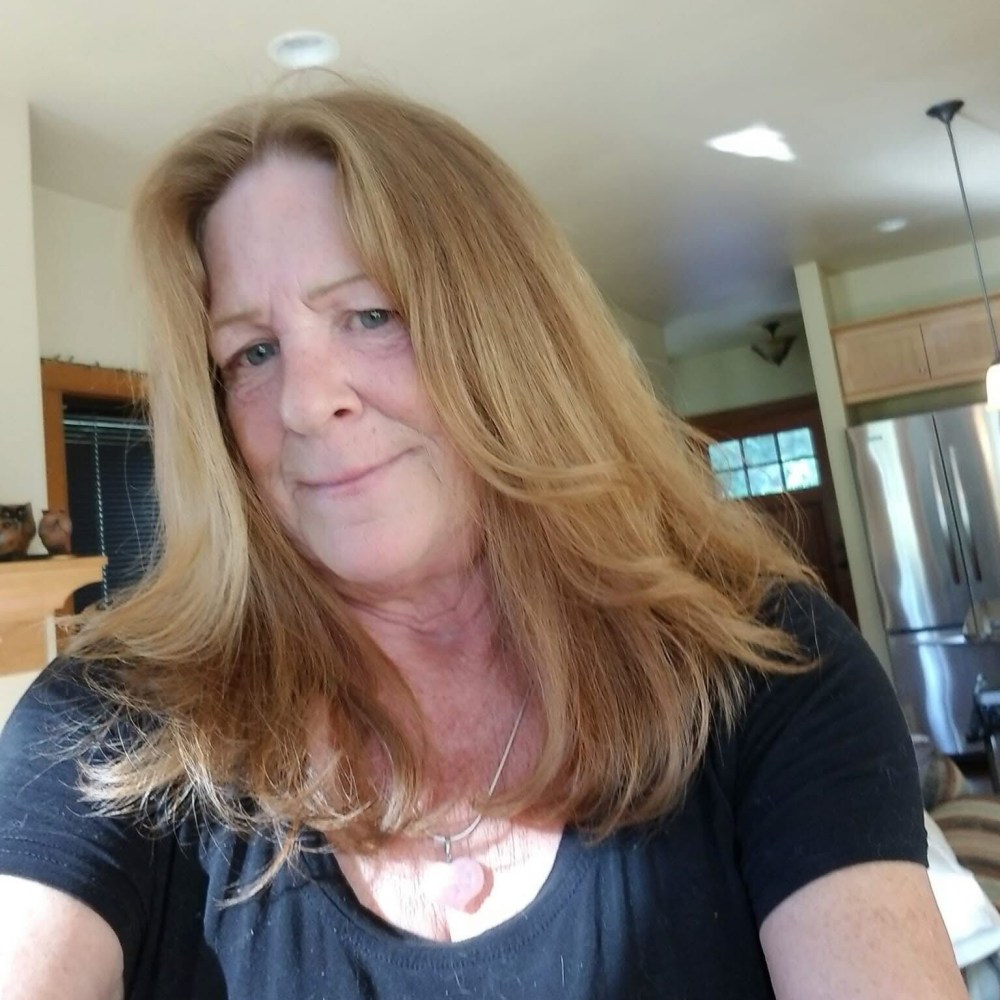
Adamson said his mother refused to be taken to a hospital because she was afraid of what might happen if she crossed the border.
He said he only learned of his mother’s fall after speaking with a firefighter who attended the scene of her death last Sunday, within a week of the accident.
“I’m just at a loss. Just because of a vote, my mom is dead. Just because of a stupid technicality, my mom is dead,” he said in an interview on Friday.
The fall came about a month after Paige Adamson, a permanent resident of the United States who had been living in Point Roberts since 2012, was heading home from a dinner to celebrate her birthday in nearby Tsawwassen, B.C., when U.S. border officials held her for hours and questioned her about voting in the country.
Dylan Adamson said his mother did not recall registering to vote or casting a ballot, and the ensuing deportation proceedings sent her into a “panic.”
On top of that stress, he said dental troubles had been affecting her ability to eat.
“She was very skinny when I saw her. I saw her a couple months ago. So, she was very frail and she tripped.”
Adamson said he understood from speaking with her friends in Point Roberts that she tripped and fell on a vacuum, striking her side, “around her stomach, hip side.”
He said he had also learned that paramedics who saw his mother before her death told her she needed to go to a hospital, but she signed a form declining further care.
“She would have went to the hospital. The only reason she didn’t is out of fear,” said Adamson, who lives in Maple Ridge, B.C.
Had he known about his mother’s fall, he said he would have driven to see her right away.
He said he expects to learn more details about her death from a medical examiner on Saturday.
Immigration lawyer Len Saunders said he first heard from Paige Adamson just after she was put into deportation proceedings over allegations she had illicitly registered to vote and cast a ballot in Washington state.
Saunders provided The Canadian Press with photos he said Adamson shared with him showing a transcript of her questioning by a border officer, along with a notice requiring her to appear before an immigration judge in Seattle on Nov. 4.
The notice alleged Adamson “falsely represented” herself as a U.S. citizen in order to register to vote in Whatcom county, then voted in the Nov. 6, 2018 election.
She was subject to removal from the United States on that basis, it said.
Saunders, who is based in Blaine, Wash., said he told Adamson he hadn’t been taking on deportation cases since the closure of a courtroom in the city some years ago, but he referred her to lawyers in Seattle and they kept in touch.
He said Adamson told him she was “losing sanity” over the ordeal.
Saunders said Adamson told him she hadn’t been feeling well, but she was afraid of travelling to see her doctor in Bellingham, Wash., because of the deportation action.
The lawyer said he was “shocked” to learn of her death.
“Quite frankly, when I first heard that, I thought it was suicide. I thought, you know, she’s just so stressed out,” he said.
Saunders said Adamson’s case is part of a recent U.S. government crackdown on people who aren’t American citizens but who have registered to vote, sometimes unknowingly, or cast a ballot without realizing they were ineligible to do so.
“You go into (the Department of Motor Vehicles) and you get your driver’s licence, and quite often they register you to vote,” he explained.
“People think, ‘Okay, if I can register, I can vote.’ So, a lot of these people did register and did vote, but it wasn’t done maliciously. They were naive.”
In the past, Saunders said U.S. authorities wouldn’t typically seek to deport such people as long as they removed themselves from voter lists and attested to registering or voting without knowing they shouldn’t have.
“I’ve never seen someone put in deportation proceedings at a port of entry as a permanent resident for voting. I’ve never seen it in 25 years.”
But that’s changed, Saunders said, noting the shift follows a U.S. government directive earlier this year to look into voter lists and enforce non-compliance.
Saunders said he’s heard of several cases of Canadians who are permanent residents of the United States travelling to Canada last month, then facing questions about possibly registering to vote and voting as they returned home.
He said border officials advised each of them against leaving the country “because they could be at risk when they come back of being put into custody and taken on a one-way trip” to an Immigration and Customs Enforcement detention centre.
“Like, these officers put the fear of God into all of these Canadians,” he said.
“When you go down to one of these detention centres, it’s not (for) days, it’s weeks, or months,” he added.
The transcript of Adamson’s Sept. 15 questioning shows the U.S. border officer asked her whether she had ever filled out a voter registration form in the country, to which she replied “No,” although she did recall a state-level ballot.
“Did they send you a ballot to vote?” the officer asked.
“Yes. It comes with everybody’s mail. I don’t remember when it was. Ten years ago, maybe,” Adamson replied.
Asked whether she received a ballot at her most recent address in Point Roberts, Adamson said, “No. I don’t know. It’s junk mail. I just threw it away. Right?
“Sorry, I am tired,” the transcript reads.
Saunders said he has helped many Canadians become U.S. citizens by naturalization over the years, including those who’d registered to vote or voted, telling them “as long as we can show that you deregistered,” the process should be successful.
“We’d deregister them, we’d do an affidavit, I would take them to their interview in Seattle when they became an American, and it was a non-issue.”
Now, Saunders said he won’t submit someone’s naturalization application if there’s any indication they may have registered to vote or voted in the United States.
“I don’t want to be liable for someone getting deported.”
This report by The Canadian Press was first published Oct. 23, 2026.