
Alberta government reducing education property taxes in 2027 after previous hikes
Advertisement
Read this article for free:
or
Already have an account? Log in here »
We need your support!
Local journalism needs your support!
As we navigate through unprecedented times, our journalists are working harder than ever to bring you the latest local updates to keep you safe and informed.
Now, more than ever, we need your support.
Starting at $15.99 plus taxes every four weeks you can access your Brandon Sun online and full access to all content as it appears on our website.
Subscribe Nowor call circulation directly at (204) 727-0527.
Your pledge helps to ensure we provide the news that matters most to your community!
To continue reading, please subscribe:
Add Brandon Sun access to your Free Press subscription for only an additional
$1 for the first 4 weeks*
- Enjoy unlimited reading on brandonsun.com
- Read the Brandon Sun E-Edition, our digital replica newspaper
*Your next Free Press subscription payment will increase by $1.00 and you will be charged $20.95 plus GST for four weeks. After four weeks, your payment will increase to $24.95 plus GST every four weeks.
Read unlimited articles for free today:
or
Already have an account? Log in here »
EDMONTON – Alberta Premier Danielle Smith says her government is reducing education property taxes starting next year after it brought in successive hikes for ratepayers.
It means in the spring, many home and farmland owners will pay almost seven per cent less than this year while commercial and industrial property owners will pay almost five per cent less.
Smith said Friday in Calgary the new rate will be frozen for three years so municipalities can plan with certainty.
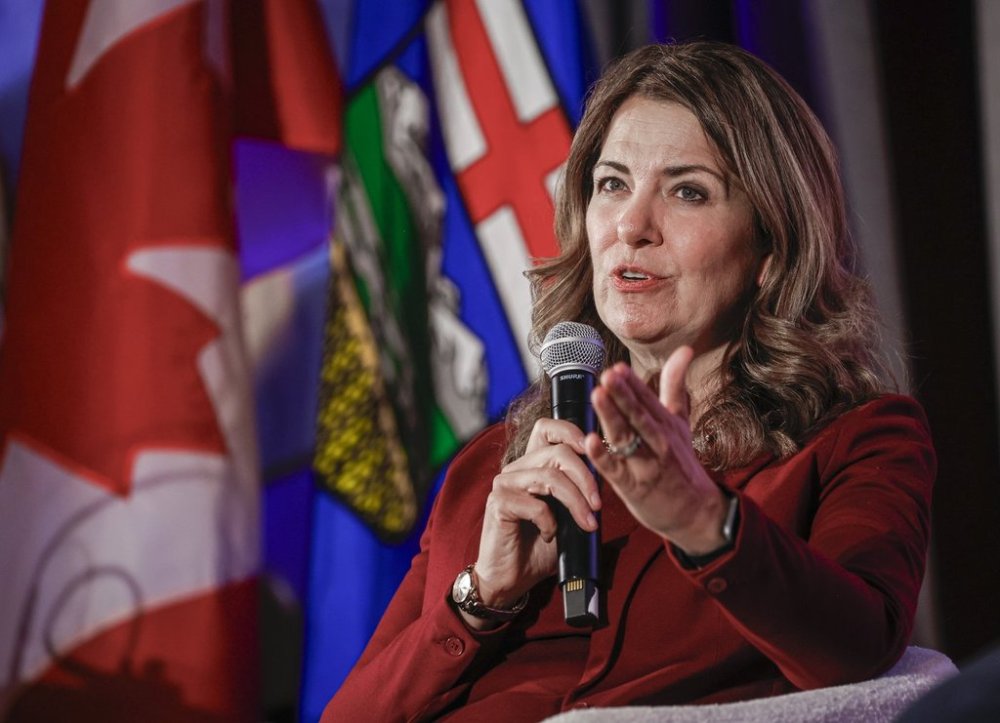
“No matter where Albertans live, they should be able to count on a fair, consistent and predictable approach to education property taxes,” she said.
The government estimates it will mean almost $100 million in savings for taxpayers in the first year, and the new rate will be standardized across the province, instead of varying from town to town.
The announcement comes after blowback from municipal leaders, particularly in Calgary, over previous UCP budgets that drove up education property taxes.
Municipalities collect the tax from all property owners on behalf of the province but those governments don’t control the rates.
It also comes in the wake of a byelection last month that saw Smith’s UCP lose a seat in the conservative stronghold of Calgary-Shaw.
Some political watchers attributed the loss to voter dissatisfaction over Smith’s referendum on separating from Canada, which sparked a debate that roiled the province all summer.
In a provincewide vote last week, Albertans decided overwhelmingly to remain in Confederation.
When asked Friday whether she was “buying votes” in Calgary as recent public opinion polls suggest sagging support in the city, Smith said she wants people to see her government is listening.
“I hope people look at this and see that we heard loud and clear that the issues that we have been talking about for the last couple of months aren’t really the top-of-mind issues for Calgarians,” she said.
She pointed to taxes, school supports, hospitals, and transportation issues as priorities.
“This is just the first step of our commitment to demonstrating that we took the message from what’s happened in the most recent byelection.”
Calgary Mayor Jeromy Farkas has been outspoken in his criticism of the last provincial education property tax increase, noting it hit Calgarians harder than other Albertans.
On Friday, Farkas thanked Smith, and called the announcement “transformational” and “generational.”
“We now expect to be able to provide a lower overall residential property tax increase to Calgarians,” he said.
Edmonton Mayor Andrew Knack also praised the move, saying in a government statement it simplifies the process for calculating the province’s education property tax while also providing more transparency to Edmontonians.
Alberta, an oil-rich province whose finances are perennially tied to international energy markets, has seen its budget projections swing wildly after war in the Middle East sent global energy prices surging.
In February, the province was projecting a $9.4-billion budget deficit, but as of the latest fiscal update, it’s now expecting a $2-billion surplus in fiscal 2026.
Finance Minister Jason Nixon said Friday he’s confident the province can absorb the cost without cuts to education.
“The approved education budget will not be reduced,” he said.
Opposition NDP Leader Naheed Nenshi said in a statement the tax freeze does very little to help Albertans and nothing to help Smith’s political standing.
He said last year’s increase meant the average Calgary home’s property taxes went up by over $350, but the decrease will only mean a savings of about $75 for homes that don’t go up in value.
“This year, (the UCP is) paying for this by shifting that property tax burden to rural homeowners who would see increases. But conveniently, only after the next election date,” said Nenshi.
“They’ve downloaded costs on municipalities, driven property taxes higher, and wasted hundreds of millions on a divisive referendum that only their separatist pals wanted.”
The government said for Albertans in communities where the new provincial rate may be higher than their current local rate, the province will offer a one-time transition tax credit in 2027.
Nixon said he expected that credit will offset the difference.
“Nobody will pay more than they would have paid before this and the vast majority will pay less than they will have before this,” he said.
This report by The Canadian Press was first published Oct. 30, 2026.