
More MDs in province, but too few specialists, Doctors Manitoba says
Advertisement
Read this article for free:
or
Already have an account? Log in here »
We need your support!
Local journalism needs your support!
As we navigate through unprecedented times, our journalists are working harder than ever to bring you the latest local updates to keep you safe and informed.
Now, more than ever, we need your support.
Starting at $15.99 plus taxes every four weeks you can access your Brandon Sun online and full access to all content as it appears on our website.
Subscribe Nowor call circulation directly at (204) 727-0527.
Your pledge helps to ensure we provide the news that matters most to your community!
To continue reading, please subscribe:
Add Brandon Sun access to your Free Press subscription for only an additional
$1 for the first 4 weeks*
- Enjoy unlimited reading on brandonsun.com
- Read the Brandon Sun E-Edition, our digital replica newspaper
*Your next Free Press subscription payment will increase by $1.00 and you will be charged $20.95 plus GST for four weeks. After four weeks, your payment will increase to $24.95 plus GST every four weeks.
Read unlimited articles for free today:
or
Already have an account? Log in here »
WINNIPEG — A shortage of up-to-date medical technology is contributing to the problem of recruiting and retaining specialists in the province which, in turn, leads to treatment delays, according to a physicians’ advocacy organization.
“They are trained in the medicine of today, and they arrive in Manitoba and they find the tools of yesterday,” Doctors Manitoba spokesperson Keir Johnson said Thursday. “And that’s not the medicine that people want to be providing.”
The organization’s annual Physicians in Manitoba report says the province is short 217 specialists, which makes up more than 90 per cent of the overall doctor shortage.
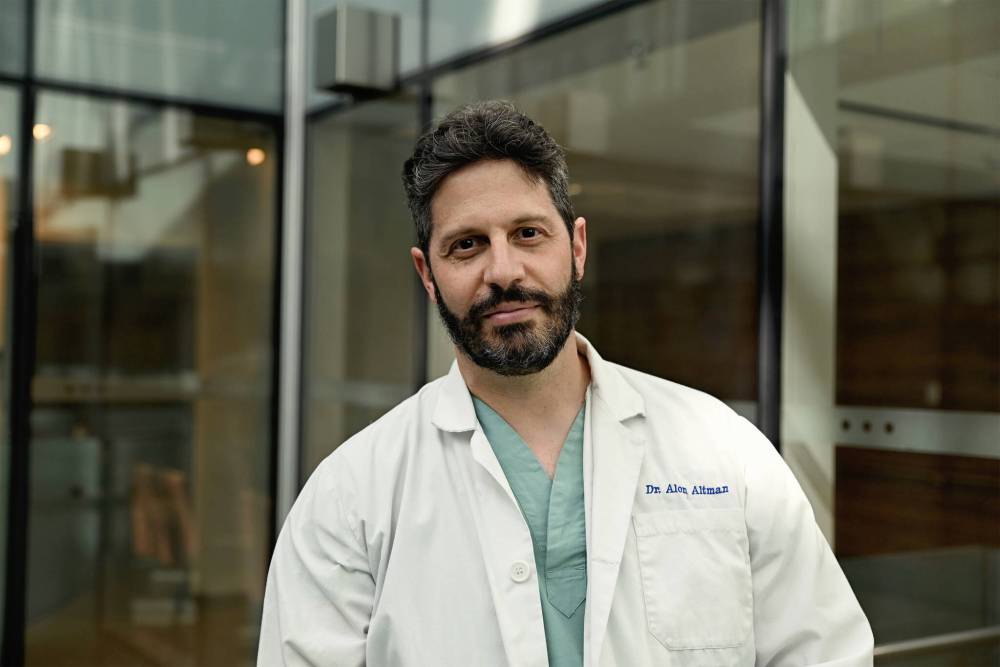
Manitoba’s government deserves credit for increasing the number of family doctors, but work needs to be done to attract more specialists, says Doctors Manitoba president Dr. Alon Altman. (Supplied)
There was significant positive data in the annual report, however, led by record growth in the number of physicians practising here.
“Manitoba is heading in the right direction on shrinking our severe doctor shortage,” Doctors Manitoba president Alon Altman said in a news release. “The shortage is nearly half the size it was just three years ago when it reached its peak.”
That news, however, is tempered by the fact there are “serious gaps” in some rural communities.
The report found that Manitoba has 235 physicians per 100,000 residents, a 4.5 per cent increase, and closer to the national average of 245. It said the province needs 229 more doctors to reach the Canadian average, down from a peak shortage of 445 three years ago.
The report said technology for specialty doctors is lacking in the province. As an example, Manitoba has a single surgical robot shared among multiple specialties. Other provinces have more units, said Altman.
There are several urologists in the province trained to use the technology, but waiting for access means patients wait longer.
“One robot is not enough for all the specialists to be using it efficiently,” Altman said. “We’ve got to catch up on things.”
Johnson said robotic surgery has several benefits, including speed of procedures and shorter recovery times.
That can free up in-patient beds, which officials have pointed to as a way to move people out of the emergency department more quickly.
The report said there are staffing shortages across the province in several specialties, including geriatrics, emergency medicine, cardiology, vascular surgery, pathology, nuclear medicine and radiology.
The shortages contribute to longer waits for consultations, diagnostic tests and surgeries, leading some patients to seek care elsewhere.
A July report from Statistics Canada said the country’s aging population is increasing demand for specialist care. The data, which used figures from 2024, showed 38 per cent of Canadians aged 45 or older had seen a specialist. Nearly 28 per cent experienced access difficulties and 18 per cent reported unmet health-care needs.
The federal government recently announced it was directing about $6 million towards hiring as many as 90 family doctors by 2029 to work in rural and northern Manitoba communities by expanding the provincial practice-ready assessment program, which fast-tracks the credentials of internationally trained doctors.
The province has credited its recruitment office, which has helped to attract 137 physicians to the province since 2024, including 18 who have taken positions in the western region.
However, the report says 658 doctors are considering leaving Manitoba or retiring in the next three years, and if they aren’t replaced, it would undo the recruitment work the province has done. The data show 158 doctors left during the last fiscal year, up from 138 a year earlier.
Altman said newly trained Manitoba doctors are also looking for work elsewhere because of shortcomings in the public health-care system. Sixty-three per cent of medical residents who completed their training in Manitoba are still practising in the province five years later, compared to the national average of 73 per cent.
“The administrative burden, the paperwork, the lack of team-based care, the equipment, technology and facilities that we don’t have — so they don’t picture themselves working in that,” he said.
Progressive Conservative health critic Kathleen Cook told reporters Thursday the province needs to focus on keeping doctors here as much as it is recruiting them.
In a prepared statement, Health Minister Uzoma Asagwara blamed the previous PC government for the shortages, and said while doctors have been added, there is still more work to do.
» Winnipeg Free Press