
Feds commit $32B to close First Nations infrastructure gap, $3B for health services
Advertisement
Read this article for free:
or
Already have an account? Log in here »
We need your support!
Local journalism needs your support!
As we navigate through unprecedented times, our journalists are working harder than ever to bring you the latest local updates to keep you safe and informed.
Now, more than ever, we need your support.
Starting at $15.99 plus taxes every four weeks you can access your Brandon Sun online and full access to all content as it appears on our website.
Subscribe Nowor call circulation directly at (204) 727-0527.
Your pledge helps to ensure we provide the news that matters most to your community!
To continue reading, please subscribe:
Add Brandon Sun access to your Free Press subscription for only an additional
$1 for the first 4 weeks*
- Enjoy unlimited reading on brandonsun.com
- Read the Brandon Sun E-Edition, our digital replica newspaper
*Your next Free Press subscription payment will increase by $1.00 and you will be charged $20.95 plus GST for four weeks. After four weeks, your payment will increase to $24.95 plus GST every four weeks.
Read unlimited articles for free today:
or
Already have an account? Log in here »
OTTAWA – The new federal budget commits $32 billion over 10 years to repair, replace and build First Nations infrastructure — though the Assembly of First Nations says the work will require more.
The federal budget released Thursday is largely framed around building up the Canadian economy. The government says the First Nations infrastructure funding will make essential services more reliable and help communities retain skilled workers.
“Building a strong and united Canada also means continuing the important work of reconciliation,” Finance Minister François-Philippe Champagne said in prepared remarks.
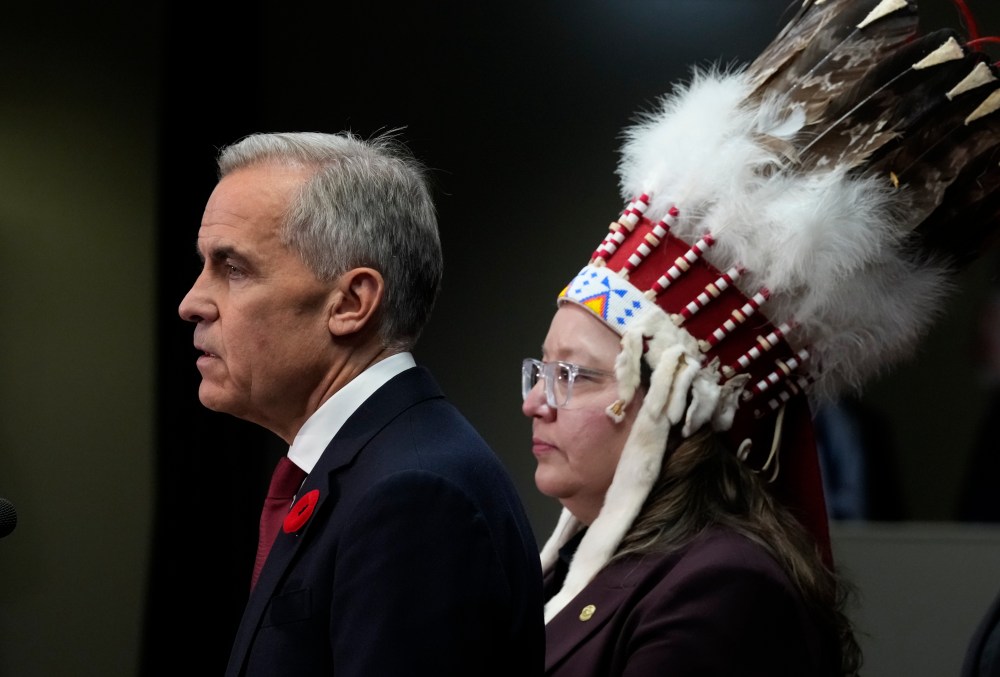
“It means ensuring Indigenous communities have the same foundations that every community needs to thrive: safe housing, clean water, good schools, reliable infrastructure, stable and culturally responsive policing services, and the ability to shape their own future.”
There is a deep infrastructure gap between First Nations communities and the rest of Canada. The Assembly of First Nations and the Conference Board of Canada estimate it would take around $375 billion to close it.
Many First Nations communities suffer from a lack of modern roads, schools and housing, poor internet connectivity and defective water treatment plants.
The federal budget earmarks $11 billion over 10 years to maintain, renovate and build First Nations homes, and $18.5 billion to build roads, bridges and schools. The budget also commits $5.8 billion over five years for First Nations elementary and secondary education.
Assembly of First Nations National Chief Cindy Woodhouse Nepinak has said the gap between First Nations and the rest of the country will only continue to grow without targeted investments.
The budget also includes $4.6 billion set aside by Indigenous Services Minister Mandy Gull-Masty for clean drinking water in First Nations communities, tied to the proposed First Nations clean water legislation.
“While we have made progress together over the past decade, discriminatory gaps continue to prevent First Nations and this country from meeting our full potential,” Woodhouse Nepinak said on Tuesday, ahead of the budget.
The budget also earmarks $2.9 billion over three years for Non-Insured Health Benefits, an Indigenous Services program.
The program has come under fire from chiefs since a woman from Fort Severn First Nation died in September after Indigenous Services failed to book her medical transportation after heart surgery.
After Miranda Mamakwa died, more than a dozen First Nations and tribal councils filed a human rights complaint alleging widespread neglect of their communities’ health needs.
Chiefs have demanded reform of the Non-Insured Health Benefits program and have called on the Ontario Provincial Police to look into Mamakwa’s death.
The budget also commits $290 million over four years to renew funding for public health workers and initiatives in Indigenous communities.
The budget earmarks $6 billion for Jordan’s Principle over six years — to ensure First Nations children receive the health and social supports they need — and $575 million over five years for a similar program for Inuit.
The federal government is also setting aside $610 million over four years for the Nutrition North subsidy to help offset high grocery prices in the North.
Inuit Tapiriit Kanatami, the organization that represents Inuit in Canada, says the program has failed to improve food security and reduce prices in the region.
While First Nations and Inuit have targeted funding measures in the budget, Métis do not, despite having pressed the government for supports in areas like housing and health care.
The only mention of Métis in the budget is in association with $806 million set aside over five years to implement a Trudeau-era Indigenous child welfare law.
“This funding will help Indigenous communities provide culturally appropriate supports and services that better meet the needs of children, youth and families,” the budget document says.
This report by The Canadian Press was first published Nov. 5, 2026.