
Diab says immigration plan about predictability, doing the ‘right thing’
Advertisement
Read this article for free:
or
Already have an account? Log in here »
We need your support!
Local journalism needs your support!
As we navigate through unprecedented times, our journalists are working harder than ever to bring you the latest local updates to keep you safe and informed.
Now, more than ever, we need your support.
Starting at $15.99 plus taxes every four weeks you can access your Brandon Sun online and full access to all content as it appears on our website.
Subscribe Nowor call circulation directly at (204) 727-0527.
Your pledge helps to ensure we provide the news that matters most to your community!
To continue reading, please subscribe:
Add Brandon Sun access to your Free Press subscription for only an additional
$1 for the first 4 weeks*
- Enjoy unlimited reading on brandonsun.com
- Read the Brandon Sun E-Edition, our digital replica newspaper
*Your next Free Press subscription payment will increase by $1.00 and you will be charged $20.95 plus GST for four weeks. After four weeks, your payment will increase to $24.95 plus GST every four weeks.
Read unlimited articles for free today:
or
Already have an account? Log in here »
OTTAWA – Immigration Minister Lena Diab says the new immigration levels plan is meant to make the system more predictable while doing the “right thing” by clearing a severely backlogged humanitarian permanent residency stream.
The levels plan, published Thursday, includes targets for 380,000 permanent residents and 370,000 new temporary residents annually through 2029, along with a pledge to make upwards of 200,000 longtime temporary residents permanent by the end of 2027.
Between the one-time plan to give 200,000 additional people permanent residency and a similar plan in last year’s immigration plan, the government looks to add more than 600,000 permanent residents next year. Many of those people are already in Canada and have been here for years, officials said.
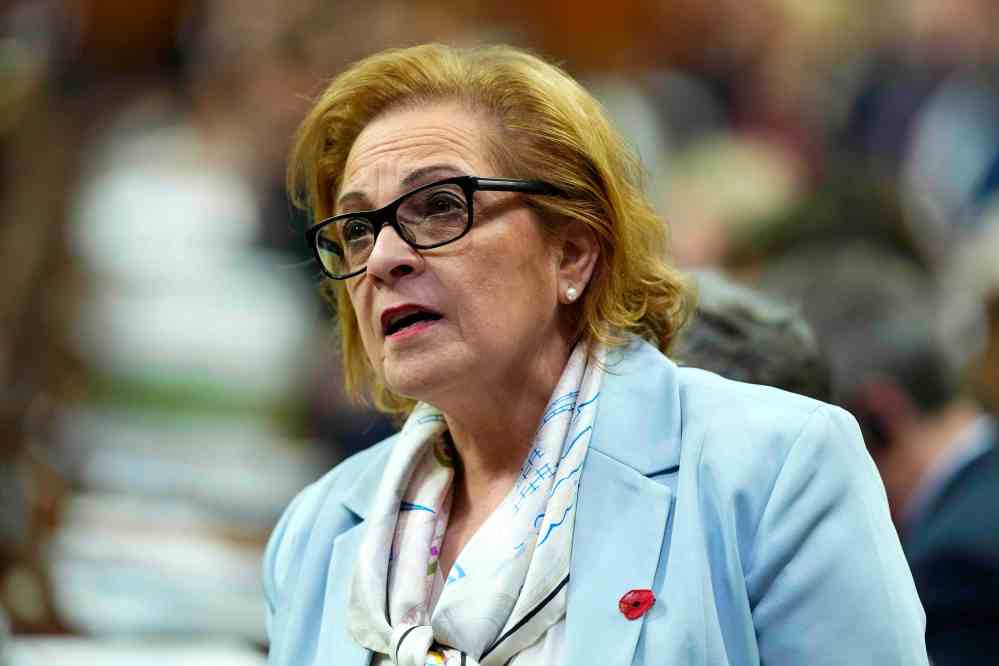
Speaking at a press conference in Stellarton, N.S. Monday, Diab said half of that 200,000 target will be made up of workers already in Canada. She said they will be selected in collaboration with the provinces and territories.
“It’s the measure that builds our economy, it’s up to 100,000 people, mostly people that are already working in Canada. It is to collaborate and be in partnership exactly with those provinces and territories, who are jointly responsible for this wonderful and challenging file right now … to make decisions directly on the up to 100,000, whether they want to use it or not,” Diab said.
The second half of the 200,000 target is focused on clearing the government’s backlog of humanitarian and compassionate permanent residency applications. Applicants to the humanitarian and compassionate permanent residency stream face wait times of more than a decade, both for specialty programs and family reunification.
Those in the backlog include about 50,000 former Hong Kong residents who came to Canada feeling Chinese political persecution and Ukrainians escaping Russia’s invasion.
“These are, for the most part, people that are already in Canada. They have housing, they have services, they’re paying taxes,” Diab said.
“We’re going to bring those in 2027 as permanent residents. Also spouses and children, you know, families. We don’t want families to be separated. That is the right thing to do for Canada economically, but it’s the right thing to do.”
In a video released Sunday, Conservative Leader Pierre Poilievre called the government’s latest immigration plan “bonkers” and claimed it will bring in about 200,000 more permanent residents annually than the government did when Justin Trudeau was prime minister.
“This is insane. Population growth already outstripped housing, health care and jobs for a decade,” Poilievre said in his video.
The Conservative leader accused the government of pursuing an immigration plan to boost the population to 100 million by 2100 in order to “make corporate power brokers a lot richer.”
“They can lower wages with an endless supply of poor foreign workers who come in and accept less. And they can charge a lot more rent when the housing market gets overwhelmed with too many people. But that destroys the working class who pay more to get less,” Poilievre said.
Diab repeated the government’s assertion that immigration is back under control, with numbers of new international students and workers coming to Canada dropping significantly since their peaks in 2024.
Immigration has become a fraught political topic in recent years and polls suggest about half the population thinks too many immigrants have come to Canada. The government’s own study found that view tends to soften when people learn more about the plan beyond headline numbers.
Diab’s comments Monday were her first public statements about the new immigration levels plan since it was tabled last week.
She said she wanted to speak with “really important stakeholders” like provincial immigration ministers and permanent residency applicants from Ukraine and Hong Kong before speaking about the levels publicly.
The government’s stated policy goals are to maintain new permanent resident admissions at less than one per cent of the total population annually and to reduce the temporary resident population to less than five per cent of the total population by the end of 2027.
Statistics Canada estimates show that as of July 1, 6.7 per cent of Canada’s population was made up of non-permanent residents, down from the October 2024 peak of 7.4 per cent.
The Immigration Department’s annual report, tabled Thursday, says about 3.3 million people held temporary visas to enter or remain in Canada throughout 2025.
This report by The Canadian Press was first published Nov. 9, 2026.