
Indigenous women’s groups call out Ottawa over funding in new federal budget
Advertisement
Read this article for free:
or
Already have an account? Log in here »
We need your support!
Local journalism needs your support!
As we navigate through unprecedented times, our journalists are working harder than ever to bring you the latest local updates to keep you safe and informed.
Now, more than ever, we need your support.
Starting at $15.99 plus taxes every four weeks you can access your Brandon Sun online and full access to all content as it appears on our website.
Subscribe Nowor call circulation directly at (204) 727-0527.
Your pledge helps to ensure we provide the news that matters most to your community!
To continue reading, please subscribe:
Add Brandon Sun access to your Free Press subscription for only an additional
$1 for the first 4 weeks*
- Enjoy unlimited reading on brandonsun.com
- Read the Brandon Sun E-Edition, our digital replica newspaper
*Your next Free Press subscription payment will increase by $1.00 and you will be charged $20.95 plus GST for four weeks. After four weeks, your payment will increase to $24.95 plus GST every four weeks.
Read unlimited articles for free today:
or
Already have an account? Log in here »
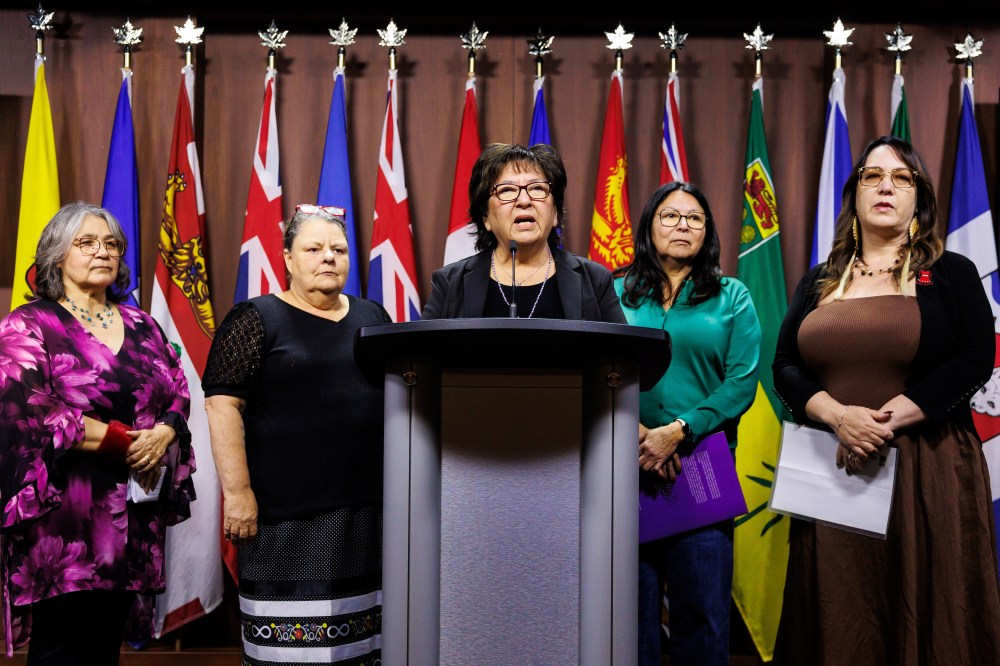
OTTAWA – Indigenous women’s groups say the new federal budget is harming the people they represent by not including funding targeted at violence and community support services.
Native Women’s Association of Canada president Josie Nepinak said Thursday the safety of Indigenous women must not depend on short-term funding cycles or be treated as a secondary factor in broader programs.
“We need sustained investment, clear accountability and a meaningful role for Indigenous women’s organizations in determining how these commitments will be implemented,” Nepinak said.
The federal budget identifies $3.6 million in funding for Indigenous women, including money to address the crisis of missing and murdered Indigenous women and to fund an alert system to help find women who go missing.
Nepinak said while some of the funding in the budget is welcome, more needs to be done to ensure “Indigenous women are not an afterthought.”
The collective of Indigenous women’s organizations from across the country said Thursday they’ve met with Crown-Indigenous Relations Minister Rebecca Alty to outline their priorities, but their requests were not reflected in the budget.
Crown-Indigenous Relations did not immediately respond to a request for comment.
Ontario Native Women’s Association CEO Cora McGuire-Cyrette said funding for Indigenous women is especially important as Prime Minister Mark Carney’s government works to speed up major project development.
“Canada is mobilizing billions to respond to economic threats and expand industries that put Indigenous women’s lives at risk,” she said.
“And we have yet to see the same urgency in addressing the threats we face every day. Canada cannot be strong when we, as Indigenous women, remain unsafe.”
Amnesty International has reported that binge drinking and drug use among transient resource sector workers, combined with high housing prices and a shortage of childcare services, can lead to the exploitation of Indigenous women and girls and make it harder for them to leave abusive relationships.
A 2019 inquiry into missing and murdered Indigenous women and girls concluded Indigenous women are 12 times more likely to go missing or be murdered than their non-Indigenous counterparts.
The final report was culled from the testimony of more than 2,380 family members, survivors, experts and knowledge-keepers brought together over two years to study the crisis and propose solutions.
Family members told the inquiry how intergenerational trauma and poverty compound the threats facing Indigenous women and girls, while knowledge-keepers described how women, through colonization, have been displaced from their traditional roles.
The commission brought forward 231 calls to action to address what it described as a genocide. Seven years later, little progress has been made on implementing them.
“We need government to take up its responsibilities and act on the solutions that generations of Indigenous women have put forward over the last three decades,” McGuire-Cyrette said.
“We have an opportunity today for generational change to create safer and more prosperous communities for all, but economic prosperity requires safety first, and investments into our safety must be recognized as nation-building.”
This report by The Canadian Press was first published Nov. 12, 2026.