
Public service union calls on Liberals to criminalize residential school denialism
Advertisement
Read this article for free:
or
Already have an account? Log in here »
We need your support!
Local journalism needs your support!
As we navigate through unprecedented times, our journalists are working harder than ever to bring you the latest local updates to keep you safe and informed.
Now, more than ever, we need your support.
Starting at $15.99 plus taxes every four weeks you can access your Brandon Sun online and full access to all content as it appears on our website.
Subscribe Nowor call circulation directly at (204) 727-0527.
Your pledge helps to ensure we provide the news that matters most to your community!
To continue reading, please subscribe:
Add Brandon Sun access to your Free Press subscription for only an additional
$1 for the first 4 weeks*
- Enjoy unlimited reading on brandonsun.com
- Read the Brandon Sun E-Edition, our digital replica newspaper
*Your next Free Press subscription payment will increase by $1.00 and you will be charged $20.95 plus GST for four weeks. After four weeks, your payment will increase to $24.95 plus GST every four weeks.
Read unlimited articles for free today:
or
Already have an account? Log in here »
OTTAWA – The Public Service Alliance of Canada is echoing calls from Indigenous leaders for the federal government to criminalize residential school denialism.
Between 1857 and 1996, roughly 150,000 Indigenous children were forced to attend church-run, government-funded schools.
The Truth and Reconciliation Commission concluded in its landmark 2015 final report that the residential school system was a central element of a state-backed policy of cultural genocide.
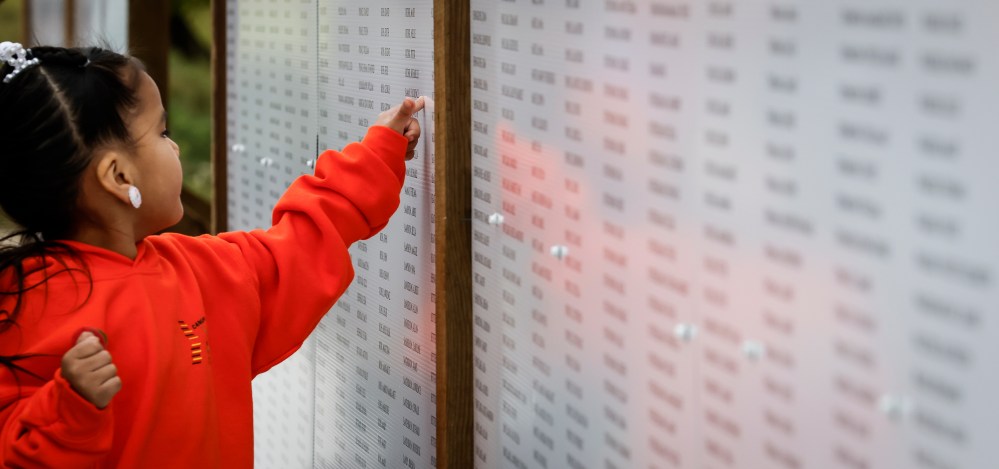
Children were barred from speaking their languages at the institutions, which were often rife with abuse and located far away from their families and communities.
The Truth and Reconciliation Commission initially documented the deaths of 3,200 children at residential schools. Experts at the National Centre for Truth and Reconciliation — who continue to comb through millions of records — say the actual number could be much higher.
The Assembly of First Nations has passed multiple resolutions in favour of criminalizing residential school denialism — one at its July gathering.
The government did not include residential school denialism in its recent hate crime bill and an attempt by some senators to amend the bill to add it was unsuccessful.
Public Service Alliance of Canada national president Sharon DeSousa said Ottawa should criminalize residential school denialism and commit funding to public education and programming to combat it.
“Reconciliation cannot move forward when the truth is under attack,” DeSousa said Monday on Parliament Hill as the union was beginning its Indigenous advocacy day.
Indigenous Services Minister Mandy Gull-Masty has indicated the federal government will not pass legislation criminalizing residential school denialism but will work on educating the public.
Public demonstrations of residential school denialism have shaken survivors and their communities.
Roseanne Casimir, chief of Tk̓emlúps te Secwépemc First Nation, reported a group of masked individuals dropped a banner from an overpass in Kamloops, B.C., in September questioning the record of residential schools.
The banner bearing the words “Got bones?” appeared to be questioning reports of human burials at the former sites of residential schools.
In May 2021, Tk̓emlúps te Secwépemc announced ground-penetrating radar had uncovered what were believed to be 215 unmarked graves at the site of the former Kamloops Indian Residential School. That news made international headlines and led to the community being attacked online.
Some outside individuals brought shovels to the community to dig for human remains and the First Nation was forced to increase security around the site of the former school.
Kimberly Murray, Canada’s former special interlocutor on unmarked graves and missing children, said despite the “well-documented reality” of deaths in the institutions, some have made a concerted effort to attack the testimony of survivors, Indigenous families and communities.
Murray said denying the history of residential schools enforces a false view of Canadian history and protects those responsible for the system by justifying their actions.
In her final report, released in 2024, Murray said people who do not deny that residential schools existed may still misrepresent the intent and impacts of the residential school system.
“Denialism is not a simple misunderstanding of the facts; whether consciously or unconsciously, denialists are working toward the accomplishment of psychological, practical or political goals,” she wrote.
“Indian residential school denialism must be taken seriously because it puts at risk the important work of truth and reconciliation. It should not be dismissed as a harmless fringe phenomenon.”
James Marchand of PSAC’s Indigenous Peoples’ Circle said residential school denialism continues to affect communities and families fighting for recognition.
“Government still won’t commit to making it a crime,” he said. “These are not issues of the past — they are happening today and demand action.”
NDP MP Leah Gazan has a private member’s bill before the House of Commons which would criminalize as hate speech any effort to condone, deny, downplay or justify residential schools — the same language used to criminalize Holocaust denialism in the Criminal Code.
Anishinabek Nation Grand Council Chief Linda Debassige said at the July gathering of the Assembly of First Nations the history of residential schools isn’t up for debate.
“Our survivors, both here today and those who have passed on, have kept the truth alive for generations. Now, hate speech needs to be incorporated into law to ensure denialism will no longer prey upon survivors, their families, or our people across this country,” she said.
“We stand united across this country to ensure that we will continue to honour our ancestors, our survivors, and to continue to push this until this is formally recognized in the Criminal Code of Canada.”
This report by The Canadian Press was first published Nov. 23, 2026.