
First Nation calls on B.C. to respect, follow court ruling on industrial developments
Advertisement
Read this article for free:
or
Already have an account? Log in here »
We need your support!
Local journalism needs your support!
As we navigate through unprecedented times, our journalists are working harder than ever to bring you the latest local updates to keep you safe and informed.
Now, more than ever, we need your support.
Starting at $15.99 plus taxes every four weeks you can access your Brandon Sun online and full access to all content as it appears on our website.
Subscribe Nowor call circulation directly at (204) 727-0527.
Your pledge helps to ensure we provide the news that matters most to your community!
To continue reading, please subscribe:
Add Brandon Sun access to your Free Press subscription for only an additional
$1 for the first 4 weeks*
- Enjoy unlimited reading on brandonsun.com
- Read the Brandon Sun E-Edition, our digital replica newspaper
*Your next Free Press subscription payment will increase by $1.00 and you will be charged $20.95 plus GST for four weeks. After four weeks, your payment will increase to $24.95 plus GST every four weeks.
Read unlimited articles for free today:
or
Already have an account? Log in here »
Hey there, time traveller!
This article was published 08/07/2021 (1886 days ago), so information in it may no longer be current.
VANCOUVER – The British Columbia government is being urged not to appeal a landmark court ruling halting new industrial development that doesn’t first have the approval of a First Nation whose territory has long been the focus of resource development.
Chief Marvin Yahey of the Blueberry River First Nation, located in northeastern B.C., said industrial development without regard for the nation’s treaty rights has been going on for decades.
“This confirmation from the court proves that our treaty has not been honoured,” he said at a news conference held outside the B.C. Supreme Court on Thursday. “There is a lot of work to do. We will not accept anything less than full enforcement of our rights as recognized by the courts.”
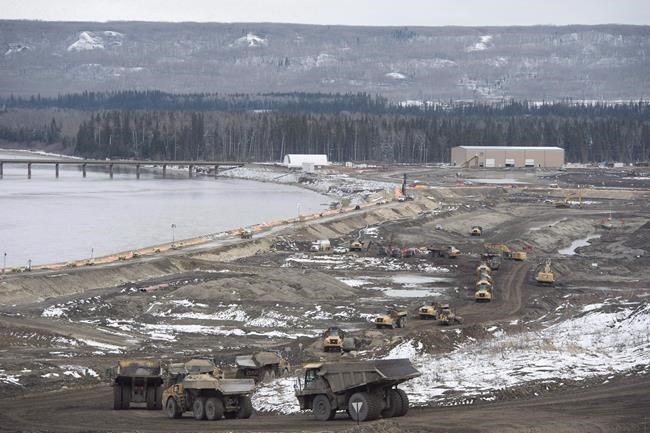
The B.C. Supreme Court found the provincial government breached the Treaty 8 agreement signed with the nation more than 120 years ago because it allowed development such as forestry and natural gas extraction without the community’s approval.
It found the province failed its treaty promise to maintain the nation’s rights to hunt, fish and trap without interference.
“For at least a decade, the province has had notice of Blueberry’s concerns about the cumulative effects of industrial development on the exercise of its treaty rights,” Justice Emily Burke wrote in her ruling issued last week. “The province failed to respond in a manner that upholds the honour of the Crown and implements the promises contained in Treaty 8.”
Burke said the rights, obligations and promises made in the treaty must be respected, upheld and implemented.
The ruling said that while not one single project has had a devastating effect on the community, the cumulative effect of a series of projects has limited their ability to maintain their treaty rights.
Two hydroelectric dams currently operate in the nation’s territory, and the controversial Site C dam project is under construction on the Peace River.
A spokeswoman for B.C.’s Ministry of Indigenous Relations and Reconciliation said in a statement that it is reviewing the ruling, and will be reaching out to the First Nation to discuss the next steps.
The Ministry of the Attorney General directed questions to the Indigenous Relations Ministry, and did not comment on whether the government would appeal the ruling.
Maegen Giltrow, the lawyer who represented the First Nation in court, said the case is precedent-setting and vindicates the belief the community had when it attempted to negotiate with the government in the past.
“The way of life that was negotiated, the balance that was negotiated in the treaty cannot be stolen,” she said.
If the provincial government was truly committed to reconciliation, it would not appeal the B.C. Supreme Court ruling, Yahey added.
The trial heard that over 84 per cent of Blueberry territory is within 500 metres of an industrial disturbance.
Yahey said while they aren’t anti-development, they want to be consulted.
“We are not against industry, if this is done right there’s plenty of work for everyone,” he said, adding that he wants to sit down with the province and have them hear their concerns.
A 2016 report published by the David Suzuki Foundation and Ecotrust Canada found that more than 110,000 linear kilometres of roads, pipelines and transmission and seismic lines had been cut across less than 40,000 square kilometres of Blueberry River territory.
Other representatives of Treaty 8 nations in attendance at the news conference spoke of the future impact the case could have.
“What this case means to our people is preservation of the connection to our land,” said Chief Trevor Makadahay, from the Doig River First Nation.
Chief Roland Willson, of the West Moberly First Nations, said Blueberry River’s win gives him hope for his nation’s ongoing legal battle against the provincial government over the Site C dam.
This report by The Canadian Press was first published July 8, 2021.
Note to readers: This is a corrected story. A previous version misspelled Chief Marvin Yahey’s last name.