
Helped develop response to SARS, H1N1: Renowned scientist Francis Plummer dies
Advertisement
Read this article for free:
or
Already have an account? Log in here »
We need your support!
Local journalism needs your support!
As we navigate through unprecedented times, our journalists are working harder than ever to bring you the latest local updates to keep you safe and informed.
Now, more than ever, we need your support.
Starting at $15.99 plus taxes every four weeks you can access your Brandon Sun online and full access to all content as it appears on our website.
Subscribe Nowor call circulation directly at (204) 727-0527.
Your pledge helps to ensure we provide the news that matters most to your community!
To continue reading, please subscribe:
Add Brandon Sun access to your Free Press subscription for only an additional
$1 for the first 4 weeks*
*Your next subscription payment will increase by $1.00 and you will be charged $20.00 plus GST for four weeks. After four weeks, your payment will increase to $24.00 plus GST every four weeks.
Read unlimited articles for free today:
or
Already have an account? Log in here »
Hey there, time traveller!
This article was published 04/02/2020 (2249 days ago), so information in it may no longer be current.
WINNIPEG – The former scientific director of Canada’s National Microbiology Laboratory who had experimental brain surgery to battle alcoholism has died.
Dr. Francis (Frank) Plummer, a world-renowned microbiologist and infectious-disease expert, was 67.
“He was a scientific maverick,” Theresa Tam, Canada’s chief public health officer, tweeted on Tuesday.
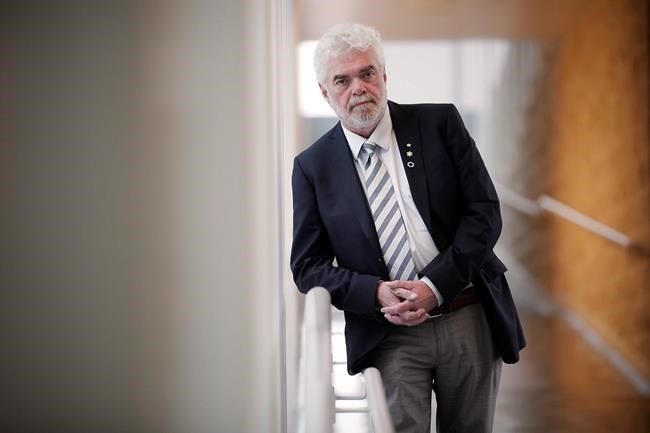
Plummer was a mentor, she said, who helped set up and make the national laboratory in Winnipeg a world-class institution.
Plummer was at the helm of the lab during the SARS, influenza and H1N1 epidemics, as well as during the development of an Ebola vaccine.
Prior to his time at the lab, Plummer’s research shaped public health policy around the world. He built a world-class research operation in Kenya, where he observed a particular group of women who had a natural immunity to HIV-1. That discovery provided important information for HIV vaccine and drug development.
“He was admired and regarded highly by academics and researchers around the world, and his legacy of seeking to develop an HIV vaccine remains one of the landmarks of infectious disease prevention,” University of Manitoba president David Barnard said in a statement.
“His contributions have had a cumulative global impact on saving the lives of tens of thousands of people for decades and also improving the lives of HIV positive people around the world,” added Digvir Jayas, the university’s vice-president of research.
Plummer was named an Officer of the Order of Canada in 2006 and a member of the Order of Manitoba three years later. He received numerous prestigious awards throughout his career, including the Flavelle Medal from the Royal Society of Canada in 2018 for his contributions to biological science.
Plummer had recently shared his own battle with alcoholism. In an article he wrote for Toronto’s Sunnybrook Health Sciences Centre, Plummer explained how he began to drink scotch to “to celebrate, relax and deal with stress, anxiety, disappointment and grief.”
After decades of drinking, attempts at quitting and a liver transplant, Plummer decided to get experimental treatment using deep brain stimulation in 2018.
“Having committed my career to medical science and human health I saw this study as one more way to make a contribution — this time, literally using my brain!” Plummer wrote.
Keith Fowke, head of medical microbiology and infectious diseases at the University of Manitoba, was a grad student under Plummer’s tutelage when they made the major discovery in Kenya. They later became close friends and colleagues.
Fowke said as a scientist or a research participant, Plummer always wanted to help people.
“He was always focused on truth and knowledge and making the world a better place,” Fowke said.
Fowke described his friend as warm and kind. He called Plummer a loving father and husband who enjoyed having his friends over for dinner.
“He wanted everyone to know he was a proud Winnipegger and a proud Canadian, and that all of us can make important globally significant contributions.”
This report by The Canadian Press was first published Feb. 4, 2020