
Inuk elder honoured for helping the home front during Second World War
Advertisement
Read this article for free:
or
Already have an account? Log in here »
We need your support!
Local journalism needs your support!
As we navigate through unprecedented times, our journalists are working harder than ever to bring you the latest local updates to keep you safe and informed.
Now, more than ever, we need your support.
Starting at $15.99 plus taxes every four weeks you can access your Brandon Sun online and full access to all content as it appears on our website.
Subscribe Nowor call circulation directly at (204) 727-0527.
Your pledge helps to ensure we provide the news that matters most to your community!
To continue reading, please subscribe:
Add Brandon Sun access to your Free Press subscription for only an additional
$1 for the first 4 weeks*
- Enjoy unlimited reading on brandonsun.com
- Read the Brandon Sun E-Edition, our digital replica newspaper
*Your next Free Press subscription payment will increase by $1.00 and you will be charged $20.95 plus GST for four weeks. After four weeks, your payment will increase to $24.95 plus GST every four weeks.
Read unlimited articles for free today:
or
Already have an account? Log in here »
Hey there, time traveller!
This article was published 24/01/2020 (2411 days ago), so information in it may no longer be current.
OTTAWA – Qapik Attagutsiak, a 99-year-old Inuk woman, will be the guest of honour at a ceremony Monday to recognize the little-known contribution by Inuit communities to help Canada and the Allies during the Second World War.
Canadians across the country were encouraged to salvage whatever waste materials they could, including metal, rubber, paper and rags, which were then recycled into various items for the war effort.
The call for raw materials also extended into the High Arctic, where Inuit communities were encouraged to collect bones that were then transported south and used in the manufacturing of ammunition and aircraft, as well as in fertilizer to grow food.
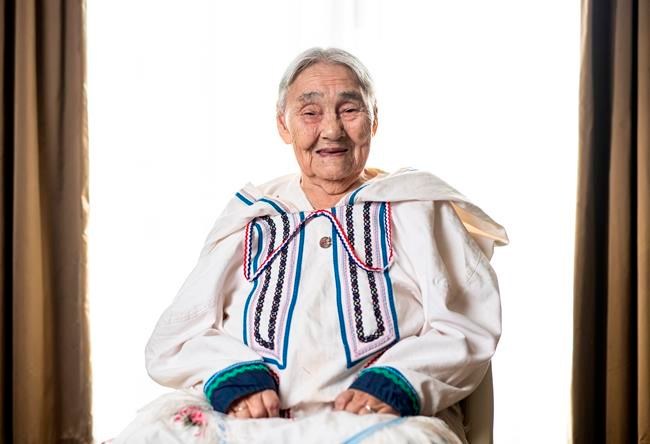
Attagutsiak’s family was among those who helped with that effort, and even now she remembers collecting bags full of dogs that had died from disease, as well as walrus and seal bones, at the behest of a local Catholic priest who told them of the war.
Eighty years later, she is the last known survivor of Inuit who contributed to those efforts and will be recognized at a ceremony organized by Parks Canada and the Canadian Armed Forces at the Canadian Museum of History in Gatineau, Que.
While Attagutsiak says her family at that time knew little about the rest of world, they understood that their way of life was under threat and felt compelled to help however they could.
This report by The Canadian Press was first published Jan. 24, 2020.