
Racialized adults on revised federal COVID-19 vaccination priority list
Advertisement
Read this article for free:
or
Already have an account? Log in here »
We need your support!
Local journalism needs your support!
As we navigate through unprecedented times, our journalists are working harder than ever to bring you the latest local updates to keep you safe and informed.
Now, more than ever, we need your support.
Starting at $15.99 plus taxes every four weeks you can access your Brandon Sun online and full access to all content as it appears on our website.
Subscribe Nowor call circulation directly at (204) 727-0527.
Your pledge helps to ensure we provide the news that matters most to your community!
To continue reading, please subscribe:
Add Brandon Sun access to your Free Press subscription for only an additional
$1 for the first 4 weeks*
- Enjoy unlimited reading on brandonsun.com
- Read the Brandon Sun E-Edition, our digital replica newspaper
*Your next Free Press subscription payment will increase by $1.00 and you will be charged $20.95 plus GST for four weeks. After four weeks, your payment will increase to $24.95 plus GST every four weeks.
Read unlimited articles for free today:
or
Already have an account? Log in here »
Hey there, time traveller!
This article was published 15/02/2021 (2067 days ago), so information in it may no longer be current.
OTTAWA – Adults from racialized communities disproportionately affected by the COVID-19 pandemic should be prioritized for shots in the second stage of the vaccination campaign, says new guidance from Canada’s national advisory committee on immunization.
The advice also would see all essential workers who can’t do their jobs from home moved into the second stage, instead of focusing on health workers with lower-risk jobs.
The second stage is expected to start this spring after provinces get COVID-19 vaccines into the arms of all the staff and residents of long-term care homes, adults aged 70 or older, front-line health workers and adults in Indigenous communities.
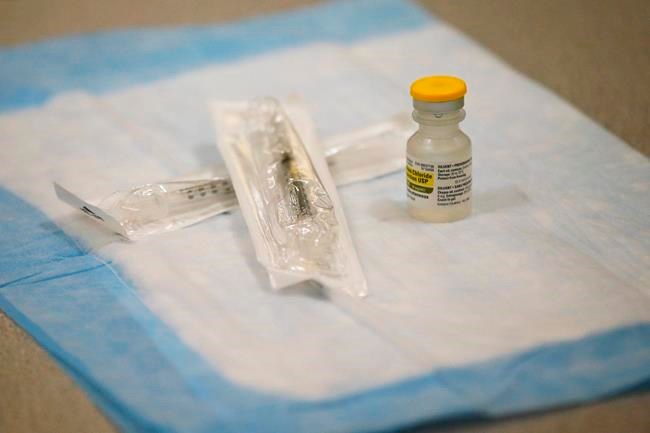
The list of groups that should receive COVID-19 vaccines in the second stage includes people between 60 and 69 years old, racialized adults from groups disproportionately affected by COVID-19, essential workers, first responders, caregivers and residents and staff of congregate living sittings including homeless shelters, prisons and migrant workers’ quarters.
The committee added a third stage to its immunization recommendations that includes people between 16 and 59 years old with underlying conditions, those who are between 50 and 59 years old with no underlying conditions, and health workers and essential workers who are didn’t got shots in previous rounds.
The new recommendations prioritize racialized adults from groups disproportionately affected by the pandemic ahead of some older non-racialized people.
“Key populations are sequenced in three stages corresponding to increasing vaccine availability in each quarter of 2021,” the committee said Monday.
“By the end of the third quarter of 2021, it is anticipated that sufficient vaccine supply will be available to offer vaccines to the general Canadian population.”
Canada’s chief public health officer Dr. Theresa Tam said Friday the new recommendations take into consideration objectives to reduce serious outcomes of COVID-19 throughout society, and to reduce the burden of illness.
Health authorities in the provinces and the territories make the actual decisions on who gets vaccinated first.
“Provinces have different demographics but they use the evidence, I think, to inform their vaccinations,” Tam said.
“For example, if you were in Toronto, if you’re in Ontario, they’ve already got data in relationship to where those higher risk populations are and that they be considered as part of the rollout for the prioritization of vaccines.”
The new federal vaccination guidance comes as COVID-19 vaccination efforts are expected to get a big boost this week.
The Public Health Agency of Canada says it expects Pfizer and BioNTech to deliver more than 400,000 doses of their COVID-19 vaccine this week and about 450,000 doses each week until April.
This report by The Canadian Press was first published Feb. 15, 2021.
—–
This story was produced with the financial assistance of the Facebook and Canadian Press News Fellowship.